
| Filling system | Isobaric for beer and CSD, volumetric for juice and tea |
| Output range | Up to 25,000 CPH |
| Can format | Standard 250, 330 and 500 ml |
| Seaming | Roller seamer integrated with the filler |
| Options | Hot fill for juice and tea, nitrogen dosing |
| Key control | Fill level, seam tightness, dissolved oxygen |
Four inputs fix the shortlist: the product, the package, the daily demand and the number of formats per week. Everything else, including the brand of the PLC, is a detail that can be settled after those four are written down.
Beer and CSD run isobaric, cold, under counter-pressure. Juice and tea often run hot fill or a volumetric fill with a downstream pasteuriser. The can is the same format; the filler, the valve set and the temperature control are not, so one can line rarely covers both without a second specification.
Hot juice beverages require equipment that can manage higher temperatures and reduce the risk of contamination.
| Product | Filling principle | Critical measurement |
|---|---|---|
| Beer | Isobaric, cold | Dissolved oxygen and seam tightness |
| CSD and soda | Isobaric, cold | CO2 retention and fill height |
| Juice and tea | Volumetric or hot fill | Fill temperature and seam integrity |
| Energy drinks | Isobaric or volumetric | Dissolved oxygen and closure |
Site requirements, air and water consumption sit with the Aluminum Can Filling Machine for Beer, Carbonated Soft Drink.
Small can lines exist for craft producers, usually with a compact filler-seamer and manual or semi-automatic packing. The limit is not the filler but the seam quality control, which needs a tear-down station and a trained operator at any volume.
Site requirements, air and water consumption sit with the Aluminum Can Filling Machine for Hotfill Juice and Tea.
The filler, the seamer and the conveyor all change with the can diameter and height. Seamer change parts are precise and expensive, so a can line is normally specified around one or two formats and run in campaigns rather than switched daily.
The same question is worked through from another angle in Volumetric Aluminum Can Fillers for Hot Beverages.
Yes, with change parts for the filler, the seamer and the conveyor. Changeover time is the real cost. Two formats on one line normally means 40-90 minutes per switch and a lower production factor.
Usually conveyor pressure or a jam at a transfer, not the can quality. Air conveyor pressure, guide rail gaps and accumulation length are the three settings to check first.
With change parts for the filler, the seamer and the conveyor, yes. The changeover is longer than a label change and is normally scheduled between campaigns.
Yes, at the same filler, because the fill volume per cycle is smaller. The seamer and the packer still have to carry the higher can rate, which is why the line rating is set on cans per hour, not litres.
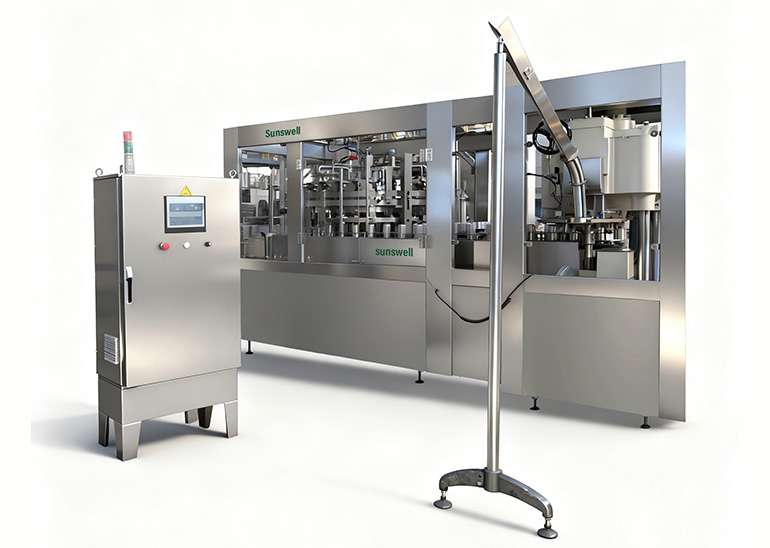
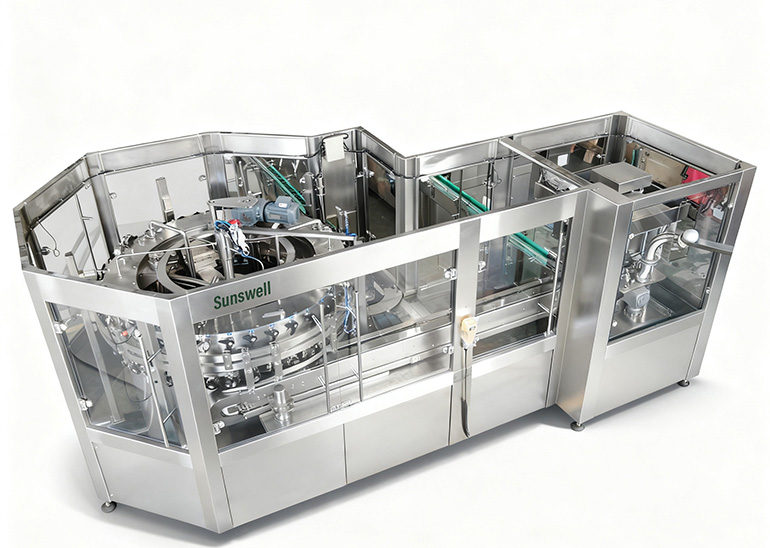
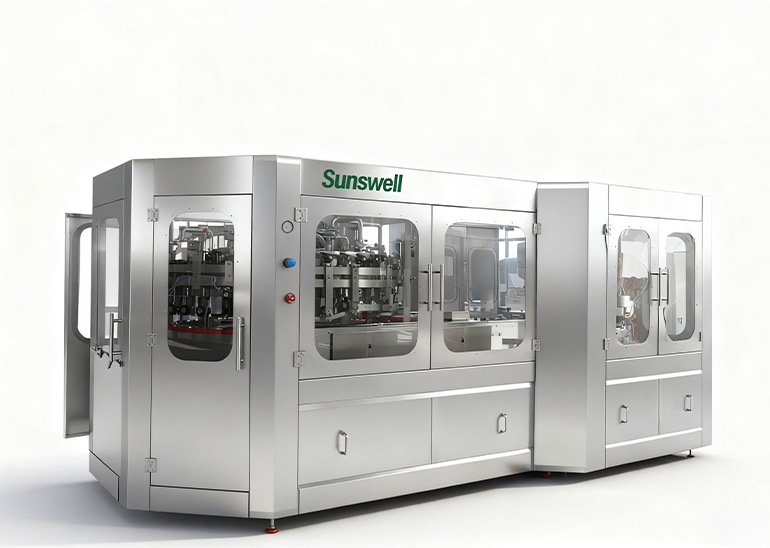
Country: Syria
Product: Aluminum Canned Carbonated Soft Drinks
Capacity: 24000CPH (250ml)
Solution:Carbonated Drinks Production Line
Country:Kazakhstan
Product: PET Bottled Sparkling Water, Canned Soft Drink, Canned Tea
Capacity: 25000CPH (250ml)
Solution:Three Lines,7000BPH(1.5L), 15000CPH(330ml),15000CPH(450ml)



 +86 13921964455
 [email protected]

A2 Dongjiu Industrial Park, 30 East Jintang Road, Tangshi, Zhangjiagang, Jiangsu 215600, China


