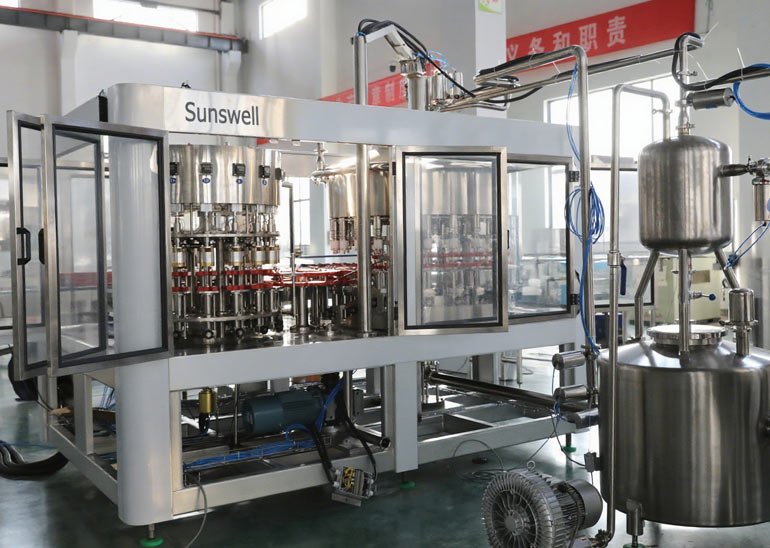
| Filling system | Hot-fill, up to 85 C |
| Rated output | 6,000-36,000 BPH at 0.2-2 L |
| Package | Heat-resistant PET geometry, or glass |
| Line | Hot-fill monobloc with tunnel pasteuriser |
| Products | Juice, tea, nectar, functional drinks |
| Key control | Fill temperature, hold time, cap seal |
Hot filling does two jobs at once: it pasteurises the product on the way to the filler, and the residual heat sanitises the bottle and cap. That is why a hot-fill line can run an acidic juice without a separate bottle steriliser. The price is a heat-resistant bottle and a longer cooling tunnel.
Fill temperature and hold time together set the pasteurisation result. Below the target, shelf life is at risk; above it, the product cooks and the bottle deforms. The number belongs to the product and the bottle, not to the machine, and it should be written into the acceptance protocol with a tolerance.
| Route | Temperature | What it costs |
|---|---|---|
| Hot fill | Up to 85 C | Heat-resistant bottle and a cooling tunnel |
| Cold fill with preservative | Ambient | Formulation constraint, not a machine constraint |
| Cold fill with in-line pasteuriser | Product-side only | Separate pasteuriser and a closed filling zone |
| Hot fill in glass | Up to 85 C | Glass mass, slower line, higher transport cost |
A different bottle format means a different unit; see the Juice By Volumetric Filler.
Pulp needs either a larger valve bore or a piston filler, and it needs continuous gentle agitation in the bowl. Dead corners in the product path settle fibre, then release it as a slug into the next bottle. Bowl geometry and return-flow design matter more than valve count here.
Look for features such as adjustable piston speeds and stroke lengths to fine-tune the filling process according to the viscosity and pulp content of the juice being processed.
The unit behind this configuration is the Hotfill Type Filling Machine for Juice.
Cap seals and filling valve O-rings, because they see the highest temperature every cycle. A seal that is fine on a water line at 20 C will harden in weeks at 85 C. The spare parts list should carry those two items in proportion to the number of valves, not as a single set.
The same question is worked through from another angle in Troubleshooting Volumetric Fillers on Pulp Juice and Tea Lines.
The bottle leaves the filler at up to 85 C and has to come down in a controlled ramp. A plunge cools the outside first, the inside contracts later, and the panel pulls in. The tunnel zones are set per bottle geometry and checked with a probe in the product.
Up to 85 C, set per product and per bottle. The exact set point and tolerance belong in the product specification, because acidity, pulp content and bottle wall thickness all move it.
It replaces the bottle steriliser for acidic products, because the fill temperature and hold time do the microbial work. It does not replace correct product formulation or a validated hold tube.
Usually fill temperature above the bottle rating, or a vacuum that forms as the product cools. Check the fill temperature against the bottle specification and the cap seal before changing the cooling profile.
It depends on the hold tube volume and the heater capacity. The line is not production-ready until the return temperature is stable, so start-up time belongs in the daily plan rather than being discovered at shift start.
Yes, if the filler, the recipe and the downstream cooling are specified for both. Tea usually needs a finer filtration step and a different deaeration setting, so the changeover is a recipe and filter change, not just a new label.
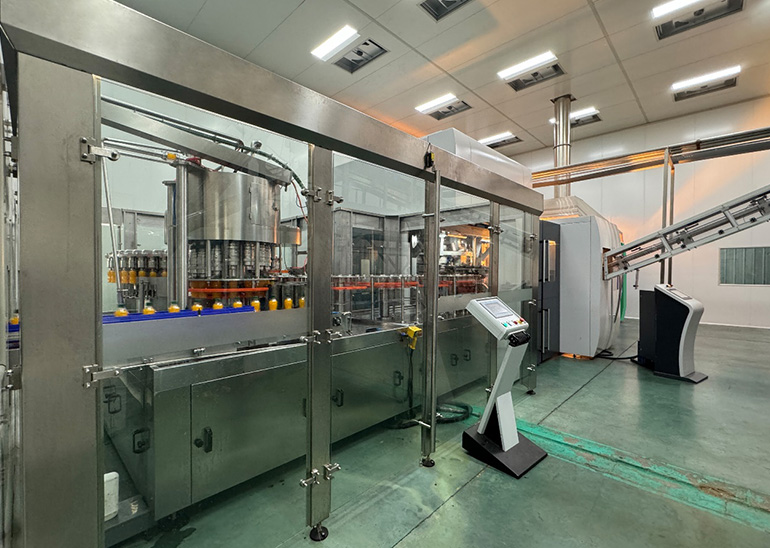
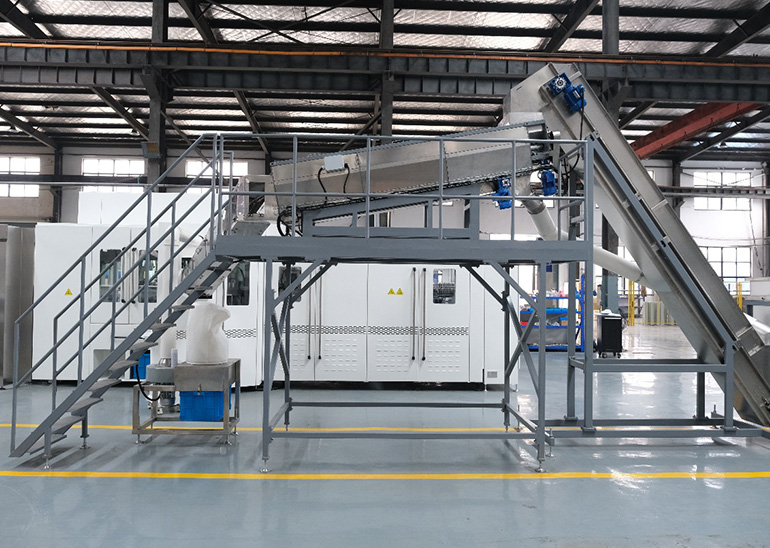
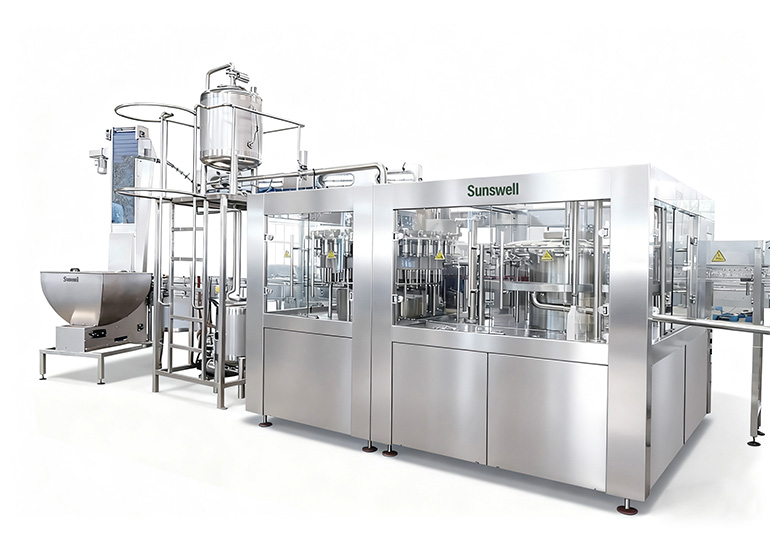
Country: Turkey
Product: Glass and PET Bottled Juice
Capacity: 20000BPH(330ml) Glass Bottle; 4000BPH(3L) PET Bottle
Solution:Juice Production Line
Country:Kazakhstan
Product: PET Bottled Sparkling Water, Canned Soft Drink, Canned Tea
Capacity: 25000CPH (250ml)
Solution:Three Lines,7000BPH(1.5L), 15000CPH(330ml),15000CPH(450ml)



 +86 13921964455
 [email protected]

A2 Dongjiu Industrial Park, 30 East Jintang Road, Tangshi, Zhangjiagang, Jiangsu 215600, China