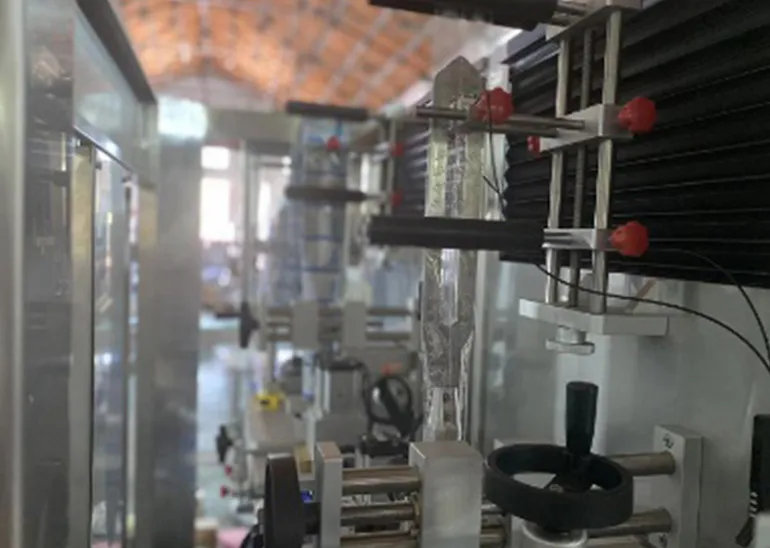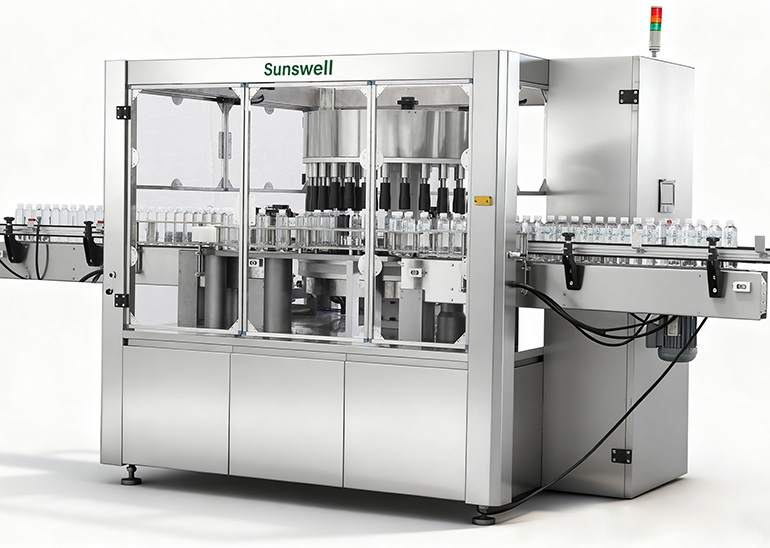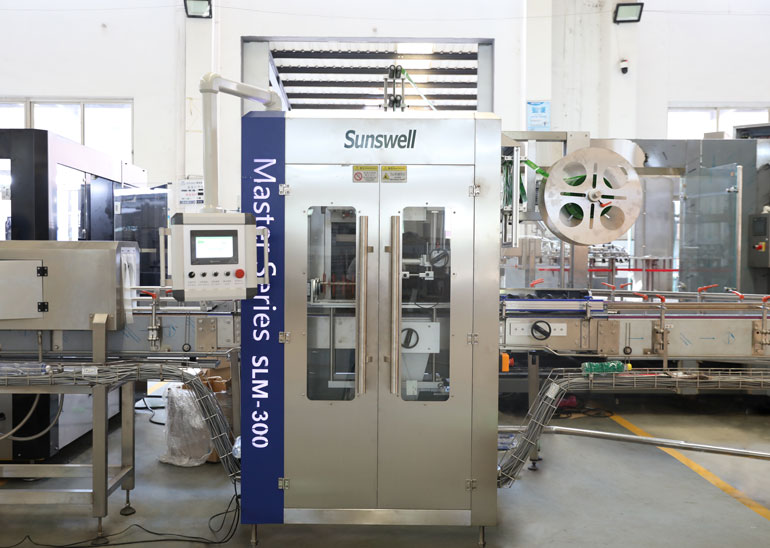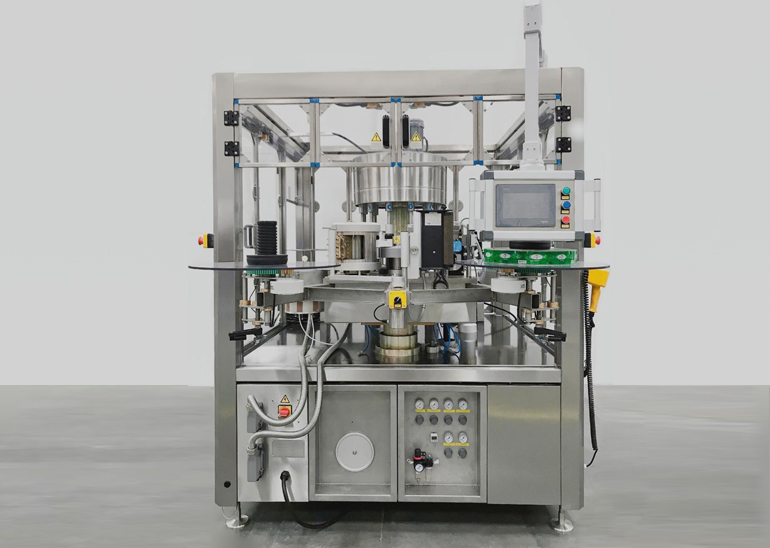
| Types | Sleeve, hot melt glue OPP, rotary sticker, self-adhesive |
| Throughput | Matched to the filler, with an accumulator between |
| Key control | Label position, glue pattern, shrinkage, adhesion |
| Wetted parts | OPP film, PVC or PETG sleeve, paper sticker |
| Key decision | Full sleeve or partial wrap |
| Line position | After filling, before packing |
A full-body sleeve covers the whole bottle and gives the most design freedom, at the cost of film and a shrink tunnel. An OPP wrap-around label is the cheapest per unit at high speed. A sticker suits short runs and curved surfaces where a wrap is impractical.
By applying a plastic sleeve label, they offer a 360-degree display area for branding and product information.
A consistent shrink needs the right film direction, a controlled tunnel temperature profile and a bottle that does not deform. Steam tunnels give a softer shrink than hot air and suit thin-wall bottles. A wrinkle at the shoulder is usually a film or temperature issue, not a speed issue.
| Label type | Cost per unit | Best for |
|---|---|---|
| OPP wrap-around | Lowest at volume | High-speed round bottles |
| Full-body sleeve | Higher film cost | Full coverage and shaped bottles |
| Self-adhesive sticker | Middle | Short runs and flat or curved panels |
| Paper label with glue | Low material, slower | Glass bottles and craft products |
Site requirements, air and power consumption sit with the Rotary Sticker Labeling.
Surface energy, bottle temperature and glue choice. A cold bottle straight from the filler carries condensation, and a water-based adhesive will not bond to it. Hot melt handles a damp surface better, which is why it dominates high-speed beverage lines.
Reference unit for this duty: the Sleeve Labeling.
A consistent circumference and no sharp undercut where the film cannot follow. Sleeves shrink around the shape, so a bottle with a deep waist needs a film with the right shrink direction. The bottle and the sleeve are designed together.
The same question is worked through from another angle in How to Integrate Labeling and Packaging Machines Efficiently.
It is matched to the filler, typically with margin above the filler rating so that a short stop does not reach the filler. The practical limit is the shrink tunnel dwell time, not the sleeve applicator.
Usually uneven tunnel temperature, wrong film orientation, or a bottle that is still warm from filling. Check the tunnel profile and the film direction before changing the speed.
Not without a change of the applicator. Sleeve and wrap-around are different machines with different film paths, so a plant running both normally has two labellers.
On a fixed production interval set by the glue supplier and the plant, and immediately after any stop long enough for the glue to cure. A clogged nozzle shows as a missing glue line and a label that lifts in the pack.
Country:Kazakhstan
Product: PET Bottled Sparkling Water, Canned Soft Drink, Canned Tea
Capacity: 25000CPH (250ml)
Solution:Three Lines,7000BPH(1.5L), 15000CPH(330ml),15000CPH(450ml)



 +86 13921964455
 [email protected]

A2 Dongjiu Industrial Park, 30 East Jintang Road, Tangshi, Zhangjiagang, Jiangsu 215600, China