
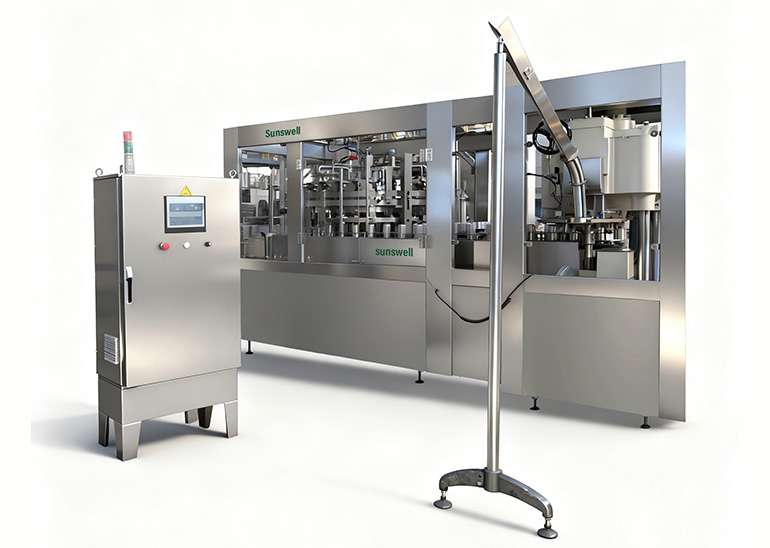
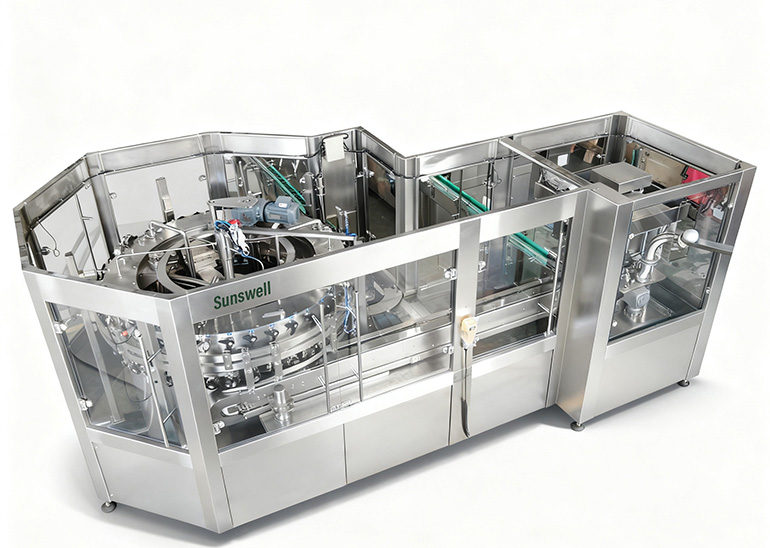
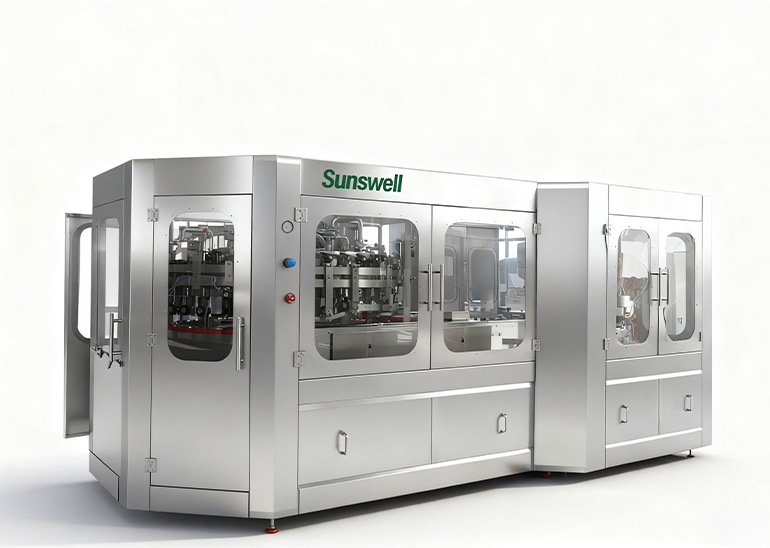
| Filling system | Isobaric for beer and CSD, volumetric for juice and tea |
| Output range | Up to 25,000 CPH |
| Can format | Standard 250, 330 and 500 ml |
| Seaming | Roller seamer integrated with the filler |
| Options | Hot fill for juice and tea, nitrogen dosing |
| Key control | Fill level, seam tightness, dissolved oxygen |
Maintenance effort should follow the wear map, not the machine layout. Seals, capping inserts, guide rail blocks and filters account for most unplanned stops; painting and polishing account for none. A short daily check on those four items beats a long monthly inspection.
Beer and CSD run isobaric, cold, under counter-pressure. Juice and tea often run hot fill or a volumetric fill with a downstream pasteuriser. The can is the same format; the filler, the valve set and the temperature control are not, so one can line rarely covers both without a second specification.
Account for variations in product viscosity and density when calibrating the filler.
| Product | Filling principle | Critical measurement |
|---|---|---|
| Beer | Isobaric, cold | Dissolved oxygen and seam tightness |
| CSD and soda | Isobaric, cold | CO2 retention and fill height |
| Juice and tea | Volumetric or hot fill | Fill temperature and seam integrity |
| Energy drinks | Isobaric or volumetric | Dissolved oxygen and closure |
Sizing for this duty runs through the Aluminum Can Filling Machine for Beer, Carbonated Soft Drink, where the valve count is set out.
The filler discharges cans onto a transfer star wheel that hands each can to the seamer at a fixed pitch. Any slip at that transfer shows up as a damaged flange and a failed seam. The transfer is the most alignment-sensitive point on a can line.
Throughput and change-part lists are on the Aluminum Can Filling Machine for Hotfill Juice and Tea page rather than in this note.
Cans are light and rigid, so they move on air conveyors and mass conveyors with low back pressure. Dents come from jams and from accumulation pressure, not from the filler. A can line that dents is a conveyor setting problem before it is a machine problem.
The same question is worked through from another angle in How to Select the Right Aluminum Can Filling Machine.
300 cans per minute. Divide CPH by 60. The seamer, the filler and the packer all have to carry that number, so the line rating is the lowest of the three.
It is the oxygen left in the product after filling. It drives oxidation, off-flavour and haze. Beer and juice have tight limits, and the measurement belongs in the acceptance protocol, taken from the finished can.
With change parts for the filler, the seamer and the conveyor, yes. The changeover is longer than a label change and is normally scheduled between campaigns.
Yes, at the same filler, because the fill volume per cycle is smaller. The seamer and the packer still have to carry the higher can rate, which is why the line rating is set on cans per hour, not litres.
Country: Syria
Product: Aluminum Canned Carbonated Soft Drinks
Capacity: 24000CPH (250ml)
Solution:Carbonated Drinks Production Line
Country:Kazakhstan
Product: PET Bottled Sparkling Water, Canned Soft Drink, Canned Tea
Capacity: 25000CPH (250ml)
Solution:Three Lines,7000BPH(1.5L), 15000CPH(330ml),15000CPH(450ml)



 +86 13921964455
 [email protected]

A2 Dongjiu Industrial Park, 30 East Jintang Road, Tangshi, Zhangjiagang, Jiangsu 215600, China


