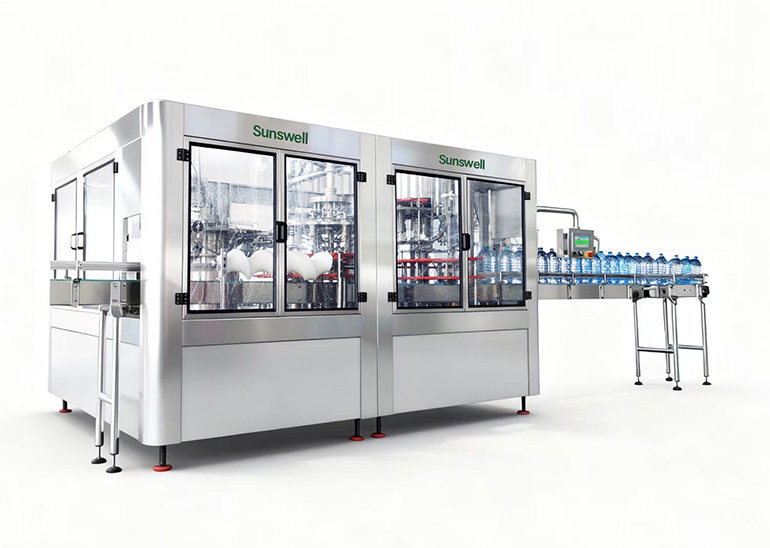
In today’s highly competitive bottled water market, selecting the right water filling machine is not just a technical decision—it is a strategic investment that directly affects production efficiency, product quality, operating costs, and long-term profitability.
For bottled water plant managers and decision-makers, the challenge is not simply purchasing bottling equipment. It is selecting a solution that aligns with your production line capacity, packaging strategy, future expansion plans, and operational model.
This guide provides a structured, technical framework to help you choose the most suitable water bottle filling machine for your facility.
The first and most critical factor is output capacity.
Drink water filling machines are typically rated in bottles per hour (BPH). Before selecting equipment, clearly define:
Current production demand
Peak seasonal demand
Future 3–5 year growth projections
Common capacity ranges:
Small-scale plants: 2,000–6,000 BPH
Medium-scale plants: 8,000–18,000 BPH
Large-scale plants: 24,000–48,000+ BPH
Under-sizing equipment creates bottlenecks. Over-sizing leads to unnecessary capital expenditure and higher energy consumption.
The water filling machine must match upstream and downstream equipment, including:
Blow molding systems (if in-house)
Bottle unscramblers
Labeling machines
Cartoning or shrink-wrapping systems
A mismatch in speeds creates inefficiencies. A properly engineered production line ensures synchronized throughput across all bottling equipment.
Not all water filling machines handle all bottle types equally. Understanding your packaging strategy is essential.
Most bottled water production lines use PET bottles. However, consider:
Lightweight PET bottles
High-transparency bottles
Recycled PET (rPET)
Glass bottles (premium water segment)
Your filling system must provide stable handling without bottle deformation, especially when working with lightweight PET.
Do you produce:
330ml / 500ml single-serve bottles?
1L – 2L family-size bottles?
5L – 10L large containers?
A flexible automatic water filling machine can accommodate multiple bottle sizes with minimal changeover time. For factories serving different markets, quick format change is a competitive advantage.
The machine must be compatible with common neck standards (e.g., 28mm PCO neck). Ensure:
Accurate positioning
Leak-proof sealing
Stable capping torque control
Poor cap application leads to leakage, product recall risk, and brand damage.
Water products vary. Your filling principle must match your product type.
Suitable for:
Non-carbonated purified water
Mineral water
Advantages:
Simple structure
Lower investment cost
Stable performance
Used when:
Filling carbonated water
Higher precision required
Pressure systems maintain carbonation and ensure filling stability.
High-end bottling equipment may use flow meters to improve precision and reduce product waste.
Benefits:
Higher filling accuracy
Reduced water loss
Better cost control

Automation directly affects labor costs, operational stability, and data visibility.
Semi-automatic systems:
Suitable for small plants
Lower initial investment
Higher labor dependency
Fully automatic production lines:
Higher speed
Lower long-term labor cost
Improved hygiene and consistency
For medium to large-scale bottled water factories, full automation is generally recommended.
Modern water filling machines should include:
PLC control systems
Touchscreen HMI interfaces
Real-time monitoring
Fault diagnostics
Data recording capability
Advanced control systems improve:
Operational transparency
Maintenance response time
Overall equipment effectiveness (OEE)
Water is a food-grade product. Equipment must comply with strict sanitation requirements.
Critical components should be:
SUS304 or SUS316 stainless steel
Corrosion-resistant
Easy to clean
An integrated CIP system ensures:
Reduced contamination risk
Faster cleaning cycles
Lower downtime
For premium bottled water brands, consider:
Enclosed filling rooms
HEPA air filtration
Positive pressure systems
Food safety compliance directly affects market access and brand credibility.
Beyond initial purchase price, evaluate Total Cost of Ownership (TCO).
Key considerations:
Energy consumption (kWh per 1,000 bottles)
Water loss during filling
Compressed air usage
Spare part availability
Maintenance frequency
High-quality bottling equipment may require a higher upfront investment but delivers:
Lower breakdown rates
Longer service life
Reduced maintenance cost
Even the best production line requires technical support.
Before choosing a supplier, evaluate:
Installation and commissioning services
Operator training programs
Spare parts supply speed
Remote troubleshooting capability
On-site technical support availability
Downtime in bottled water production can result in significant revenue loss. Reliable after-sales service is not optional—it is essential.
The bottled water industry is highly dynamic. Your equipment must support growth.
Consider:
Modular design
Expandable filling heads
Upgrade compatibility
Smart factory integration
Choosing a water filling machine that can scale prevents costly full-line replacement in the future.
Professional decision-making requires financial analysis.
Evaluate:
Capital investment (CAPEX)
Expected production output
Operating cost savings
Break-even period
Return on investment (ROI)
A properly selected water filling machine improves efficiency, reduces waste, and enhances competitiveness—leading to measurable financial returns.
Choosing the right water filling machine for your production line is a strategic engineering decision, not merely a purchasing task.
Plant managers and investors must carefully evaluate:
Required production capacity
Bottle types and packaging flexibility
Filling technology
Automation level
Hygiene standards
Energy efficiency
Supplier reliability
The right bottling equipment ensures stable production, consistent product quality, and sustainable business growth.
At Sunwell, we specialize in designing and manufacturing advanced water filling machines and complete bottling equipment solutions tailored to your specific production requirements.
Whether you are launching a new bottled water factory or upgrading an existing production line, our engineering team provides:
Customized capacity design
Turnkey project solutions
Energy-efficient systems
Reliable after-sales service
If you are evaluating options for your next water filling machine investment, contact Sunwell today. Let us help you build a smarter, more efficient, and future-ready bottled water production line.
Reach out now to discuss your project requirements and receive a professional technical proposal.



 +86 13921964455
 [email protected]

A2 Dongjiu Industrial Park, 30 East Jintang Road, Tangshi, Zhangjiagang, Jiangsu 215600, China