In today’s highly competitive beverage market, manufacturers are under constant pressure to increase output, reduce operational costs, maintain strict hygiene standards, and respond quickly to changing packaging demands. For bottled water and beverage factory managers, optimizing the efficiency of the entire beverage production process is no longer optional—it is a strategic necessity.
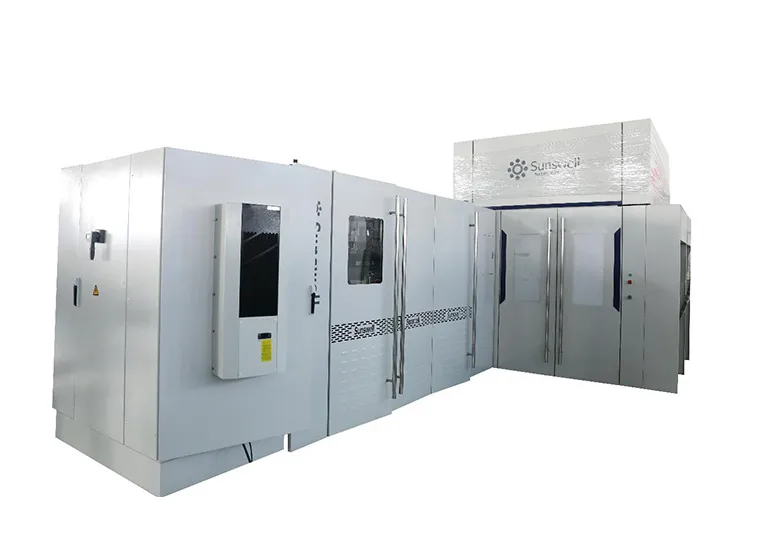
One of the most significant technological advancements in recent years is the combiblock system. By integrating multiple functions—typically blow molding, filling and capping—into a single compact unit, combiblock solutions redefine how modern production lines are designed and operated.
This article provides a technical analysis of how combiblock systems work, their operational advantages, and why they are becoming the preferred choice for forward-thinking beverage manufacturers.
A combiblock system is an integrated solution that combines traditionally separate machines into one synchronized platform. In conventional beverage production lines, processes are often divided into:
Bottle air conveyor
Capping machine
Each piece of equipment operates independently and requires physical transfer systems between stages.
By contrast, a combiblock system integrates:
Preform feeding and heating
Stretch blow molding
Filling and capping
All within a single enclosure, operating under unified control architecture.
This structural integration eliminates unnecessary bottle transfer steps, reduces contamination risks, and significantly improves overall production efficiency.
Factory floor space is a valuable asset. Traditional lines require separate installation areas for blowing, conveying, and filling sections. This often leads to:
Long conveyor systems
Large sterile zones
Higher building construction costs
A combiblock system integrates these functions in one compact module, reducing line length and total footprint by up to 30–40%, depending on capacity.
For new plant construction, this translates into:
Lower building investment
Reduced HVAC requirements
More efficient layout planning
For existing factories, compact design enables easier line upgrades without major facility reconstruction.

Food safety remains the top priority in beverage production. Each bottle transfer point increases contamination risk.
In traditional systems, empty bottles are transported via air conveyors after blow molding. During this transfer:
Bottles are exposed to open-air environments
Dust and microorganisms may accumulate
Static electricity can attract particles
In a combiblock system, bottles are transferred directly from blow molding to filling within a closed environment. This significantly reduces exposure and enhances hygienic control.
Because blow molding and filling and capping are integrated, sterile zone management becomes more efficient. Manufacturers can maintain:
Positive pressure filling chambers
HEPA-filtered airflow
Reduced cleanroom size
This not only improves product safety but also lowers energy consumption associated with cleanroom maintenance.
In conventional lines, separate machines must be synchronized through complex control systems. Any imbalance can lead to:
Bottle accumulation
Line stoppages
Increased wear on conveyors
A combiblock system uses a unified PLC control system to manage all processes. Blow molding output is directly synchronized with filling speed, ensuring stable and continuous production.
Fewer transfer components mean:
Fewer motors
Fewer conveyors
Fewer changeover parts
This reduces mechanical failure points and lowers maintenance requirements.
For plant managers, this means:
Higher Overall Equipment Effectiveness (OEE)
Reduced downtime
Lower spare part inventory
Energy efficiency is a growing concern in beverage production, especially for large-capacity bottled water plants.
In traditional systems, air conveyors require continuous compressed air to transport bottles. Eliminating these systems reduces:
Air compressor load
Electricity consumption
Maintenance costs
Direct transfer from blow molding to filling minimizes bottle deformation and tipping. This leads to:
Lower rejection rates
Reduced material waste
Improved packaging consistency
Over time, these savings significantly impact total cost of ownership (TCO).
Modern combiblock systems are designed for Industry 4.0 integration.
With one integrated control platform, manufacturers gain:
Real-time production monitoring
Automatic fault detection
Data-driven performance analysis
For beverage manufacturers producing multiple bottle sizes, quick changeover is critical. Combiblock systems allow:
Tool-less or simplified adjustments
Reduced downtime during SKU switching
Improved production flexibility
This capability is especially valuable in competitive markets where packaging diversity drives sales.
Although the initial investment in a combiblock system may be higher than separate machines, the long-term financial advantages are substantial.
Smaller plant area
Reduced building construction cost
Lower cleanroom setup expenses
Reduced labor
Lower energy consumption
Fewer spare parts
Due to improved efficiency and reduced waste, many beverage plants experience faster ROI compared to traditional line configurations.
For decision-makers evaluating expansion or modernization projects, a combiblock system represents a strategic long-term investment rather than a short-term expense.
Combiblock systems are widely used in:
Bottled water
Mineral water
Carbonated beverages
Juice drinks
Functional beverages
They are particularly suitable for medium to large-scale beverage production lines where speed, hygiene, and efficiency are critical success factors.
As beverage markets become increasingly competitive, operational efficiency and hygienic control are decisive factors for success. The integration of blow molding, filling and capping into a unified combiblock system offers:
Reduced production footprint
Improved hygiene and safety
Higher line efficiency
Lower energy consumption
Reduced operational complexity
Better long-term ROI
For factory managers and decision-makers seeking sustainable growth, combiblock technology is not merely an equipment upgrade—it is a strategic transformation of the entire beverage production process.
At Sunwell, we specialize in advanced combiblock systems designed to optimize beverage production efficiency and reliability. Our integrated solutions combine precision blow molding, high-speed filling and capping, and intelligent control systems into a compact, energy-efficient platform.
Whether you are building a new plant or upgrading an existing production line, Sunwell provides:
Customized engineering design
Turnkey beverage production solutions
Energy-efficient system integration
Comprehensive technical support
If you are evaluating a combiblock system for your next project, contact Sunwell today. Let our engineering experts design a high-performance solution tailored to your capacity and market requirements.
Reach out now to receive a professional consultation and start optimizing your beverage production line for long-term success.



 +86 13921964455
 [email protected]

A2 Dongjiu Industrial Park, 30 East Jintang Road, Tangshi, Zhangjiagang, Jiangsu 215600, China