
| Filling method | Isobaric for beer and CSD, volumetric for juice and tea |
| Capacity range | Up to 25,000 CPH |
| Can range | Standard 250, 330 and 500 ml |
| Seaming | Roller seamer integrated with the filler |
| Options | Hot fill for juice and tea, nitrogen dosing |
| Key control | Fill level, seam tightness, dissolved oxygen |
Dissolved oxygen enters at three points: deaeration of the product, the filler bowl atmosphere, and the gap between fill and seam. Nitrogen dosing and a steam or CO2 tunnel at the seamer reduce the last one. For beer and juice, the dissolved oxygen in the finished can is the number to test, not the setting on the doser.
From improving CO2 retention and taste to extending shelf life, the benefits of nitrogen dosers are undeniable for bottled water plant managers looking to deliver top-tier products to their consumers.
Compressed air for the seamer and the air conveyor, CO2 for purging, and the tear-down cans used for seam checks every shift. None of these appear in the machine price. A line running 24,000 CPH can consume a measurable share of its operating cost in air alone.
| Product | Filling principle | Critical measurement |
|---|---|---|
| Beer | Isobaric, cold | Dissolved oxygen and seam tightness |
| CSD and soda | Isobaric, cold | CO2 retention and fill height |
| Juice and tea | Volumetric or hot fill | Fill temperature and seam integrity |
| Energy drinks | Isobaric or volumetric | Dissolved oxygen and closure |
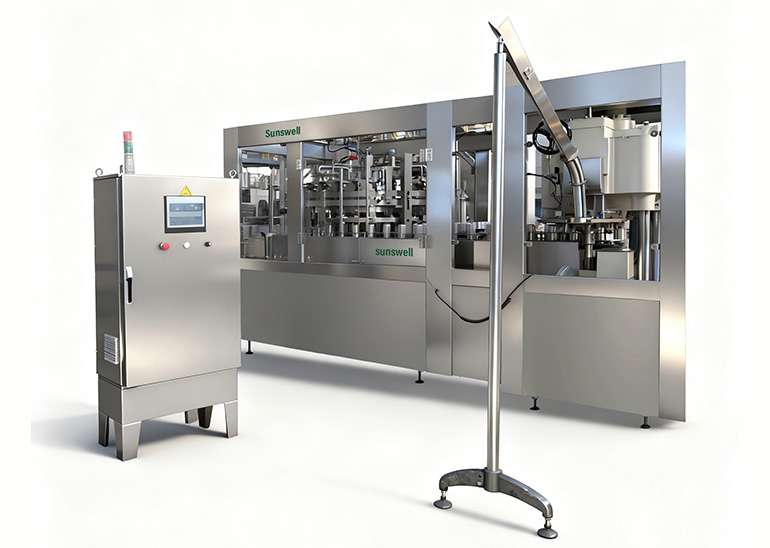
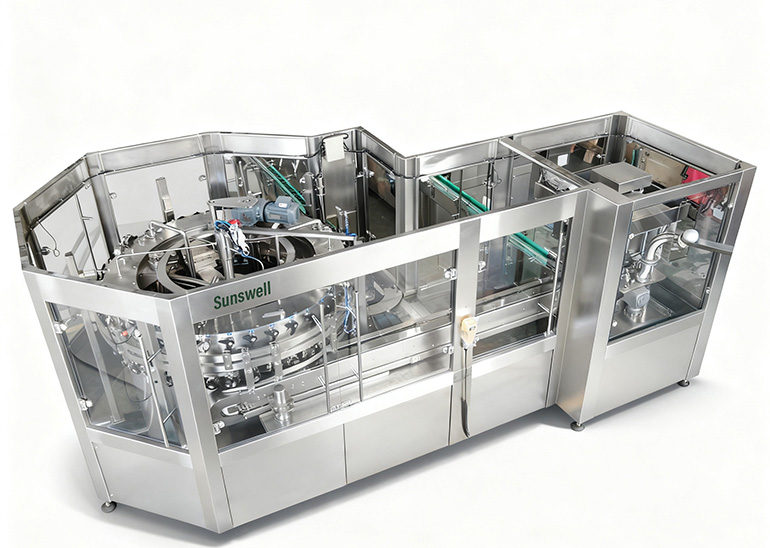
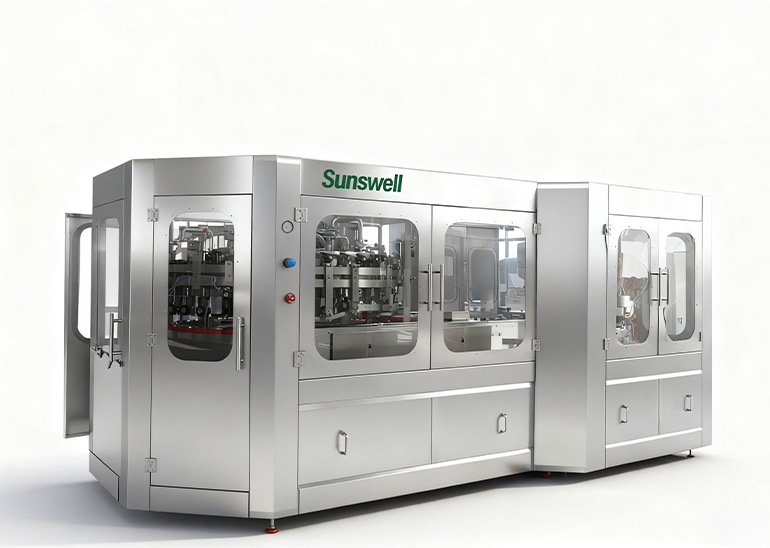
Sizing for this duty runs through the Aluminum Can Filling Machine for Beer, Carbonated Soft Drink, where the valve count is set out.
A heated product path, a fill temperature control loop and a cooling tunnel after seaming. The can itself tolerates the heat; the lining and the product do not always. The temperature window belongs to the product specification.
The Aluminum Can Filling Machine for Hotfill Juice and Tea is the matching unit when this becomes a line project.
Small can lines exist for craft producers, usually with a compact filler-seamer and manual or semi-automatic packing. The limit is not the filler but the seam quality control, which needs a tear-down station and a trained operator at any volume.
The same question is worked through from another angle in Nitrogen Dosers with Can Lines: Filler and Seamer Synchronisation.
300 cans per minute. Divide CPH by 60. The seamer, the filler and the packer all have to carry that number, so the line rating is the lowest of the three.
Yes, with change parts for the filler, the seamer and the conveyor. Changeover time is the real cost. Two formats on one line normally means 40-90 minutes per switch and a lower production factor.
It is the oxygen left in the product after filling. It drives oxidation, off-flavour and haze. Beer and juice have tight limits, and the measurement belongs in the acceptance protocol, taken from the finished can.
At a fixed interval during production, by tear-down and measurement, plus a check after every seamer adjustment. The interval is set by the plant quality plan; the point is that it is measured, not inspected by eye.
Country:Kazakhstan
Product: PET Bottled Sparkling Water, Canned Soft Drink, Canned Tea
Capacity: 25000CPH (250ml)
Solution:Three Lines,7000BPH(1.5L), 15000CPH(330ml),15000CPH(450ml)



 +86 13921964455
 [email protected]

A2 Dongjiu Industrial Park, 30 East Jintang Road, Tangshi, Zhangjiagang, Jiangsu 215600, China


