Setting up a bottled water plant in Kenya or Nigeria can be a strong business opportunity, but it is not as simple as buying a standard machine and starting production. The water source, treatment process, bottle format, power supply, certification, and spare-parts plan all affect whether the project runs smoothly after installation. This guide explains the key points investors should consider before choosing a water filling line for these two important African markets.
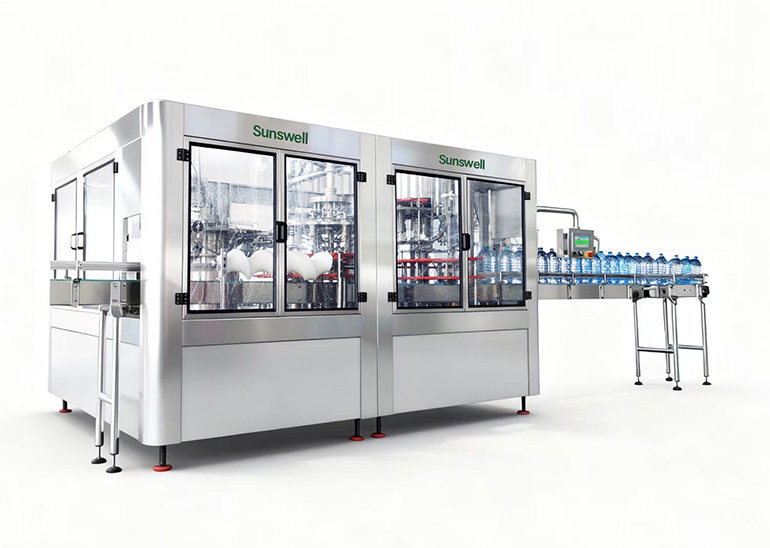
The first decision is not the filling machine. It is the water source. In many projects, the raw water comes from a borehole, spring, or municipal supply. Each option needs proper testing before the production line is designed.
A professional water test report should include TDS, hardness, iron, manganese, turbidity, microbiological indicators, and any local contaminants. Without this report, the treatment system is only a guess.
Groundwater in parts of Kenya and Nigeria may contain high TDS, iron, manganese, or suspended solids. The treatment process should be selected according to the test results, not only according to the budget.
For many bottled water plants, reverse osmosis is useful, but it should not be specified blindly. In some cases, pretreatment is more important than the RO system itself. A well-designed water treatment system helps protect product quality and reduces maintenance problems later.
Many new investors want to start with the largest possible machine, but a bigger line is not always the best first step. The right capacity depends on distribution channels, available capital, storage space, and how quickly the local market can absorb the product.
For Kenya and Nigeria, 500 ml and 1.5 L PET bottles are common choices. Some plants also add a separate 18.9 L or 5-gallon line for offices, homes, hotels, and restaurants.
Power reliability is one of the biggest practical issues in bottled water production. A good equipment layout should include not only the filling machine, but also the compressor, water treatment system, bottle blowing machine, labeling machine, shrink wrapper, and backup power plan.
Grid outages can interrupt production, damage product consistency, and increase downtime. Many plants need a generator or UPS support for key equipment, especially the control system, RO high-pressure pump, air compressor, and bottle blowing system. For a 12,000 BPH line, total peak power demand may be significant, so the final number should always be confirmed with the supplier after the full line configuration is selected.
Clean and dry compressed air is important for pneumatic valves, bottle blowing, and stable machine operation. Poor air quality can cause frequent machine faults, unstable filling, and shorter component life.
In hot climates, chilled water and proper cleaning systems may be needed to keep production stable. A hygienic plant should also include drainage, washable floors and walls, pest control, and clearly separated clean production areas.
Packaging decisions should follow local buying habits. In Kenya, 500 ml and 1.5 L PET bottles are widely used for retail, while 18.9 L bottles are popular for offices and hospitality customers. In Nigeria, 50 cl bottled water has strong demand, and many producers also serve home and office customers with larger bottles.
If you plan to produce both small PET bottles and 18.9 L bottles, you normally need two separate filling lines. They use different bottle handling systems, filling structures, and cleaning requirements.
Certification should be planned early, not after the machines arrive. In Kenya, bottled water producers need to meet KEBS requirements and relevant local permits. In Nigeria, packaged water must go through NAFDAC registration before it is legally sold. Imported machinery may also need SONCAP documentation before shipment or customs clearance.
This is why it is important to work with an equipment supplier that understands export documentation, machine inspection, spare-parts lists, electrical standards, and installation support. Sunswell has supplied beverage and water production equipment to customers in Africa, the Middle East, Central Asia, and other international markets. You can learn more about the company here: Why Sunswell.
A bottled water plant produces a daily consumer product, so downtime can quickly affect cash flow and customer trust. Before placing an order, ask the supplier for a recommended spare-parts list and keep critical parts in stock locally.
Remote support is also important. A supplier should be able to assist with commissioning, operator training, troubleshooting, and future line upgrades. Sunswell’s service program can support installation planning, commissioning, and spare-parts preparation.
The total investment depends on capacity, bottle format, water quality, automation level, building conditions, and local utility requirements. A complete project may include the water treatment system, bottle blowing machine, rinsing-filling-capping machine, labeling machine, packing machine, air compressor, generator, laboratory equipment, and installation costs.
Many plants use borehole water because it gives better control over supply. However, the borehole must be legally approved and the water must be tested before treatment equipment is selected. Municipal water may be possible in some locations, but it is often less reliable for continuous production.
For many new regional brands, 6,000–8,000 BPH for 500 ml PET bottles is a practical starting range. It balances equipment investment, operating cost, and market coverage. Larger lines are better for companies with strong distribution already in place.
Normally, no. Small PET bottles and 18.9 L bottles require different filling machines. Many bottled water factories install a PET bottle line first, then add a separate 5-gallon line when the market is ready.
If you are planning a bottled water project in Kenya, Nigeria, or another African market, Sunswell can help design a market-specific solution based on your water report, bottle size, capacity target, and local requirements. View our water production line solutions or contact us for a tailored proposal.
```



 +86 13921964455
 [email protected]

A2 Dongjiu Industrial Park, 30 East Jintang Road, Tangshi, Zhangjiagang, Jiangsu 215600, China