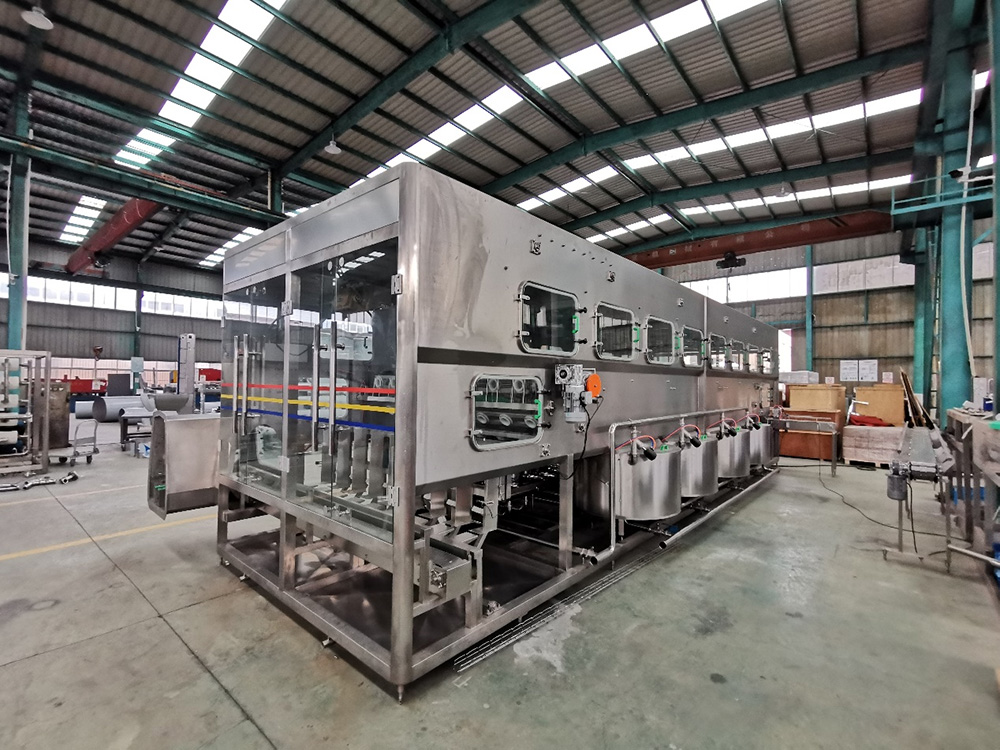
Smart manufacturing has reached beverage filling. What was once a mechanical rotary monoblock is now a data-generating node on the factory network. For producers planning a new line—or upgrading an existing one—understanding AI and IoT applications helps you avoid buying obsolete capacity. This article maps where these technologies deliver real value on a filling production line, with practical notes for buyers from China and in emerging markets.
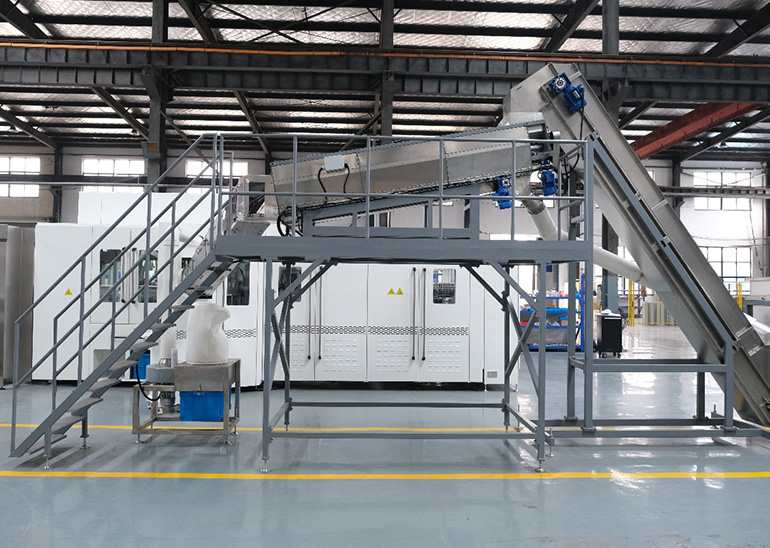
Modern fillers embed sensors on every station—torque, pressure, flow, vibration, temperature. Streamed to a dashboard, this turns guesswork into data:
By modeling vibration and cycle data, AI estimates remaining useful life of bearings, seals, and valves. Instead of calendar-based parts swaps, you replace only when needed—cutting downtime and spares cost. This is especially valuable where local technical support is thin (common in Africa and remote sites).
High-speed cameras plus ML models detect:
Unlike fixed-threshold sensors, AI models improve with data and adapt to new SKUs—see our PE bottle vision inspection approach.
A Manufacturing Execution System links filler, CIP, labeler, and palletizer to batch records and traceability. For food-safety regimes (HACCP/ISO 22000), automated logs beat manual sheets. Our processing and control integration supports this.
Advanced suppliers simulate the line digitally before steel is cut—validating throughput and layout, reducing startup risk. While still premium, it pays back on complex turnkey lines.
Cloud-connected lines let the supplier diagnose faults remotely and push parameter updates—cutting the need for urgent international flights. Sunswell supports remote commissioning and troubleshooting across its global installations.
AI features vary wildly. Ask for demonstrated results—detection rates, false-reject rates, downtime reduction—not buzzwords. Validate on your bottles at FAT.
Documented smart-line deployments strengthen your plant's Expertise narrative with investors and customers. Choosing a supplier with proven IoT references—such as Sunswell—supports long-term Authoritativeness in your market.
A: Often yes—cap and fill-level inspection alone prevents costly recalls; scale the camera count to speed.
A: No. Local dashboards work offline; cloud is for remote support and multi-site roll-ups.
A: Modestly—mostly software/config; choose a supplier with proven deployments to avoid custom-risk delays.
Explore Sunswell's technology or ask about a smart-line specification.



 +86 13921964455
 [email protected]

A2 Dongjiu Industrial Park, 30 East Jintang Road, Tangshi, Zhangjiagang, Jiangsu 215600, China