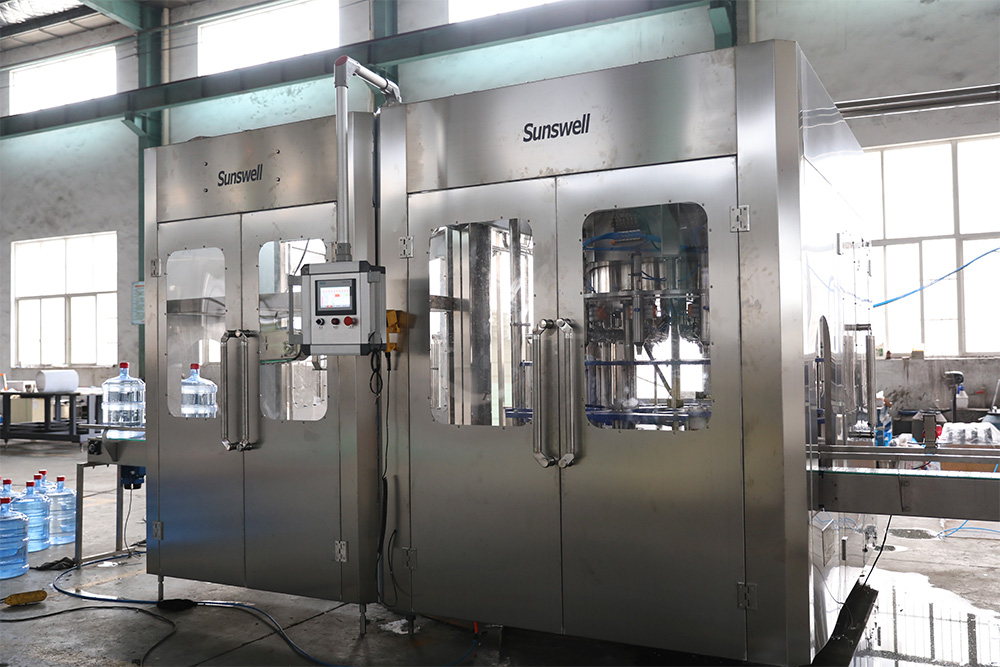
According to aggregated forecasts from Mordor Intelligence, Grand View Research and Statista, the global beverage filling machine market was valued at roughly USD 18–20 billion in 2024 and is projected to reach USD 26–28 billion by 2031, growing at a CAGR of 5.0–5.8%. Demand is no longer concentrated in Europe and North America; Asia Pacific already accounts for more than 40% of new installations, led by capacity expansions in China, India, Vietnam and Indonesia. This report breaks down where growth is coming from, which package formats are winning, and what it means for buyers planning a line from China or scaling in emerging markets.
The filling equipment market is shifting from replacement demand in mature regions to greenfield capacity in Asia, Africa and the Middle East. Three forces dominate: rising consumption of bottled water and CSD in emerging markets, the premiumization of functional and ready-to-drink beverages, and the automation wave replacing semi-automatic lines. Buyers should expect continued price pressure from Chinese manufacturers while European OEMs defend the high-speed, high-mix segment.
| Segment | 2024 Est. (USD) | 2031 Est. (USD) | CAGR |
|---|---|---|---|
| Rotary fillers (water/CSD/juice) | ~9.5B | ~13B | 5.2% |
| Combiblock / blow-fill-cap | ~3.0B | ~4.8B | 7.0% |
| Can filling lines | ~3.2B | ~4.3B | 4.6% |
| Aseptic & ESL lines | ~1.8B | ~3.0B | 7.8% |
| Accessories & retrofits | ~2.5B | ~3.2B | 3.9% |
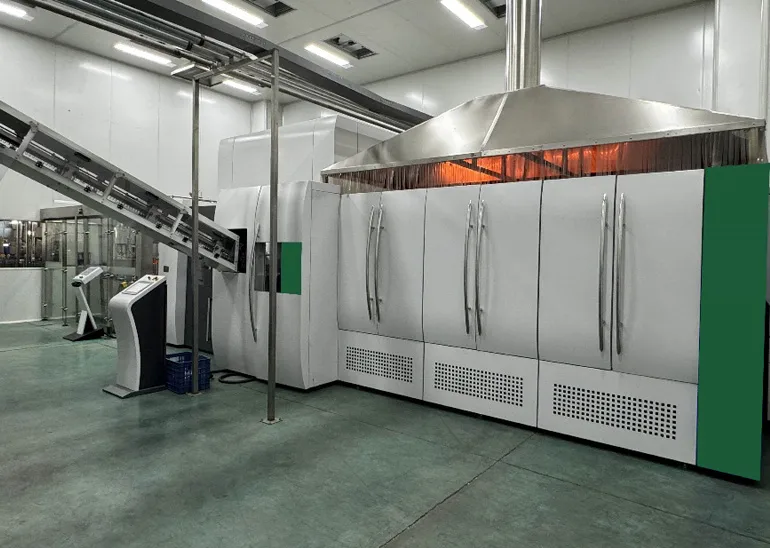
Combiblock and aseptic/ESL lines grow fastest because they reduce footprint and improve hygiene for sensitive products. A modern Combiblock integrates blowing, filling and capping in one enclosure, cutting transferred contamination risk and floor space.
Urbanization and a young population push bottled water and CSD volumes across Southeast Asia. Vietnam, Indonesia and the Philippines favor 500ml–1.5L PET lines at 12,000–24,000 BPH; India adds large-format and value-tier SKUs. Machinery from China dominates new projects on total cost and lead time.
GCC countries invest in premium water and juice; Sub-Saharan Africa builds entry-level 6,000–12,000 BPH lines. Both rely heavily on imported equipment, mostly from China, with local support becoming a differentiator.
Mature markets are driven by retrofits, sustainability upgrades (rPET, lightweighting) and high-speed aseptic for dairy alternatives. Compliance with EU machinery and packaging law raises the bar for suppliers.
Asia Pacific, followed by the Middle East and Africa, where per-capita consumption is still low and capacity is being built from scratch.
Yes for mid-speed (6,000–24,000 BPH) lines; leading Chinese manufacturers now ship CE/EAC/SASO-compliant lines with remote commissioning and spare-part programs.
Explore complete water production line solutions and Combiblock systems engineered for global projects.



 +86 13921964455
 [email protected]

A2 Dongjiu Industrial Park, 30 East Jintang Road, Tangshi, Zhangjiagang, Jiangsu 215600, China