


Market · Central Asia
Kazakhstan vs Uzbekistan vs Kyrgyzstan — Where to Locate Your Bottling Plant in Central Asia
The three Central Asian markets reward different strategies. Kazakhstan offers the largest market and easiest logistics; Uzbekistan offers low costs and a young, dense population; Kyrgyzstan offers a small but open market. This comparison is written for an investor deciding where the first line goes.
71+
Countries exported
8
Lines in one KZ plant
12,000–24,000
BPH typical KZ scale
444+
Lines delivered
2011
Sunswell founded
Short answer: Kazakhstan: biggest market, better logistics, EAC certification, and the highest import volume — the safest first market. Uzbekistan: lower costs, larger population and faster growth in demand, but a more complex currency and payment environment. Kyrgyzstan: smallest market, best for a compact plant serving niche demand. Most investors start in Kazakhstan and add Uzbekistan later; few start in Kyrgyzstan.
🎯 Key takeaways
- Kazakhstan is the largest and safest first market; its plants already run imported lines routinely.
- Uzbekistan has the biggest population and the fastest-growing demand, but payment and customs are harder.
- Kyrgyzstan is small; a plant there suits niche products or a regional base, not volume.
- EAC certification applies across the EAEU — one certificate can serve several markets.
- Logistics from China to all three is established; Kazakhstan has the shortest, most reliable chain.
On this page
1. Market size and growth
Kazakhstan has the largest purchasing power in Central Asia and the most developed retail structure, which is why most branded water and CSD producers build or contract capacity there. Uzbekistan has roughly three times the population and a younger demographic, and its beverage market is growing faster from a lower base — but average income is lower, so price-point packaging matters more. Kyrgyzstan is the smallest of the three; its market suits a regional producer rather than a national brand launch.
For a first plant, Kazakhstan gives the fastest revenue ramp. For a cost-advantaged product aimed at price-sensitive consumers, Uzbekistan may justify the extra friction.
2. Energy, water and input costs
Energy and water tariffs differ across the three. Uzbekistan and Kyrgyzstan have historically low regulated tariffs, which lowers the running cost of water treatment, blowing and filling — meaningful for an energy-hungry line. Kazakhstan's tariffs are higher, and in some regions water is scarce, which pushes plants toward efficient rinsing and water-recovery systems.
| Input | Kazakhstan | Uzbekistan | Kyrgyzstan |
|---|---|---|---|
| Market size | Largest purchasing power | Largest population | Smallest |
| Energy / water cost | Moderate to higher | Low regulated | Low regulated |
| Import certification | EAC, well-practised | EAC + Uzbek standards | EAC + local registration |
| Logistics from China | Rail / truck, shortest | Longer, transit via KZ | Via KZ, small volumes |
Low utility tariffs are a genuine advantage for a first plant, but they are also the first thing a government adjusts. Model the line on realistic tariffs, not today's headline rate.
3. Import and certification
All three countries operate within the EAEU framework for machinery certification, so the EAC mark is the common requirement — and it is the document most first-time buyers underestimate. Uzbekistan applies additional national registration on top of EAC for some equipment; Kyrgyzstan follows EAEU rules closely. In practice, one EAC certificate covers Kazakhstan and Kyrgyzstan, with Uzbek national steps added for the second market.
Ask the supplier to quote the EAC certificate for your exact model as part of the contract. A certificate issued after arrival is a customs delay you did not budget for.
A supplier who has shipped into all three knows exactly which documents clear which border. That experience is worth more than a price difference measured in single percentages.
4. Logistics and lead time
Rail and truck links from China to Almaty and Astana are the most reliable in the region; Uzbekistan is served through Kazakhstan by rail, adding transit time; Kyrgyzstan takes smaller, more fragmented shipments. For a complete line, Kazakhstan is the easiest destination, which is one more reason it is the standard first market.
Plan for winter: frozen sections and border queues can add weeks between November and March. If the project has a hard commissioning date, build the schedule around the logistics chain, not around the factory build.
5. Labour and market access
Uzbekistan offers the largest and cheapest labour pool, which suits a labour-hungry downstream operation (packing, palletising, distribution). Kazakhstan's labour is costlier but its market access is better — roads, rail, retail chains and payment infrastructure are more developed. Kyrgyzstan has a small labour pool, and many workers are abroad.
Match the plant to the labour reality: automation pays off faster in Kazakhstan, while a more manual line may be rational in Uzbekistan.
6. Decision matrix
| Criteria | Kazakhstan | Uzbekistan | Kyrgyzstan |
|---|---|---|---|
| First market safety | Best | Good | Weak |
| Revenue potential | Highest now | Highest later | Low |
| Operating cost | Moderate | Lowest | Low |
| Import ease | Best | Moderate | Moderate |
| Logistics reliability | Best | Good | Fair |
| Payback speed | Fastest | Medium | Slow |
Read the matrix as a sequence: Kazakhstan first, Uzbekistan second, Kyrgyzstan only with a specific niche product.
7. How to sequence the decision
Do the market work first: retail prices, import duty, packaging norms and water quality for the intended product. Then shortlist suppliers who have delivered in the target country — their FAT reports and customs documents are evidence. Finally, decide the line scale on the product you can sell in year one, not the market size in year five.
The equipment question is the same in all three: a combiblock for a self-contained water or CSD plant, a filling machine for a standalone filler, and the same EAC and FAT discipline whichever country you choose.
Frequently asked questions
Which Central Asian market should I enter first?
Kazakhstan. It has the largest purchasing power, the most reliable logistics and the most practised import route. Use Uzbekistan as the second market once the first line runs.
Does one EAC certificate cover all three countries?
Kazakhstan and Kyrgyzstan are covered by EAEU certification; Uzbekistan adds national registration on top for some equipment. Verify the exact scope with the supplier before shipment.
Is Uzbekistan cheaper to operate?
Energy, water and labour are cheaper, but customs, payment and transit add friction and time. The real question is whether the lower running cost beats the slower ramp.
What line scale makes sense for a first plant?
For a first plant, scale to what you can sell in year one: small city plants run from about 2,000 BPH. A bigger line with idle capacity is a worse investment than a smaller line that runs at capacity.
Is Kyrgyzstan worth considering?
Only for a niche product or a regional base. The market is small, and logistics runs through Kazakhstan anyway.
How does Sunswell support Central Asian projects?
Sunswell has delivered multiple lines in Kazakhstan, including an eight-line plant near Almaty, and ships to Uzbekistan and Kyrgyzstan with EAC documentation. Service and spare-part terms are set in the contract.
About the author
Written by the Sunswell engineering team — led by Howie SUN, Founder & CEO, with 14 years in filling and blow-moulding equipment R&D and turnkey project delivery across 71+ countries.
Last reviewed: 2026-08-28 · Reviewed by Sunswell engineering team
Ask our engineering team →
Project references
-

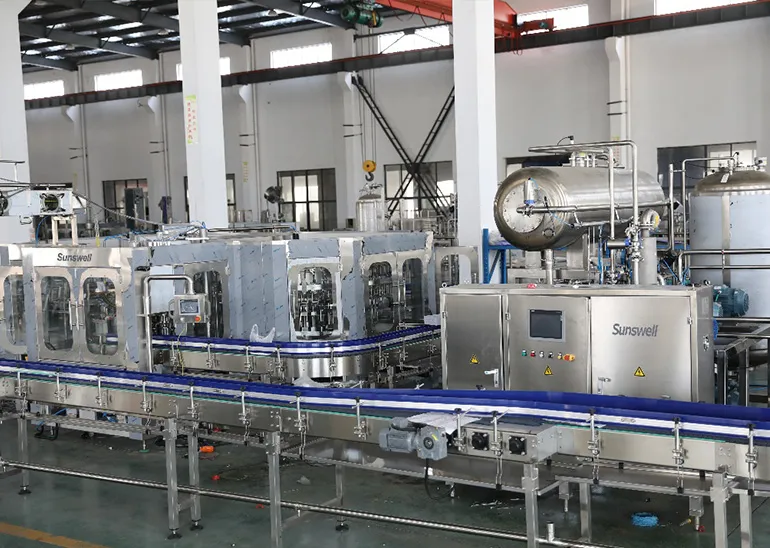
Vizit, 12,000BPH 1L Bottling Line with Combiblock for CSD, Kazakhstan
Country: Kazakhstan
Product: PET Bottled Carbonated Soft Drinks
Capacity: 12000BPH (1L)
Solution:Carbonated Drinks Production Line
Read More + -
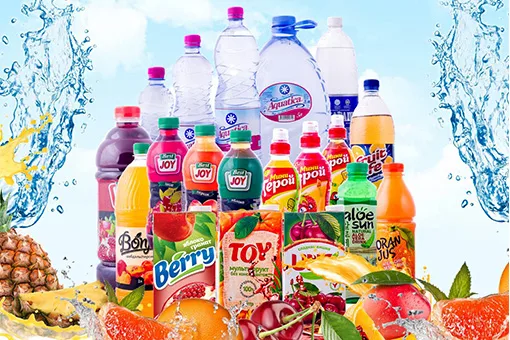
Rauan, 8 Sets of Bottlingand Canning Lines from 12,000-24,000BPH for Water, CSD and Juice, Kazakhstan
Country:Kazakhstan
Product: PET Bottled Sparkling Water, Canned Soft Drink, Canned Tea
Capacity: 25000CPH (250ml)
Solution:Three Lines,7000BPH(1.5L), 15000CPH(330ml),15000CPH(450ml)
Read More +
Have a specific project in mind?
Tell us product, target BPH, bottle sizes and market. We reply with a draft layout, equipment list and lead time estimate.
Fill the inquiry form ↑