


Selection guide · Edible Oil
Edible Oil Filling Machine Selection Guide — Capacity, Bottle Size and Valve Type
Oil is filled by weight, not level. The right machine is set by container, viscosity and declared-weight tolerance.
5–30
t/h load cell range
1–20
L container range
3
Valve families: load cell, volumetric, piston
444+
Lines delivered
71+
Countries exported
Short answer: Edible oil is a viscous liquid filled by weight, not level, because it is sold and declared by weight. Load cell valves weigh each bottle and close at target net weight, which is the correct choice because a percentage error is a large absolute quantity in a 5–15 L container. Oil is usually filled warm to lower viscosity, and piston or large-flow volumetric valves handle the viscosity. Combiblock configurations put the blow-fill-cap block on PET bottles; larger jerry cans and drums run on separate fillers.
🎯 Key takeaways
- Oil is filled by weight (load cell), not level — sold by weight
- Warm filling lowers viscosity; piston or large-flow volumetric handle it
- Load cell immune to bottle and density variation
- Containers: PET 1–5 L, jerry can 5–20 L, drum
- Giveaway is material cost — accuracy pays for itself
- Combiblock for PET; separate filler for large containers
On this page
1. Why oil filling is a weight problem
Edible oil is a viscous liquid that is sold and declared by weight, not by volume, and that single fact drives the whole machine. A filling valve that fills to a level cannot guarantee the declared weight, because bottle volume varies and oil density shifts with temperature. A load cell valve weighs each bottle as it fills and closes at target net weight, which is the only principle that measures the delivered quantity directly. Everything else — valve choice, container size, cleaning — follows from that.
Oil is also not carbonated and not normally hot-filled at 85–88 °C the way juice is. It is filled warm enough to flow, which is a different and gentler temperature regime, and it is filled on PET bottles through a combiblock or on jerry cans and drums through separate fillers. The selection axes are output, container, viscosity and declared-weight tolerance.
Oil is filled by weight, not by level. If a quotation specifies a level-based filler for a weight-declared oil, the declared quantity will drift with bottle and temperature — choose load cell or volumetric instead.
Oil in PET has taken retail share from glass because PET is lighter, cheaper to ship and less fragile, while a screw cap and a good barrier keep the oil fresh. The filling machine choice follows the package: PET goes through a combiblock, glass through a rinser-filler-capper if a glass pack is used at all. Most new edible oil lines are PET, which is why the combiblock configuration dominates the retail segment.
2. Capacity and output
Edible oil lines are usually rated in bottles per hour at a named size, or in tonnes per hour for bulk. A load cell combiblock for PET runs roughly 6,000 to 24,000 BPH on 1–5 L, while a large-container line for jerry cans and drums is slower in BPH but moves more tonnes per hour because each container is large. Output falls as container size rises, for the same reason as every other product: more liquid per fill takes longer.
Viscosity also sets speed. Warm oil fills faster than cold, so the line is specified with the fill temperature, not just the grade. A line quoted on a thin oil at warm temperature will not hold that rate on a cold viscous grade, and the difference shows up as slower fills and more entrained air. State the grade and the temperature at quotation.
| Output measure | Typical range | Container | Note |
|---|---|---|---|
| BPH (PET 1–5 L) | 6,000–24,000 | PET bottle | Combiblock, load cell |
| BPH (jerry can 5–20 L) | 1,000–6,000 | Jerry can | Separate filler |
| t/h (bulk) | 5–30 | Drum / IBC | Load cell, high accuracy |
| Valve count | Set by BPH and size | All | Confirms rated speed |
Load cell filling needs the cell isolated from line vibration, because a cell that feels the carousel moving cannot weigh accurately at speed. That isolation is part of the machine design and part of the installation — a cell on a poorly founded floor will not hold accuracy no matter how good the valve is. State the floor condition at quotation so the mount is specified correctly.
Container size also changes the economics of the line. A 5 L bottle and a 1 L bottle at the same BPH move five times the oil, so a line rated for 5 L that you run mostly on 1 L is five times over-built on throughput and under-built on bottle count. Pick the rated size to the container you sell most, and treat the others as within-range variants rather than the headline, because the valve count and the hold tank are set to the named size, not to the full range at once.
3. Valve type follows the container and accuracy need
Load cell is the default for weight-declared oil, because it measures net weight directly and is immune to empty-bottle weight scatter and density shift. Volumetric is used where volume dosing is acceptable and a large flow path handles the viscosity. Piston valves handle the highest viscosity and pulpy or flavoured oils where a flow meter would foul.
| Valve | Measures | Best for | Relative cost |
|---|---|---|---|
| Load cell | Net weight | Weight-declared oil, 5–15 L | Highest |
| Volumetric (large flow) | Volume | Lower-value oil, thin grades | Moderate |
| Piston | Volume by displacement | High viscosity, pulp | Moderate–high |
| Gravity / mechanical | Level | Rarely for oil — not weight-accurate | Lowest |
The valve decision for the combiblock context is in combiblock filling valve types, and capacity bands by product are in combiblock capacity selection. For edible oil specifically, the block configuration is in combiblock for edible oil.
Heating the oil costs energy, and that cost recurs every shift, so the temperature control is worth specifying rather than over-building. Hold the oil at the lowest temperature that fills cleanly, insulate the hold tank, and recover heat where the process allows. The saving is small per bottle and large per year at volume.
4. Temperature and viscosity
Warm filling is standard for edible oil because viscosity falls with temperature and the product flows, fills and de-aerates better. The oil is held or heated to a controlled temperature before the filler — not to a sterilising temperature, just warm enough to pump and fill cleanly. The exact figure depends on the grade (olive, sunflower, palm and blends differ), so it is a quotation input, not a guess.
Filling too cold slows the line and traps air; filling with poor temperature control lets density drift change the delivered weight even on a weight-dosed line, because the load cell weighs mass but the customer judges the product by volume at home. Keep the fill temperature stable and the line will hold both speed and weight.
| Condition | Effect | What to specify |
|---|---|---|
| Too cold | Slow fill, entrained air | Heat to grade-specific temperature |
| Stable warm | Fast fill, clean weight | Controlled hold temperature |
| Variable | Weight drift with density | Temperature control at filler inlet |
| High viscosity grade | Needs piston or large flow | Valve sized for grade |
5. Container size and format
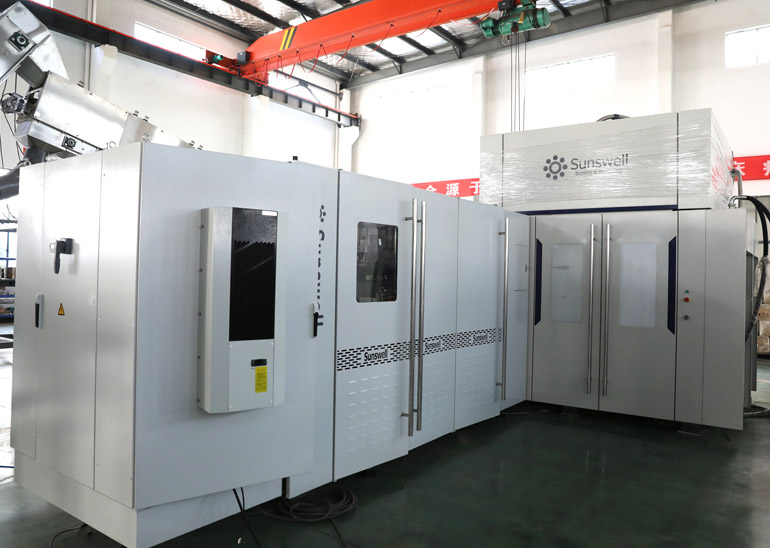
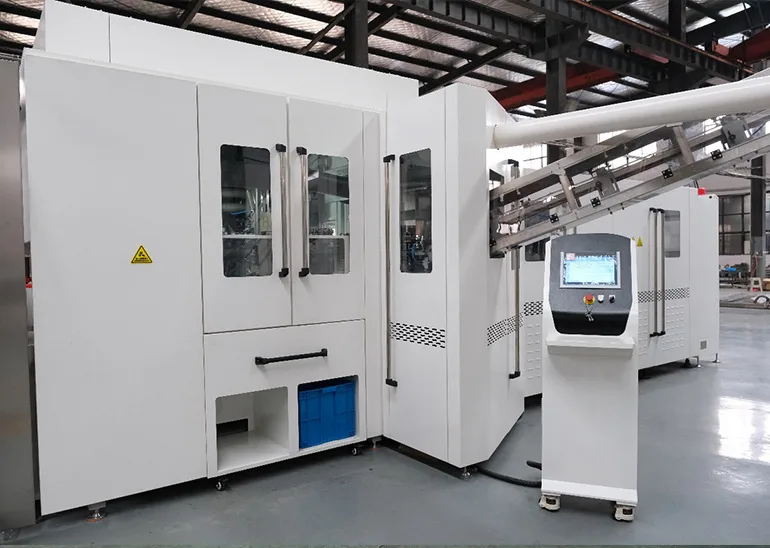
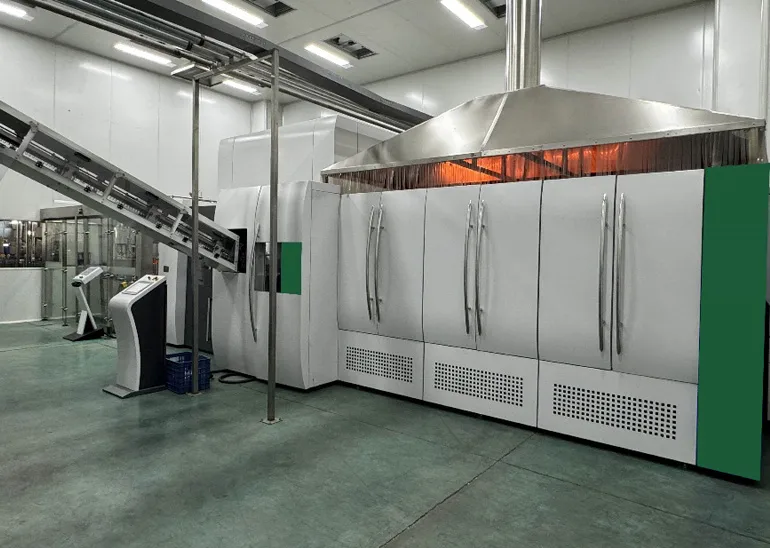
Retail PET bottles (1–5 L) run on a combiblock with load cell filling. Jerry cans (5–20 L) and drums run on separate fillers, because they are not blown from preforms and the block does not apply. A plant selling both PET and jerry can therefore runs two machines, usually at very different speeds, and should plan the building for both rather than over-size one.
| Container | Machine | Valve | Notes |
|---|---|---|---|
| 1–5 L PET | Combiblock | Load cell | Blown and filled in one block |
| 5–20 L jerry can | Separate filler | Load cell / volumetric | Not blown |
| Drum / IBC | Separate filler | Load cell | Bulk, highest accuracy need |
| Glass (premium) | Rinser-filler-capper | Load cell | If glass pack is used |
Closure matters too: a PET bottle takes a screw cap, a jerry can takes a spout cap, a drum takes a bung. The capper is selected for the closure, and for a combiblock the cap is applied in the block. State every container and closure at quotation so the line is specified for the real range.
Weight accuracy is also a compliance item, not just a cost item. Markets that declare oil by weight expect the labelled weight to be present in the bottle, and a line that drifts below it is a legal problem, not a margin one. Load cell filling with a calibration routine is the defensible position; a level-filled line cannot make that claim at all.
A practical point often missed is the capper's role in oil freshness. A loose or poorly applied closure lets the oil oxidise and the labelled weight drift on the shelf, so the closure is part of the quality spec, not just a cap on the bottle. State the closure and its torque tolerance at quotation so the capper is specified to protect the product the line was built to weigh accurately, and include closure checks in the routine checks alongside the calibration log.
6. Accuracy and giveaway
Giveaway is the cost of overfilling to stay above the declared weight. On oil it is material, because oil is higher value per litre than water and the containers are large. A small percentage error on a 15 L container is a large absolute quantity of product given away on every bottle. Load cell filling removes most of that error by weighing to target, and the payback on the valve premium is the recovered giveaway across the run.
Calibration discipline matters. A load cell drifts slowly, which is the dangerous kind of error because no one notices until the log is checked. Set a calibration interval at commissioning, record every check, and treat the log as production data. A plant that calibrates and records can prove its declared weight; a plant that does not is guessing about its own giveaway.
Buy the accuracy the product value justifies. A commodity oil plant that buys volumetric to save capex will pay for that decision on every container; a premium oil plant that skips load cell is giving away its margin by the litre.
7. Choosing your configuration
Five inputs settle most of the specification:
- Declared quantity. Weight declaration points to load cell; volume only if the market allows it.
- Container range. PET, jerry can, drum or glass — each is a different machine family.
- Oil grade and temperature. Viscosity and fill temperature set the valve and the heater.
- Target output at your main size. This sets valve count; confirm on the drawing.
- Closure. Screw, spout or bung sets the capper; state every closure.
Once the valve family and the container are fixed, the remaining choices are configuration tier and automation, compared in edible oil machine configurations and price levels. The questions buyers ask most are collected in the edible oil filling FAQ.
Match the valve to the declaration, then size the line to the container. A load cell valve on a 1 L bottle is overspec; the same valve on a 15 L drum is the only honest choice.
Where oil is one product among several, the filler range is in edible oil filling machines, and complete lines are scoped in the edible oil production line solution.
Frequently asked questions
How is edible oil filled — by volume or by weight?
By weight. Oil is sold and declared by weight, and a load cell valve weighs each bottle continuously and closes at target net weight. Volume dosing is used on lower-value or lower-accuracy lines, but weight is the correct choice because a percentage error on oil is a large absolute quantity, especially in a 5–15 L container.
Why is oil filled warm?
Warm oil is less viscous and fills faster with less aeration and fewer trapped bubbles. The product is heated in-line or held at a controlled temperature before the filler, then filled. The exact temperature depends on the oil grade, so confirm it with the supplier at quotation.
Which valve do I need for a 5 L or 15 L container?
A load cell valve for weight accuracy, or a volumetric valve with a large flow path for viscous product. Above about 5 L the load cell is the usual choice because the absolute giveaway at a percentage error grows with container size. Piston valves handle the highest viscosity.
Can a combiblock fill edible oil?
Yes, for PET bottles. A blow-fill-cap block for edible oil uses load cell filling on PET bottles from 1 to 5 L or more. Larger jerry cans and drums run on separate fillers because they are not blown from preforms, so the block does not apply to them.
Does oil foam during filling?
Less than carbonated or hot-fill product, but aeration still matters for quality and headspace. Oil is filled bottom-up or through a diving fill tube to keep the stream below the surface, which limits entrained air. Foam at the neck is a sign of too fast a fill or a wrong tube.
How accurate is load cell filling for oil?
It is the most accurate principle available, because it measures net weight directly and compensates for empty-bottle weight variation and density shift with temperature. Accuracy matters more for oil than for water because oil is higher value per litre and sold by weight.
What container sizes are typical?
PET bottles from 1 to 5 L for retail, jerry cans from 5 to 20 L for foodservice and distribution, and drums for bulk. The filler is specified for the size range you will run; PET and jerry can are different machine families, so state both if you sell both.
Is training included with an oil line?
Operator and maintenance training is delivered during commissioning and should be written into the contract with defined duration and scope. It covers running, cleaning, calibration and first-line fault diagnosis, in the languages your team uses.
About the author
Written by the Sunswell engineering team — led by Howie SUN, Founder & CEO, with 14 years in filling and blow-moulding equipment R&D and turnkey project delivery across 71+ countries.
Last reviewed: 2026-08-10 · Reviewed by Sunswell engineering team
Ask our engineering team →Recommend Products
Have a specific project in mind?
Tell us product, target BPH, bottle sizes and market. We reply with a draft layout, equipment list and lead time estimate.
Fill the inquiry form ↑