


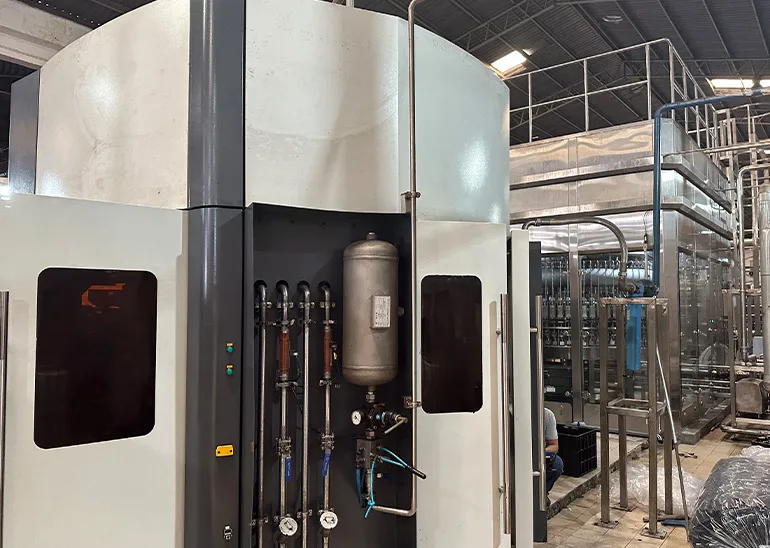
Line configuration · CSD
Carbonated Soft Drinks — Line Configuration Options and Investment Levels
A CSD line is a water plant, a syrup room and a carbonation system feeding an isobaric filler — configured at investment levels that follow output and bottle strategy. This page compares the configurations and where each one pays back.
12,000–24,000
BPH typical band
24,000
CPH canning case
CO₂
Counter-pressure filling
444+
Lines delivered
71+
Countries exported
Short answer: CSD configurations run from a standalone isobaric filler fed by separate water and syrup systems, to a full blow-fill-cap combiblock with integrated carbonation. The filler is isobaric in every configuration — counter-pressure is non-negotiable for carbonated product — and the investment levels differ in output, integration and footprint. The 12,000–24,000 BPH band covers most PET CSD projects.
🎯 Key takeaways
- Every CSD configuration uses an isobaric counter-pressure filler — no exceptions.
- Standalone configurations keep flexibility and bought-in bottle options.
- Combiblocks integrate blowing, filling, capping and carbonation for volume plants.
- The valve tier (mechanical vs semi-electric) sets consistency within any configuration.
- Investment follows output and integration; size to year-one sales.
On this page
1. The configuration levels
CSD lines configure at three recognisable levels: standalone (an isobaric filler fed by separate water, syrup and carbonation systems), integrated (monobloc or linked machines with shared controls), and full combiblock (blow-fill-cap in one carousel with integrated carbonation). The filler is isobaric in all three — counter-pressure is a requirement of the product, not a configuration choice.
| Level | Configuration | Best fit |
|---|---|---|
| Standalone | Isobaric filler + separate water/syrup | Flexible, bought-in bottles |
| Integrated | Linked machines, shared controls | Mid output, tighter footprint |
| Combiblock | Blow-fill-cap + carbonation in one block | Volume PET, light bottle |
Investment rises with integration, and the payback shows up as footprint, labour and bottle weight — not as a better drink.
2. Standalone isobaric filler
A standalone isobaric filler takes pre-carbonated product from the water/syrup/carbonation skid and fills bottles bought in or blown elsewhere. It is the most flexible configuration: formats change with change parts, and the plant can run PET, glass or cans through different infeed handling. Output covers the low-to-mid band.
For a plant that does not blow its own bottles, or that runs several packages, the standalone filler is the honest choice — the flexibility is real, and the footprint is the price.
3. Integrated and combiblock
An integrated line links the machines with shared infeed and controls, tightening footprint and labour versus standalone. The full combiblock takes it further: the bottle is blown, filled and capped in one carousel, with carbonation feeding the filler directly — the lightest bottle, the smallest footprint and the lowest labour per bottle at volume.
Above roughly 12,000 BPH with stable PET formats, a combiblock is usually the lower-cost configuration. Below that, standalone flexibility often wins.
The trade is format lock-in and bought-in bottle loss: a combiblock blows its own bottles and is set around the main format.
4. The valve tier
Within any configuration, the valve tier sets consistency: mechanical isobaric valves are the proven, cost-effective norm; semi-electric valves add flow metering for tighter repeatability and higher speeds. Load-cell weighing exists but is rare in CSD — carbonated product is metered by volume and pressure, not by weight.
Choose the tier on the speed and the fill tolerance you must hold. A mechanical isobaric filler is still the majority of the world's CSD, and there is nothing second-rate about it.
5. Water, syrup and carbonation
The front end is where the drink is made: water treatment and deaeration, the syrup room and proportioner, the cooler and the carbonator. It is shared across configurations — the filler changes, the front end is the same engineering — and it is sized on the line output and the recipe.
Under-sizing the front end is the classic CSD mistake: a 24,000 BPH filler fed by a 12,000 BPH water and carbonation skid runs at half speed, and the bottleneck is invisible in the brochure.
6. Matching to output
| Output | Configuration that fits | Valve tier |
|---|---|---|
| < 8,000 BPH | Standalone | Mechanical isobaric |
| 8,000–16,000 BPH | Integrated or standalone | Mechanical or semi-electric |
| 16,000–24,000+ BPH | Combiblock / integrated | Semi-electric |
The bands are guides, not rules — format stability and bottle strategy shift them. What is not negotiable is the isobaric filler and the sized front end.
7. The canning option
Cans change the configuration: a canning line counts in cans per hour, adds a seamer at the filler discharge, and often a nitrogen doser for non-carbonated or lightly carbonated product. Sunswell's delivered projects include a 24,000 CPH canning line — the canning front end is the same water, syrup and carbonation skid, with the seamer as the differentiator.
Decide the package mix before the configuration is quoted — a filler built around PET necks differs from one feeding a seamer.
Frequently asked questions
Is isobaric filling optional?
No. Carbonated product must be filled under counter-pressure or it foams and loses gas. Isobaric filling is a requirement, not a configuration option.
Standalone or combiblock for CSD?
Standalone for flexibility and bought-in bottles; combiblock for volume PET with stable formats, roughly above 12,000 BPH.
What valve tier do I need?
Mechanical isobaric is the proven norm; semi-electric adds repeatability for higher speeds. Choose on speed and fill tolerance.
Why is the front end so important?
The water, syrup and carbonation skid makes the drink. Under-size it and the filler starves at the rated output.
Can a CSD line run cans?
Yes — with a seamer at the filler discharge and, for some products, a nitrogen doser. Delivered example: a 24,000 CPH canning line.
What scale is typical for a new CSD plant?
12,000–24,000 BPH covers most PET projects. Size to year-one sales and the format list.
About the author
Written by the Sunswell engineering team — led by Howie SUN, Founder & CEO, with 14 years in filling and blow-moulding equipment R&D and turnkey project delivery across 71+ countries.
Last reviewed: 2026-08-28 · Reviewed by Sunswell engineering team
Ask our engineering team →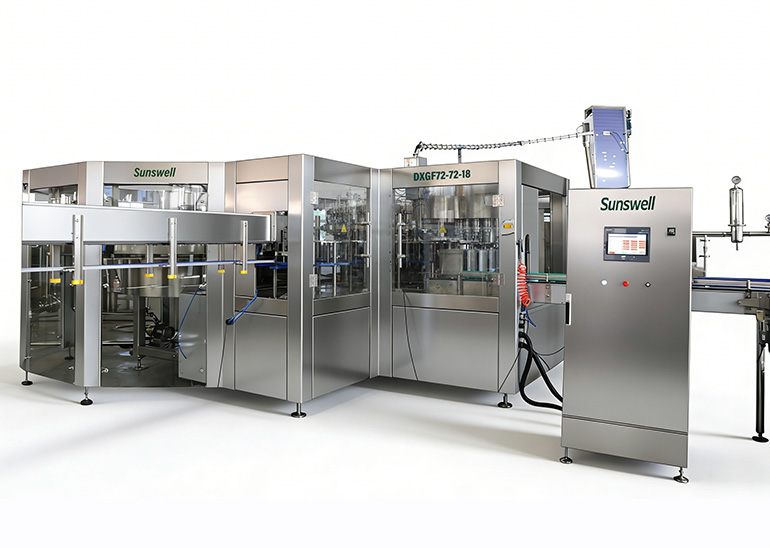
Project references
-

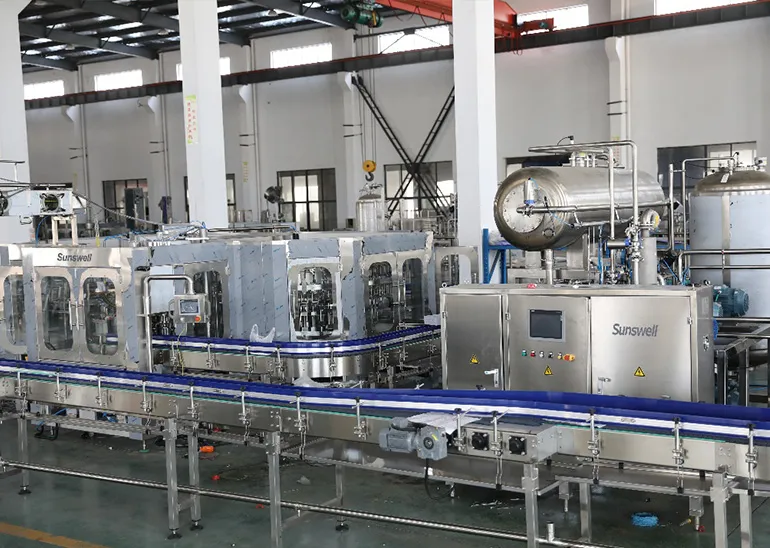
Vizit, 12,000BPH 1L Bottling Line with Combiblock for CSD, Kazakhstan
Country: Kazakhstan
Product: PET Bottled Carbonated Soft Drinks
Capacity: 12000BPH (1L)
Solution:Carbonated Drinks Production Line
Read More + -
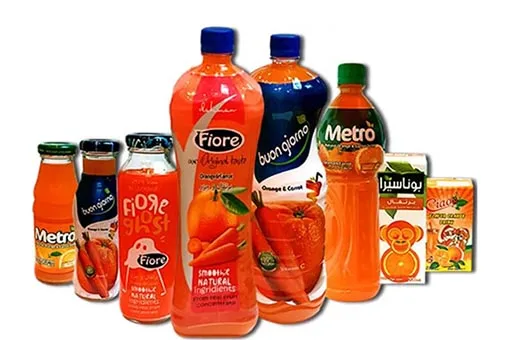
Dahman, 24,000CPH Canning Line for CSD, Syria
Country: Syria
Product: Aluminum Canned Carbonated Soft Drinks
Capacity: 24000CPH (250ml)
Solution:Carbonated Drinks Production Line
Read More +
Have a specific project in mind?
Tell us product, target BPH, bottle sizes and market. We reply with a draft layout, equipment list and lead time estimate.
Fill the inquiry form ↑