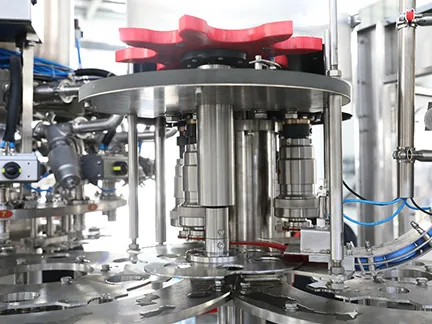
Selecting the right filling technology is one of the most critical engineering decisions in bottled water and beverage production. The filling stage directly affects product consistency, production efficiency, cost control, and overall equipment effectiveness (OEE). For factory managers and decision-makers, understanding the technical differences between volumetric filling and gravity filling is essential to optimizing both capital investment and long-term operational performance.
In this comprehensive filling machines comparison, we will examine the working principles, advantages, limitations, and application suitability of volumetric and gravity filling systems. By the end of this article, you will be able to determine which solution best fits your beverage production requirements.
Gravity filling relies on the natural force of gravity to transfer liquid from a tank into bottles. The liquid flows downward into the container until it reaches a predefined level, often controlled by a return air tube or level-control mechanism.
Key characteristics:
Suitable for low-viscosity liquids
Typically used in non-carbonated beverages
Level-based filling accuracy
Simple mechanical structure
Gravity filling is commonly used in bottled water, mineral water, and certain juice products without pulp.
Volumetric filling measures and dispenses a precise, predetermined volume of liquid into each bottle. Measurement can be achieved using:
Flow meters
Piston systems
Servo-controlled pumps
Unlike gravity filling, volumetric filling controls the exact quantity of liquid rather than the fill level.
Key characteristics:
Volume-based accuracy
Suitable for various viscosities
Higher control precision
Advanced automation capability
Volumetric systems are widely applied in premium beverages and products requiring strict volume compliance.
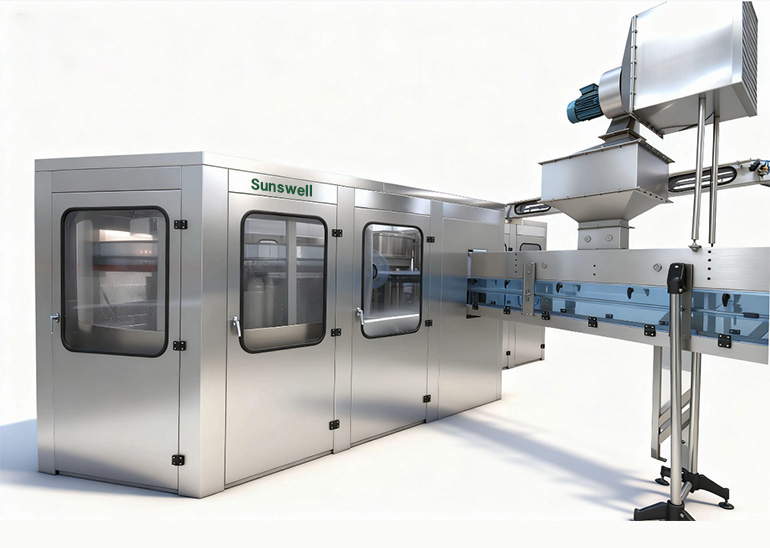
Gravity systems provide consistent fill levels, which enhances shelf appearance. However, actual liquid volume may slightly vary due to:
Temperature fluctuations
Density changes
Bottle dimensional variations
For standard bottled water production, this variation is usually within acceptable tolerance.
Advantages:
Uniform fill height
Visually appealing packaging
Limitations:
Volume inconsistency under temperature changes
Volumetric filling ensures each bottle contains a precise measured amount of product, regardless of bottle shape or minor variations.
Advantages:
High volume precision
Reduced product giveaway
Better regulatory compliance
Limitations:
Higher system complexity
Greater initial investment
For large-scale beverage manufacturers focused on cost optimization, reducing product overfill can significantly improve profitability.
Gravity filling machines have a relatively simple structure:
Fewer electronic components
Less sophisticated measurement systems
Lower mechanical complexity
This simplicity translates to:
Lower maintenance costs
Easier operator training
Faster troubleshooting
For factories prioritizing reliability and cost control, gravity filling remains a dependable solution.
Volumetric systems require:
Flow meters or piston assemblies
Advanced PLC programming
Calibration systems
Although more complex, they offer superior control and data integration.
Maintenance considerations:
Regular calibration required
More spare parts inventory
Higher technical expertise needed
However, modern automation technologies have significantly improved reliability and reduced downtime risks.
Selecting between volumetric filling and gravity filling depends largely on product characteristics.
Recommended: Gravity Filling
Reasons:
Low viscosity
Minimal foaming
Cost-sensitive production
High-speed production line compatibility
Gravity systems provide sufficient accuracy while maintaining lower operational costs for standard bottled water factories.
For carbonated drinks, pressure-based volumetric systems are often preferred due to:
CO₂ retention requirements
Precise volume control
Foam management
Gravity filling is generally not suitable for carbonated beverages.
For beverages containing pulp or varying densities:
Recommended: Volumetric Filling
Reasons:
Density variations affect gravity filling consistency
Precise portion control required
Premium product positioning
Volumetric systems maintain dosage consistency regardless of liquid composition.
For premium bottled beverages where:
Regulatory compliance is strict
Cost per milliliter is high
Brand reputation depends on consistency
Volumetric filling offers measurable economic and quality advantages.
Both gravity and volumetric filling machines can achieve high production speeds. However:
Gravity systems often dominate in ultra-high-speed bottled water lines.
Volumetric systems excel in flexible, multi-SKU production environments.
Modern volumetric filling integrates seamlessly with:
Smart factory systems
Real-time data analytics
Production monitoring dashboards
This enhances transparency and decision-making for plant managers.
Gravity systems, while simpler, can also integrate with automation but may offer fewer data insights.
Gravity filling machines: Lower upfront cost
Volumetric filling machines: Higher capital expenditure
Gravity filling may lead to slight product overfill, increasing material cost over time.
Volumetric filling reduces product giveaway, potentially offsetting higher initial investment in high-volume operations.
For large-scale factories with tight profit margins, volumetric filling may provide faster ROI through precise volume control.
For small to medium bottled water plants, gravity filling offers strong cost-performance balance.
| Criteria | Gravity Filling | Volumetric Filling |
|---|---|---|
| Accuracy Type | Level-based | Volume-based |
| Initial Cost | Lower | Higher |
| Maintenance | Simpler | More complex |
| Best For | Bottled water | Juice, premium beverages |
| Volume Precision | Moderate | High |
| Product Giveaway | Slightly higher | Minimal |
This filling machines comparison highlights that there is no universally “better” option—only the best fit for your specific production objectives.
When deciding between volumetric filling and gravity filling, factory managers must evaluate:
Product viscosity and composition
Production capacity
Regulatory requirements
Cost sensitivity
Automation goals
Long-term scalability
For standard bottled water production lines focused on cost efficiency and high-speed output, gravity filling remains a reliable and economical solution.
For diversified beverage portfolios, premium products, and strict volume compliance requirements, volumetric filling offers superior precision and financial control.
Ultimately, the optimal choice depends on aligning filling technology with your operational strategy and market positioning.
At Sunwell, we specialize in advanced filling technologies tailored to bottled water and beverage manufacturers worldwide. Whether you require high-speed gravity filling systems or precision-driven volumetric filling solutions, our engineering team provides:
Customized production line design
Energy-efficient filling systems
Intelligent automation integration
Comprehensive after-sales support
If you are evaluating filling equipment for a new project or upgrading your existing production line, Sunwell can help you determine the most suitable technology for your product.
Contact Sunwell today to receive a professional technical consultation and customized proposal for your beverage production needs.



 +86 13921964455
 [email protected]

A2 Dongjiu Industrial Park, 30 East Jintang Road, Tangshi, Zhangjiagang, Jiangsu 215600, China