
| Valve type | Piston dosing, or load cell for high-value product |
| Viscosity | Up to 10,000 cP with the right bore |
| Products | Sauces, pastes, pulp juice, honey, detergents |
| Package | PET, glass, jar, pouch by configuration |
| Key control | Dose repeatability, drip-free cut-off, product temperature |
| Cleaning | CIP circuit with a bypass for high-solid product |
A piston draws a fixed volume into a cylinder and pushes it out, so the dose does not depend on how fast the product flows. A gravity or pressure valve depends on flow time, and thick product makes that time unpredictable. For anything above a few thousand cP, the piston is the simpler answer.
A suck-back stroke at the end of the dose pulls the tail back into the nozzle. The stroke length, the nozzle bore and the product viscosity have to be matched, and they change when the recipe changes. Drip is a setting problem before it is a nozzle design problem.
| Product type | Dosing | Main risk |
|---|---|---|
| Smooth sauce | Piston | Drip at the nozzle |
| Chunky sauce | Piston with large bore | Bridging at the valve seat |
| Honey and syrup | Piston or load cell | Stringing and slow cut-off |
| Pulp juice | Piston | Fibre settling in the bowl |
Sizing for this duty runs through the Edible Oil Load Cell, where the valve count is set out.
Dose volume, piston stroke, suck-back, conveyor speed and often the nozzle set. A recipe change on a piston line is mostly mechanical, so it takes longer than a recipe change on a volumetric water line. Two very different products usually justify two fillers rather than one flexible one.
Sizing for this duty runs through the Filling Machine for Viscous Product, where the valve count is set out.
From the largest particle, then from the dose volume. The bore has to pass the piece without bridging, and the valve seat has to close on the product rather than on the liquid around it. Speed comes last.
The same question is worked through from another angle in Key Advantages of Piston Filling Machines for Viscous Products.
Seal wear and product temperature. A worn seal leaks past the piston and the dose falls gradually; a colder product fills the cylinder less completely. Both show as a slow downward trend, which is why the sample is weighed, not judged by eye.
Up to about 10,000 cP with the correct bore and inlet pressure. Above that, the product usually needs a heated hopper or a different pumping principle, and the line is specified around the product rather than the machine.
Most often a worn piston seal or a falling product temperature. Both reduce the actual volume delivered per stroke. Check the seal and log the product temperature before adjusting the stroke.
It needs a cleaning circuit designed for the product. High-solid product needs a pre-rinse and a bypass; a low-solid sauce may clean in place with the same circuit as a juice line.
The suck-back stroke is too short for the viscosity, or the nozzle bore is too large. Both are settings, and both change when the recipe changes.
Longer than on a water line, because the dose, the stroke and often the nozzle set change. Cleaning between incompatible products usually takes longer than the mechanical change.
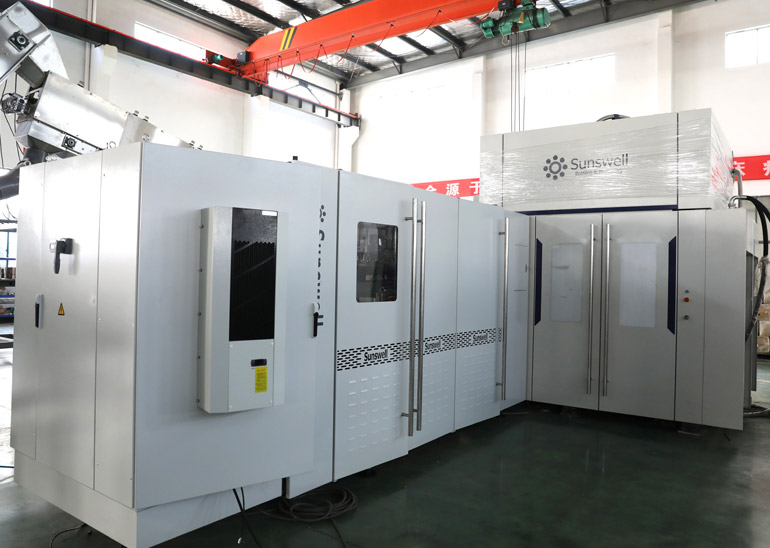
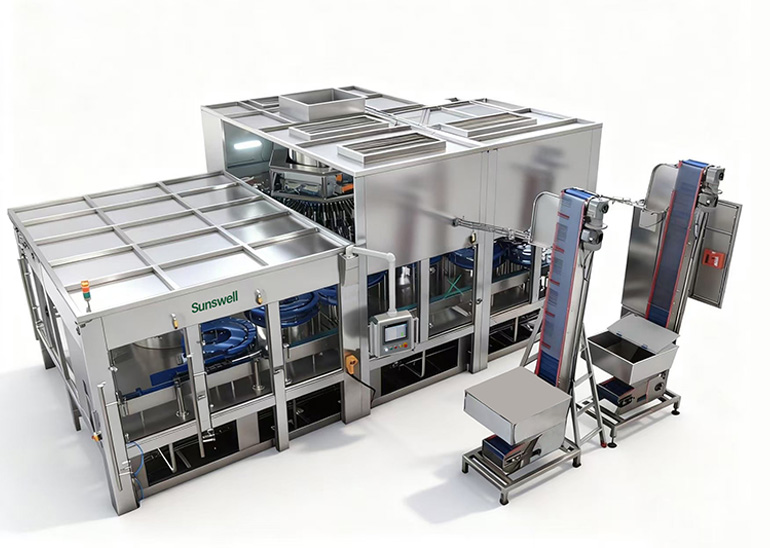
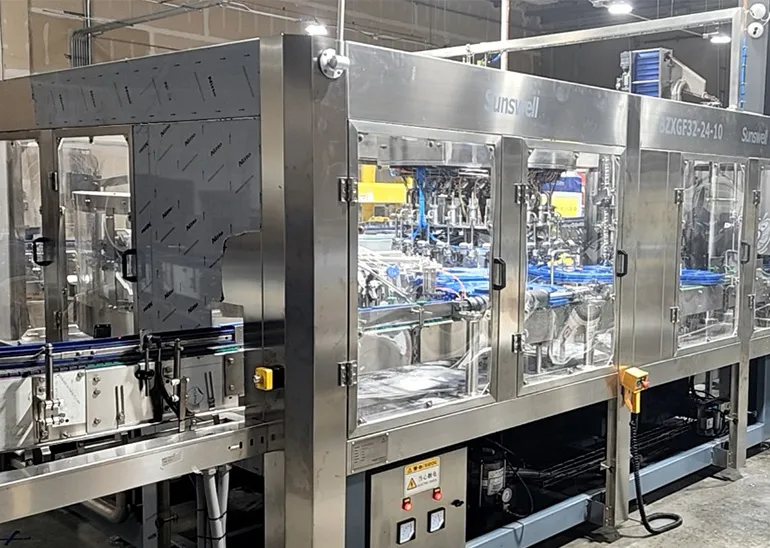
Country:Kazakhstan
Product: PET Bottled Sparkling Water, Canned Soft Drink, Canned Tea
Capacity: 25000CPH (250ml)
Solution:Three Lines,7000BPH(1.5L), 15000CPH(330ml),15000CPH(450ml)



 +86 13921964455
 [email protected]

A2 Dongjiu Industrial Park, 30 East Jintang Road, Tangshi, Zhangjiagang, Jiangsu 215600, China


