

| Where it fits | Still water, RO water, mineral water |
| Filling system | Gravity or volumetric valve |
| Capacity range | 5,000-48,000 BPH at 500 ml |
| Container range | 200 ml to 16 L, by configuration |
| Material | SUS 304 product contact, CIP-ready |
| Line scope | Treatment, blowing, filling, capping, labelling, packing |
Raw water, neck finish and the filler-capper match decide more about a water line than its BPH. Most of the meeting goes on BPH; the other two get a fraction of the time. Rinser clamps and capping heads are cut for one neck finish; a 1 mm thread change means new change parts rather than a new machine.
This water filling line is specially designed for cylindrical and square PET bottles from 3 to 15 liters, ideal for purified water, mineral water, RO water, drinking water, and even certain alcoholic beverages.
Gravity filling holds a level in a rigid bottle and costs least per valve. Volumetric filling doses a fixed volume into a chamber, so it holds accuracy across 3 L, 5 L and 10 L formats without changing the head. Isobaric filling is for carbonated product only, because it keeps CO2 in solution under counter-pressure. A still water line never needs it.
Each filling valve is made of SUS316L stainless steel and moves up and down via a valve lifter.
| Filling principle | Best for | Watch out for |
|---|---|---|
| Gravity | Still water, one rigid bottle size | Thin-wall bottles deform under head pressure |
| Volumetric valve | 3-15 L and mixed formats | Valve wear shows as slow drift, not a sudden error |
| Isobaric | Carbonated water only | Needs counter-pressure, so slower per valve |
| Load cell | Oil and high-value liquid | Slower cycle, higher cost per valve |
A different bottle format means a different unit; see the Blow-fill-cap Combibloc for Still Water.
Star wheels, guide rails, grippers, cap chute and filling recipe all change with the format. The parts are not the cost; the time is. Two formats on one line typically cost 40-90 minutes per switch, which is why the production factor falls from about 0.85 to 0.70 and why a second small line is sometimes cheaper than one flexible line.
This design not only guarantees clean bottles with no dead zones, but also reduces water usage by up to 20%, supporting sustainable production.
The specification sheet for the Gravity Filling Machine for Still Water carries the utility figures quoted here.
A lighter bottle is less rigid, so it deforms more under the filling head and grips differently in the star wheels. The filler may need a different neck handling and a lower contact pressure. Lightweighting is a bottle project that reaches into the filling line.
The rinser uses a patented flip-over and double-open bottle clamp made of SUS304 stainless steel—durable, hygienic, and food-grade safe.
The same question is worked through from another angle in Energy-Saving Strategies for Large Water Filling Lines.
200 bottles per minute. Divide BPH by 60. A 24,000 BPH line runs at 400 bottles per minute, which is why filler and packer have to be matched rather than bought separately.
Yes, with change parts: star wheels, guide rails, grippers and a filling recipe. Budget 40-90 minutes per switch and expect the production factor to drop from about 0.85 to 0.70.
Gravity holds a fill level, so accuracy depends on bottle geometry. Because volumetric filling doses by chamber volume, accuracy holds across bottle sizes. For one rigid bottle size, gravity is enough; for 3-10 L or mixed formats, volumetric is safer.
Commercial practice is a stated band per bottle size, typically checked by weight at the filler outlet. The band belongs in the acceptance protocol. A line without a written tolerance will argue about it at commissioning.


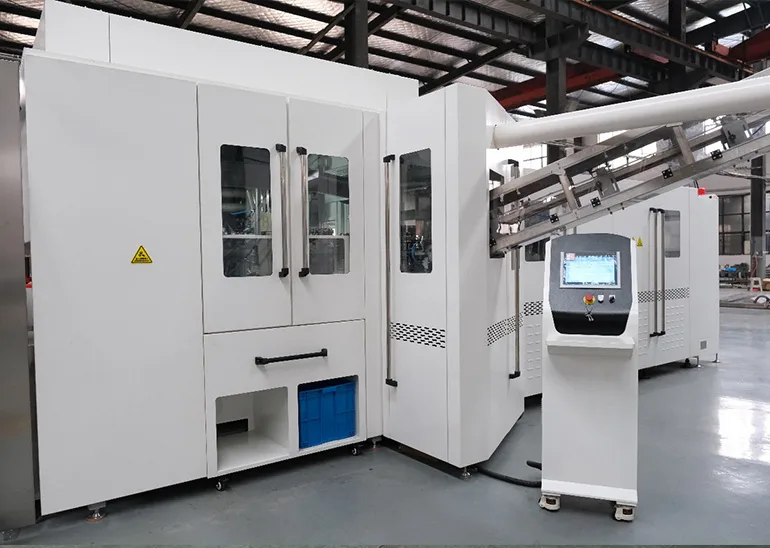
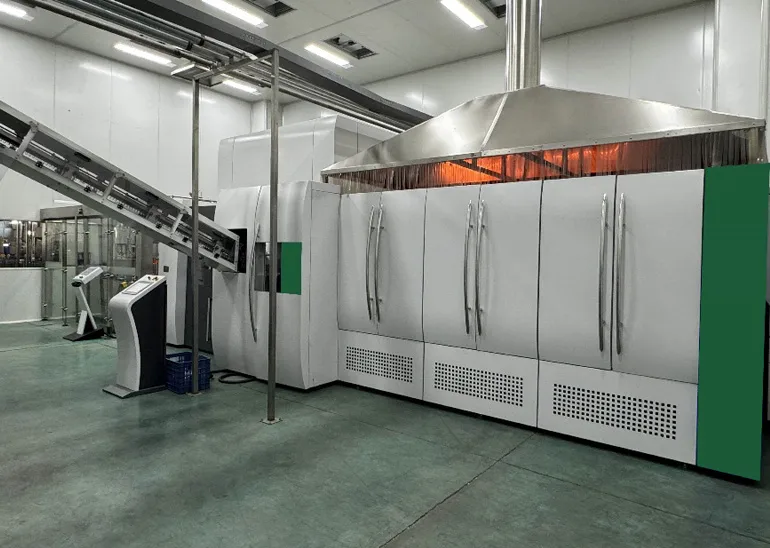
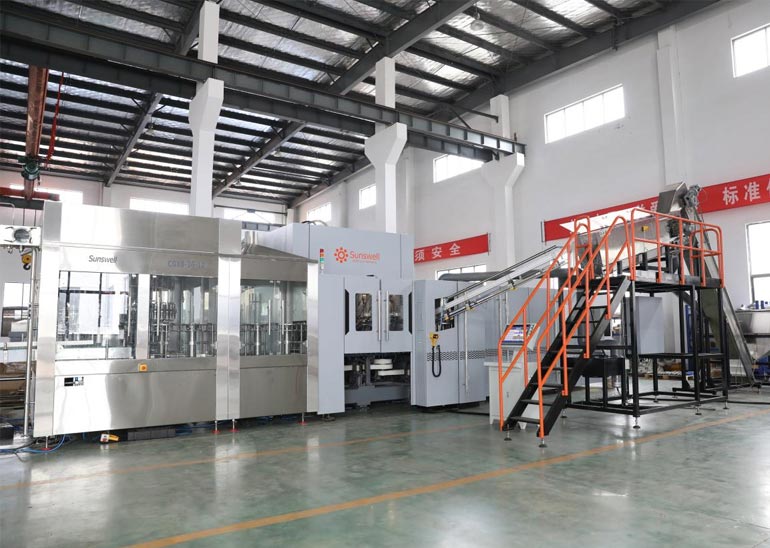
Country: Maldives
Product: PET Bottled Mineralized Water
Capacity: 24,000BPH (500ml); 2 Lines
Solution:Water Production Line
Country:Kazakhstan
Product: PET Bottled Sparkling Water, Canned Soft Drink, Canned Tea
Capacity: 25000CPH (250ml)
Solution:Three Lines,7000BPH(1.5L), 15000CPH(330ml),15000CPH(450ml)



 +86 13921964455
 [email protected]

A2 Dongjiu Industrial Park, 30 East Jintang Road, Tangshi, Zhangjiagang, Jiangsu 215600, China


