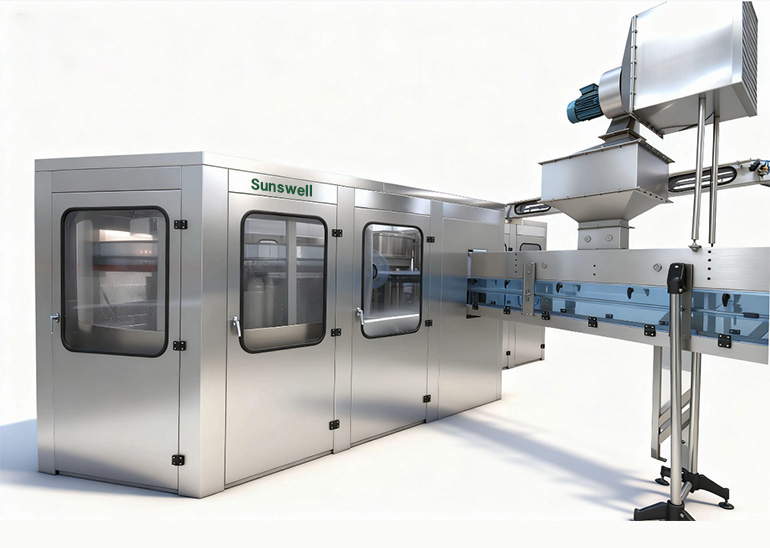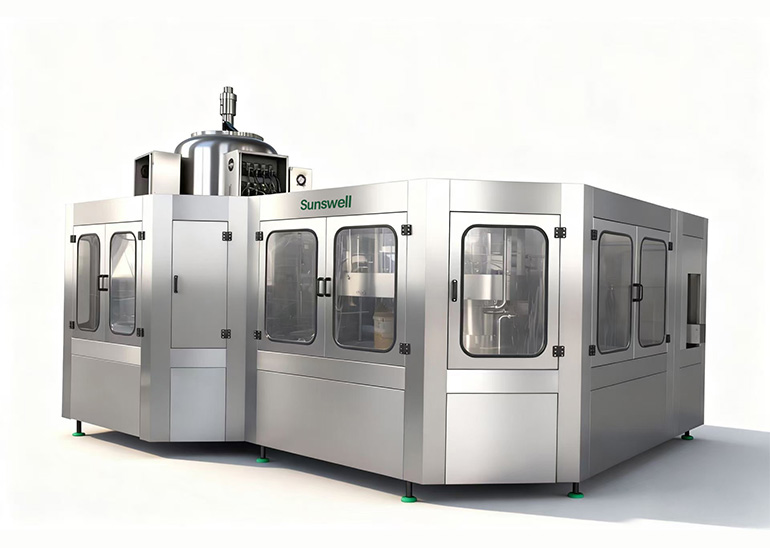
Recently, our team actively participated in the specialized digital training on "AI Inquiry Response and Skill Building" hosted by Alibaba.com's Accio Work. Grounded in the actual pain points and market demands of the liquid filling industry (covering drinking water, beverages, daily chemicals, and more), we have gained profound insights: AI and AIGC technologies have emerged as the core engines driving the industry to achieve higher quality, greater efficiency, and lean production.
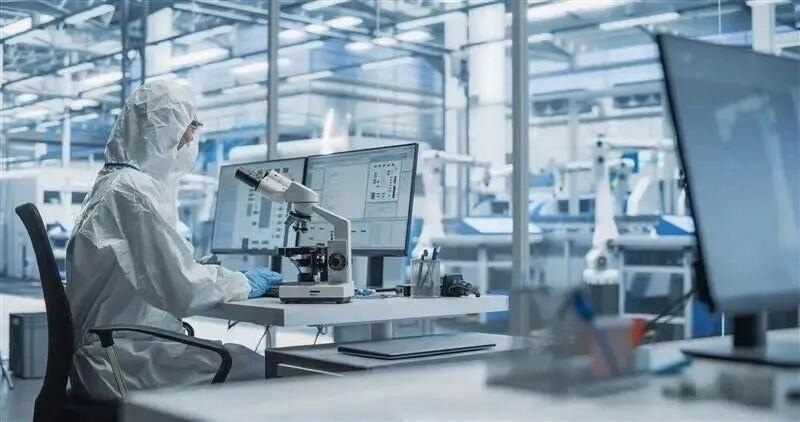
The traditional liquid filling production relies heavily on manual experience. Links including equipment operation and maintenance, fault diagnosis, quality control and staff training are commonly plagued by scattered data, lost empirical know-how, uncontrollable production losses and limited capacity efficiency. The experience-dependent production model is no longer able to adapt to the refined and intelligent market competition.
Against the backdrop of booming industrial digital transformation, industrial AIGC has demonstrated unique industrial value. Unlike consumer-oriented AI that only generates simple text and images, it acts as a full-process digital assistant for liquid filling production. It does not replace core production equipment or professional technicians, but integrates equipment data, maintenance records, production and quality documents to standardize data, systematize empirical experience and intellectualize operation and maintenance, delivering substantial value to customers’production and operation.
From the perspective of customer value, AI has achieved multi-scenario industrial application. It helps enterprises build exclusive equipment knowledge bases, lower the threshold for new employee training and reduce reliance on senior technicians. Through human-machine collaborative fault diagnosis, AI accurately locates potential problems, shortens equipment downtime, and effectively cuts production and material losses.
In terms of production and quality control, AI intelligently analyzes core indicators such as OEE, production loss and model change efficiency to facilitate lean management. Combined with machine vision and intelligent traceability systems, it optimizes traditional manual sampling inspection, realizing early warning and closed-loop management of filling defects, cap sealing errors, liquid level deviation and other quality abnormalities.
In addition, AI optimizes CIP/SIP cleaning processes to reduce water, electricity and steam consumption while strictly complying with food and daily chemical safety standards. It builds an AI standardized training system to cultivate professional talents efficiently, and supports new product R&D, packaging iteration and digital equipment verification, comprehensively lowering customers’ production and trial costs.
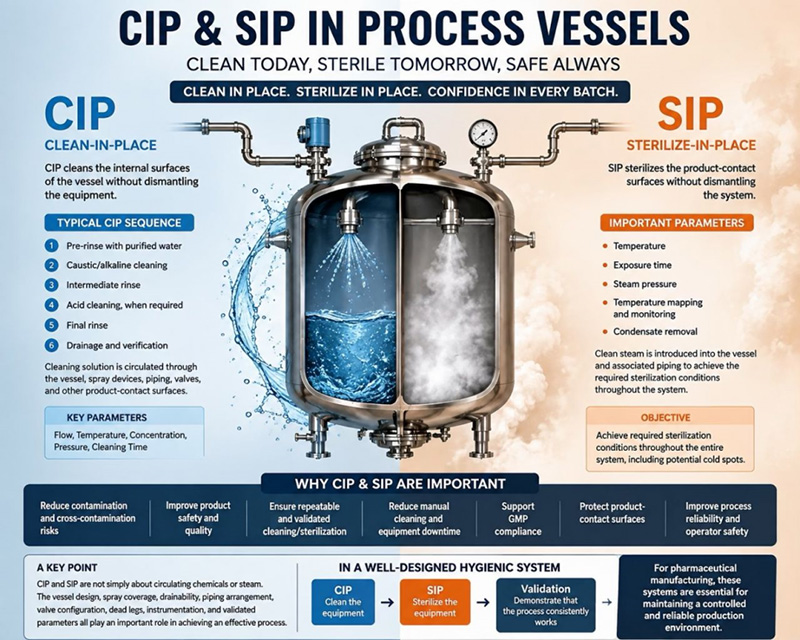
In terms of industrial compliance, AI is positioned only as an auxiliary tool. Core safety decisions involving sterilization parameters, product quality release and equipment start-stop are manually reviewed and confirmed by professionals, ensuring production safety through reliable human-machine collaboration.
The digital industry trend indicates that the liquid filling industry has entered a new competition stage featured by digitization, lean operation and knowledge-driven development. In the future, we will continue to deepen our layout in intelligent manufacturing for liquid filling industries. Centering on customers’ actual demands, we will iteratively upgrade digital solutions and empower production with lightweight and highly implementable intelligent technologies, helping customers transform from traditional experience-based production to cost-effective and high-quality intelligent manufacturing.
A: Often yes—cap and fill-level inspection alone prevents costly recalls; scale the camera count to speed.
A: No. Local dashboards work offline; cloud is for remote support and multi-site roll-ups.
A: Modestly—mostly software/config; choose a supplier with proven deployments to avoid custom-risk delays.
Explore Sunswell's technology or ask about a smart-line specification.



 +86 13921964455
 [email protected]

A2 Dongjiu Industrial Park, 30 East Jintang Road, Tangshi, Zhangjiagang, Jiangsu 215600, China