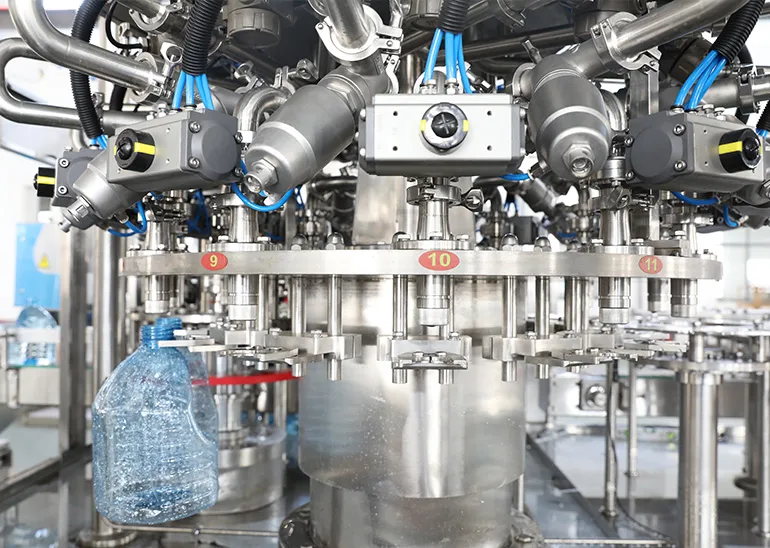
| What is included | Filling, capping and closing equipment |
| Filling principles | Gravity, volumetric, isobaric, piston, load cell |
| Capacity range | 2,000-48,000 BPH by configuration |
| Accuracy basis | Volume, weight or fill level |
| Wetted parts | SUS 304 product contact, CIP-ready |
| Key control | Fill accuracy, closure integrity, CIP time |
The product fixes the filling principle; output only fixes the size. Still liquid at a steady density runs gravity or volumetric; carbonated product needs isobaric; thick product with solids needs a piston; product sold by weight runs a load cell. Fix the product first; a machine chosen before it is a machine chosen twice.
Four variables sit behind a fill number: the dosing principle, the product temperature, the bottle geometry, and the condition of the valve or piston seal. A machine that holds its tolerance on the factory test can drift in the plant when the product arrives warmer or the bottle wall gets thinner.
| Principle | Doses by | Fails when |
|---|---|---|
| Gravity | Fill level in the bottle | Bottle geometry varies |
| Volumetric | Chamber volume | Valve seal wears |
| Isobaric | Volume under counter-pressure | Pressure or temperature drifts |
| Piston | Displacement | Product carries solids |
| Load cell | Net weight | Product temperature moves |
A different bottle format means a different unit; see the Gravity Filling Machine for Still Water.
Rated output at the specified format, fill accuracy on a defined sample, closure torque or seal measurement, and a timed changeover with the buyer watching. Anything not measured before sign-off becomes a discussion after the final payment.
Where this becomes a line rather than a single machine, the Volumetric Filling Machine for Still Water is the starting point.
Wiring and pneumatic diagrams, the spare parts list with lead times, the changeover checklist, the CIP recipe and the acceptance record. A line handed over without those five is a line that depends on the engineer who installed it.
The same question is worked through from another angle in How to Extend the Life of Semi-Electric Fillers.
The neck finish sets the rinser clamp, the filling valve seal and the capping head. A change of a millimetre in the thread is a change of change parts and often of the capper. It is the single most under-specified item in a filling line enquiry.
It depends on the principle and the product. A volumetric or load cell filler holds a tighter band than gravity on a variable bottle. The tolerance belongs in the acceptance protocol, measured by weight on a defined sample.
Yes, with change parts: star wheels, guide rails, grippers and a recipe. The parts are cheap compared with the changeover time, which is why most plants specify one dominant format.
A single frame carrying the rinser, the filler and the capper, driven and controlled together. It removes two transfers and the floor space between three separate machines.
From tens of minutes to over an hour, set by the circuit volume and the soil. It is a fixed cost per production day and should be planned as downtime, not squeezed into the shift.
Valve seals, piston seals, capping head inserts, guide rail blocks and one set of change parts for the second format. These are the items that stop a line for days when they fail.
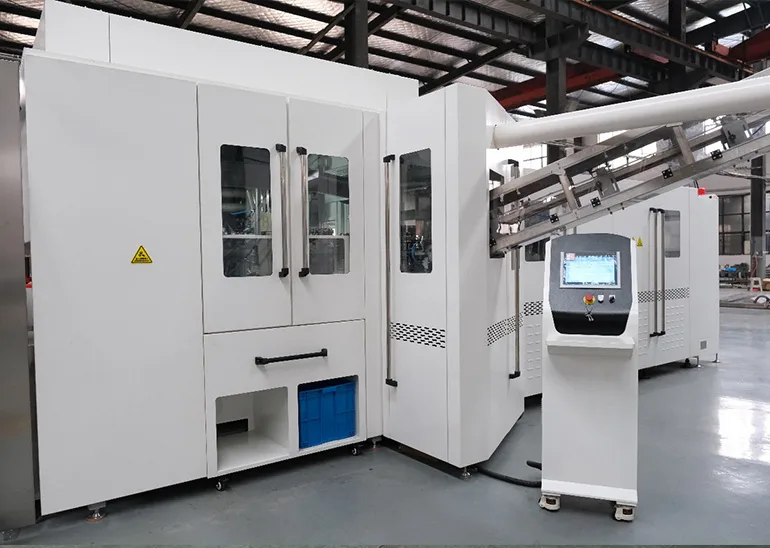
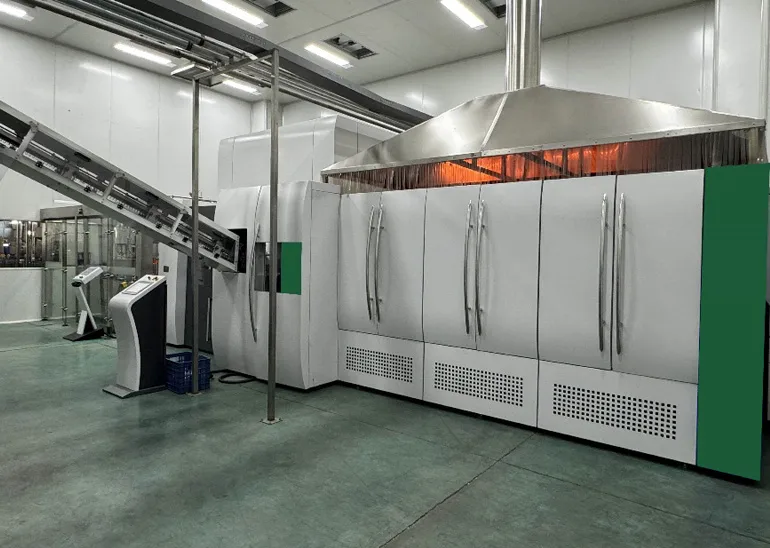
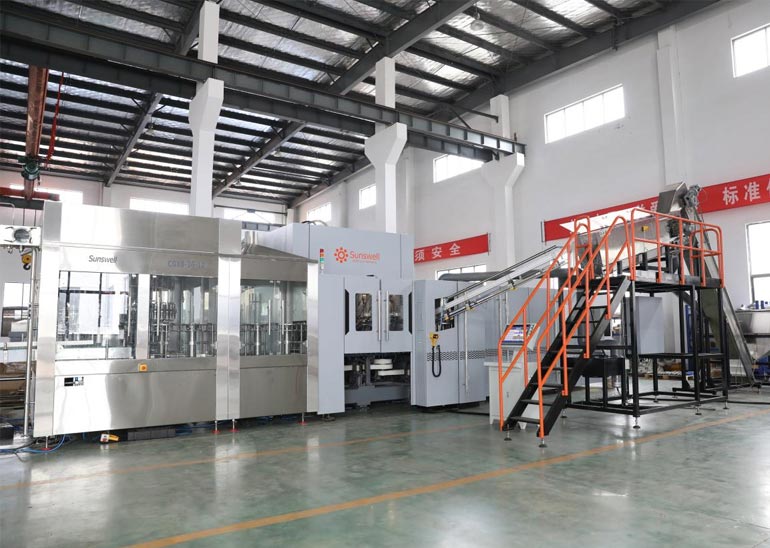
Country:Kazakhstan
Product: PET Bottled Sparkling Water, Canned Soft Drink, Canned Tea
Capacity: 25000CPH (250ml)
Solution:Three Lines,7000BPH(1.5L), 15000CPH(330ml),15000CPH(450ml)



 +86 13921964455
 [email protected]

A2 Dongjiu Industrial Park, 30 East Jintang Road, Tangshi, Zhangjiagang, Jiangsu 215600, China