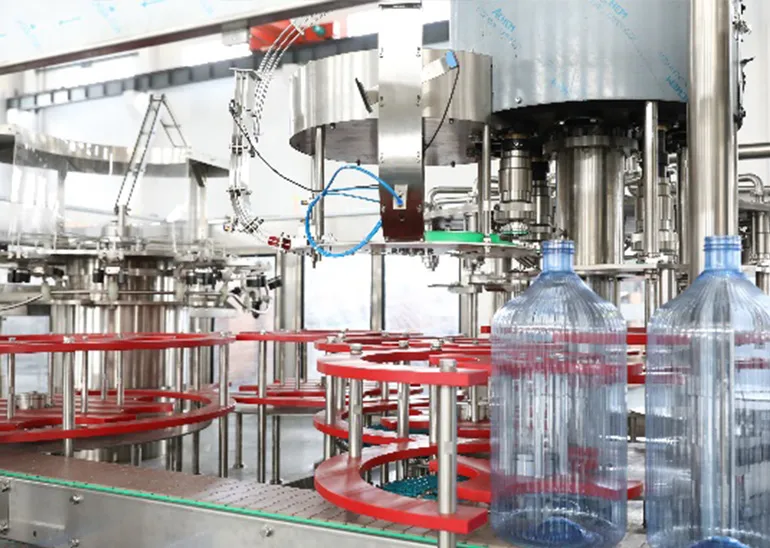
| What is included | Filling, capping and closing equipment |
| Filling principles | Gravity, volumetric, isobaric, piston, load cell |
| Output range | 2,000-48,000 BPH by configuration |
| Accuracy basis | Volume, weight or fill level |
| Wetted parts | SUS 304 product contact, CIP-ready |
| Key control | Fill accuracy, closure integrity, CIP time |
Start from the symptom and work back to the mechanism, not from the part list. Most filling faults show up in three places: fill weight or level, closure integrity, and product condition. Which of the three moved first tells you whether the cause is mechanical, thermal or product-side.
By leveraging advanced technologies such as sensors, Programmable Logic Controllers (PLCs), and monitoring systems, bottling plants can significantly minimize error rates and enhance overall efficiency.
Four variables sit behind a fill number: the dosing principle, the product temperature, the bottle geometry, and the condition of the valve or piston seal. A machine that holds its tolerance on the factory test can drift in the plant when the product arrives warmer or the bottle wall gets thinner.
With customized programming, PLCs can automate the filling process with precision and consistency, eliminating human errors and optimizing throughput.
| Principle | Doses by | Fails when |
|---|---|---|
| Gravity | Fill level in the bottle | Bottle geometry varies |
| Volumetric | Chamber volume | Valve seal wears |
| Isobaric | Volume under counter-pressure | Pressure or temperature drifts |
| Piston | Displacement | Product carries solids |
| Load cell | Net weight | Product temperature moves |
The Gravity Filling Machine for Still Water is the matching unit when this becomes a line project.
A CIP cycle is measured in tens of minutes to over an hour depending on the circuit and the soil. It is not production time, and a plan that counts it as production will miss its daily output every day. The number belongs in the capacity calculation, not in the shift handover.
Valve count, utility schedule and footprint sit on the Volumetric Filling Machine for Still Water page.
Valve count follows the target BPH and the fill time per valve. Longer fill time, thicker product or a taller bottle all reduce the rate per valve, so the same BPH needs more valves. Buying valves for a water duty and running juice on them is a common and expensive mismatch.
The same question is worked through from another angle in How Volumetric Fillers Reduce Overfill and Waste.
Gravity fills to a level set by a tube, so accuracy depends on the bottle. Because volumetric filling doses by chamber volume, accuracy holds across bottle sizes. Gravity is simpler and cheaper; volumetric is more repeatable when the bottle changes.
From tens of minutes to over an hour, set by the circuit volume and the soil. It is a fixed cost per production day and should be planned as downtime, not squeezed into the shift.
Bottle capacity variation, product temperature, valve wear or foam. On glass, mould-to-mould capacity variation alone is enough to make level filling inconsistent, which is why glass lines often check-weigh.
Valve seals, piston seals, capping head inserts, guide rail blocks and one set of change parts for the second format. These are the items that stop a line for days when they fail.
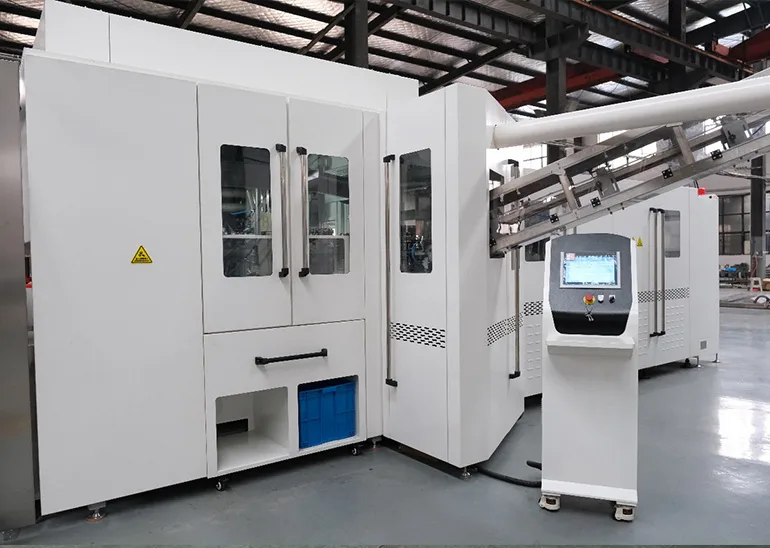
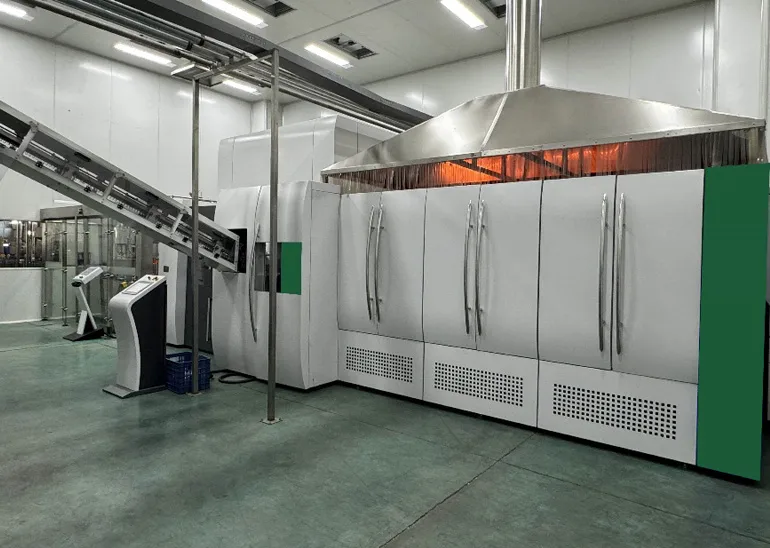
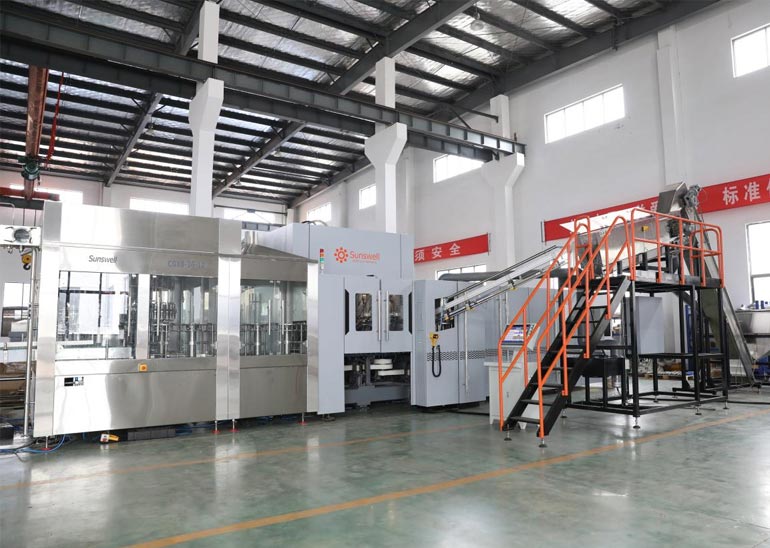
Country:Kazakhstan
Product: PET Bottled Sparkling Water, Canned Soft Drink, Canned Tea
Capacity: 25000CPH (250ml)
Solution:Three Lines,7000BPH(1.5L), 15000CPH(330ml),15000CPH(450ml)



 +86 13921964455
 [email protected]

A2 Dongjiu Industrial Park, 30 East Jintang Road, Tangshi, Zhangjiagang, Jiangsu 215600, China