| Filling system | Hot-fill, up to 85 C |
| Capacity | 6,000-36,000 BPH at 0.2-2 L |
| Bottle | Heat-resistant PET geometry, or glass |
| Line | Hot-fill monobloc with tunnel pasteuriser |
| Products | Juice, tea, nectar, functional drinks |
| Key control | Fill temperature, hold time, cap seal |
Four inputs fix the shortlist: the product, the package, the daily demand and the number of formats per week. Everything else, including the brand of the PLC, is a detail that can be settled after those four are written down.
Cap seals and filling valve O-rings, because they see the highest temperature every cycle. A seal that is fine on a water line at 20 C will harden in weeks at 85 C. The spare parts list should carry those two items in proportion to the number of valves, not as a single set.
| Route | Temperature | What it costs |
|---|---|---|
| Hot fill | Up to 85 C | Heat-resistant bottle and a cooling tunnel |
| Cold fill with preservative | Ambient | Formulation constraint, not a machine constraint |
| Cold fill with in-line pasteuriser | Product-side only | Separate pasteuriser and a closed filling zone |
| Hot fill in glass | Up to 85 C | Glass mass, slower line, higher transport cost |
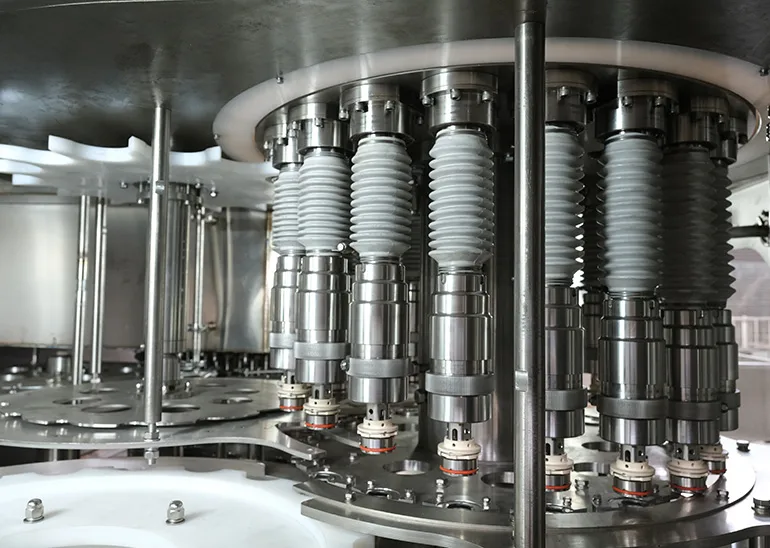
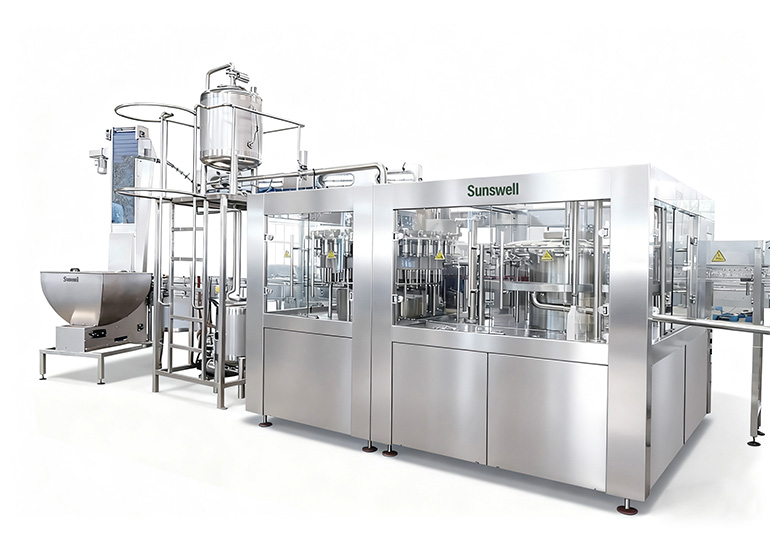
Site requirements, air and water consumption sit with the Hotfill Type Filling Machine for Juice.
Compare them on the product, not on the machine. Hot fill suits acidic juice and tea in heat-resistant PET. Cold fill needs a preservative system or a separate sanitising step, but it protects heat-sensitive flavours and vitamins and uses a lighter bottle. The decision is a product decision with a packaging cost attached.
Where this becomes a line rather than a single machine, the Juice By Volumetric Filler is the starting point.
Cold filling protects heat-sensitive flavour and colour and allows a lighter bottle. It needs either a preservative system or a validated cold chain, and it moves the microbial control to the product and the plant rather than to the filler. The decision is commercial before it is technical.
The same question is worked through from another angle in How to Maintain Juice Filling Machine.
Up to 85 C, set per product and per bottle. The exact set point and tolerance belong in the product specification, because acidity, pulp content and bottle wall thickness all move it.
Usually fill temperature above the bottle rating, or a vacuum that forms as the product cools. Check the fill temperature against the bottle specification and the cap seal before changing the cooling profile.
With a filter change and a different valve bore for the pulp, yes. Clear juice needs finer filtration, and pulp needs agitation in the bowl so the fibre does not settle.
A controlled ramp rather than a cold plunge, so the bottle does not deform under vacuum. The tunnel zones are set per bottle geometry and validated with a temperature probe in the product.
Country: Turkey
Product: Glass and PET Bottled Juice
Capacity: 20000BPH(330ml) Glass Bottle; 4000BPH(3L) PET Bottle
Solution:Juice Production Line
Country:Kazakhstan
Product: PET Bottled Sparkling Water, Canned Soft Drink, Canned Tea
Capacity: 25000CPH (250ml)
Solution:Three Lines,7000BPH(1.5L), 15000CPH(330ml),15000CPH(450ml)



 +86 13921964455
 [email protected]

A2 Dongjiu Industrial Park, 30 East Jintang Road, Tangshi, Zhangjiagang, Jiangsu 215600, China