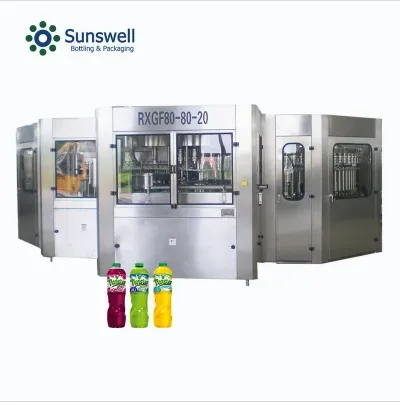
| Scope | Filling, capping and closing equipment |
| Filling principles | Gravity, volumetric, isobaric, piston, load cell |
| Capacity | 2,000-48,000 BPH by configuration |
| Accuracy basis | Volume, weight or fill level |
| Material | SUS 304 product contact, CIP-ready |
| Key control | Fill accuracy, closure integrity, CIP time |
Maintenance effort should follow the wear map, not the machine layout. Seals, capping inserts, guide rail blocks and filters account for most unplanned stops; painting and polishing account for none. A short daily check on those four items beats a long monthly inspection.
Soak all of the parts in a cleaning solution for at least 30 minutes.
Four variables sit behind a fill number: the dosing principle, the product temperature, the bottle geometry, and the condition of the valve or piston seal. A machine that holds its tolerance on the factory test can drift in the plant when the product arrives warmer or the bottle wall gets thinner.
| Principle | Doses by | Fails when |
|---|---|---|
| Gravity | Fill level in the bottle | Bottle geometry varies |
| Volumetric | Chamber volume | Valve seal wears |
| Isobaric | Volume under counter-pressure | Pressure or temperature drifts |
| Piston | Displacement | Product carries solids |
| Load cell | Net weight | Product temperature moves |
Throughput and change-part lists are on the Gravity Filling Machine for Still Water page rather than in this note.
The capping head is built for one closure family. A screw cap, a crown and a ROPP cap need different heads, different heights and different checks. Changing closure after the line is ordered means a new head, and sometimes a new bottle finish, not a setting change.
Rated output, change parts and services are listed on the Volumetric Filling Machine for Still Water page.
It saves capital and floor space, and it costs labour per shift. Manual loading, manual packing and manual palletizing are the usual trades. For a small plant with a single format and a flexible crew, that is a sensible trade; for a plant running three shifts it is not.
The same question is worked through from another angle in The Pros and Cons of Buying a Used or.
Yes, with change parts: star wheels, guide rails, grippers and a recipe. The parts are cheap compared with the changeover time, which is why most plants specify one dominant format.
A single frame carrying the rinser, the filler and the capper, driven and controlled together. It removes two transfers and the floor space between three separate machines.
Bottle capacity variation, product temperature, valve wear or foam. On glass, mould-to-mould capacity variation alone is enough to make level filling inconsistent, which is why glass lines often check-weigh.
Valve seals, piston seals, capping head inserts, guide rail blocks and one set of change parts for the second format. These are the items that stop a line for days when they fail.
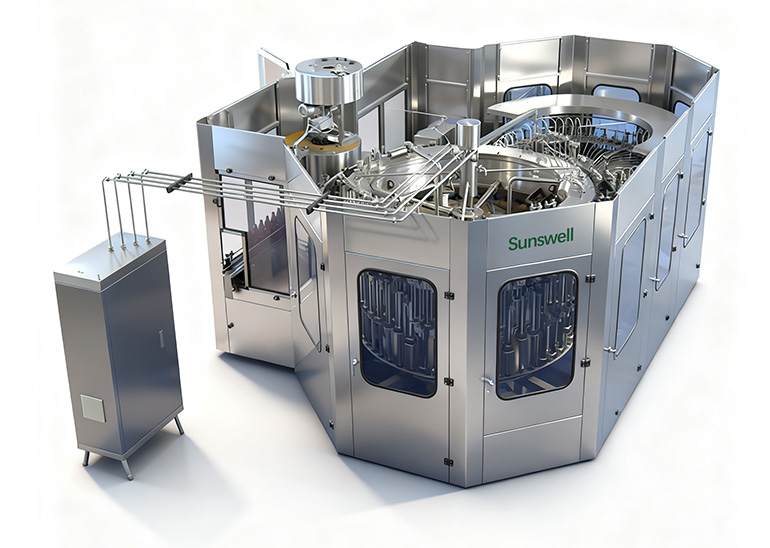
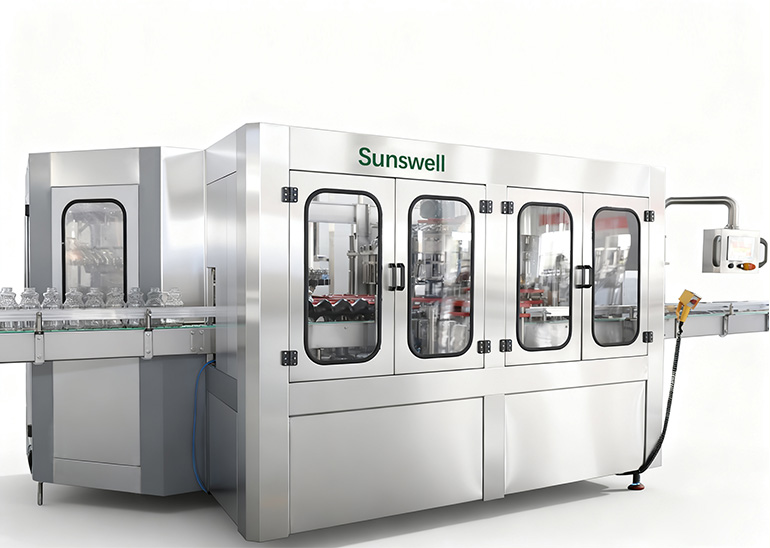
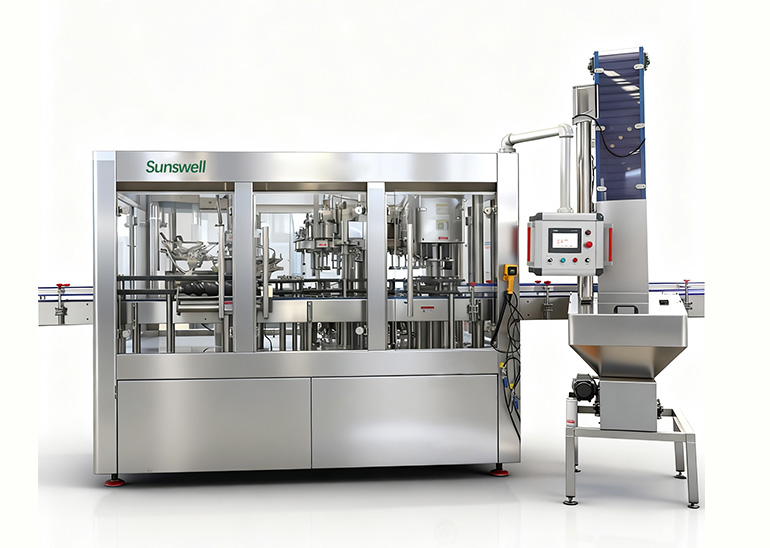
Country:Kazakhstan
Product: PET Bottled Sparkling Water, Canned Soft Drink, Canned Tea
Capacity: 25000CPH (250ml)
Solution:Three Lines,7000BPH(1.5L), 15000CPH(330ml),15000CPH(450ml)



 +86 13921964455
 [email protected]

A2 Dongjiu Industrial Park, 30 East Jintang Road, Tangshi, Zhangjiagang, Jiangsu 215600, China