
| Filling principle | Isobaric, CO2 counter-pressure |
| Capacity range | 12,000-36,000 BPH at 0.2-2 L |
| Containers | PET bottle, glass bottle, aluminum can |
| CO2 handling | Pre-pressurisation and return pipe, no venting |
| Valves | Mechanical, semi-electric or volumetric |
| Line scope | Water treatment, syrup mixing, carbonation, filler, pack |
Maintenance effort should follow the wear map, not the machine layout. Seals, capping inserts, guide rail blocks and filters account for most unplanned stops; painting and polishing account for none. A short daily check on those four items beats a long monthly inspection.
A carbonated drink is a saturated solution held in equilibrium by pressure and temperature. If the filler exposes it to atmosphere, CO2 leaves the liquid as foam and the fill level collapses. Isobaric filling pressurises the bottle to the bowl pressure first, fills under counter-pressure, then releases in a controlled ramp.
| Valve type | Setting | Best for |
|---|---|---|
| Mechanical | Fixed cam profile | Single product, long runs |
| Semi-electric | Signal-timed open and close | Recipe changes within one product family |
| Volumetric | Chamber dose | Pressure or temperature drift during the shift |
| Isobaric + volumetric | Chamber dose under counter-pressure | High CO2 with tight fill accuracy |
The unit behind this configuration is the CSD & Sparkling Water by Mechanical Filler.
Size the filler on peak shift demand with a production factor of 0.65-0.85, then size the CO2 supply on average consumption, not peak. A CO2 plant built for the filler nameplate runs partly loaded for most of the year and loses more gas to vaporisation than the line saves in speed.
The Isobaric Filling Machine for CSD and Sparkling Water is the matching unit when this becomes a line project.
Warm product holds less CO2 at the same pressure, so the filler either loses gas or needs a higher pressure that increases foaming. Chilling before carbonation is the standard answer, and the chiller capacity belongs in the utility schedule.
The same question is worked through from another angle in Where Is CSD Demand Growing Fastest? Emerging Markets &.
Overfoaming is gas leaving the product too fast at the end of fill. The pressure release has to be ramped, not dumped, and the fill height has to leave the right headspace. A snift valve that opens too early turns a good fill into a wet bottle.
It holds what the mixer sets and the temperature allows. Most CSD runs between 2.5 and 4.0 volumes, with the target set per product. Retention, not the mixer set point, is what the acceptance test should measure in the filled bottle.
It is used where the package needs internal pressure support or low oxygen, for example in cans and in some PET formats. It is an option, not a default, and it adds a consumable cost per 1,000 units.
The higher the volumes, the sharper the mouthfeel and the more pressure the package must hold. Higher carbonation also needs a colder fill and a tighter pressure ramp, so it reduces practical line speed.
Yes, with a different infeed, spacing and capping set. Glass needs mechanical spacing rather than an air conveyor, and the filler runs at 4,000-20,000 BPH on glass against 12,000-36,000 BPH on PET.
Warm product and an empty bowl. The first bottles see the largest pressure step. A short recirculation before production and a controlled bowl cool-down remove most of it.
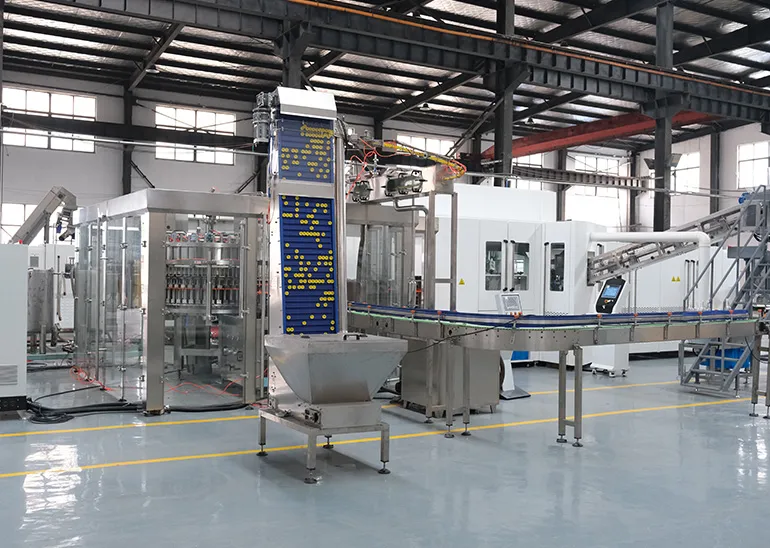
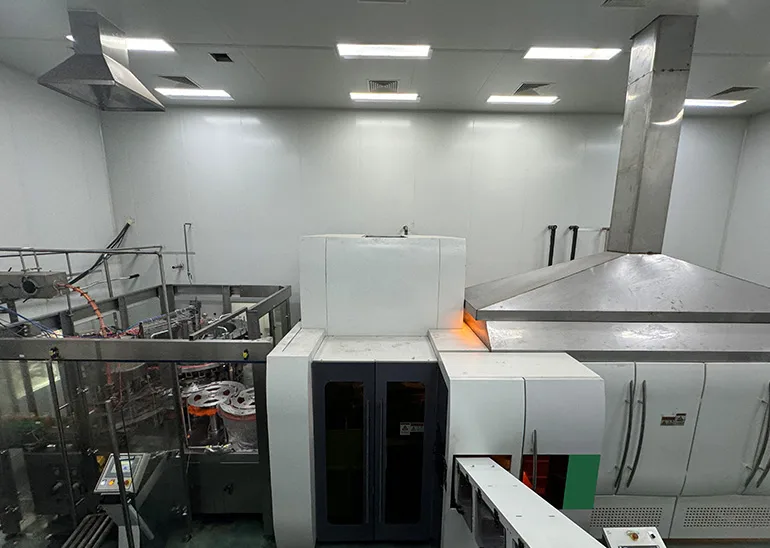
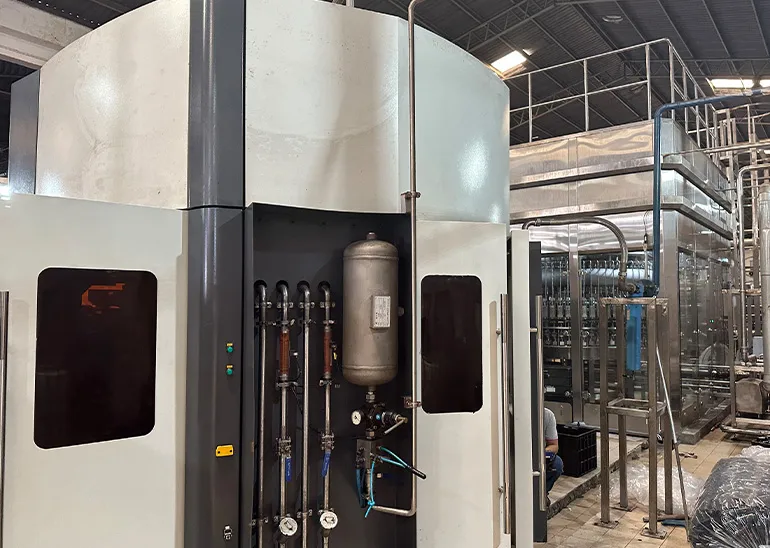
Country: Kazakhstan
Product: PET Bottled Carbonated Soft Drinks
Capacity: 12000BPH (1L)
Solution:Carbonated Drinks Production Line
Country: Syria
Product: Aluminum Canned Carbonated Soft Drinks
Capacity: 24000CPH (250ml)
Solution:Carbonated Drinks Production Line



 +86 13921964455
 [email protected]

A2 Dongjiu Industrial Park, 30 East Jintang Road, Tangshi, Zhangjiagang, Jiangsu 215600, China


