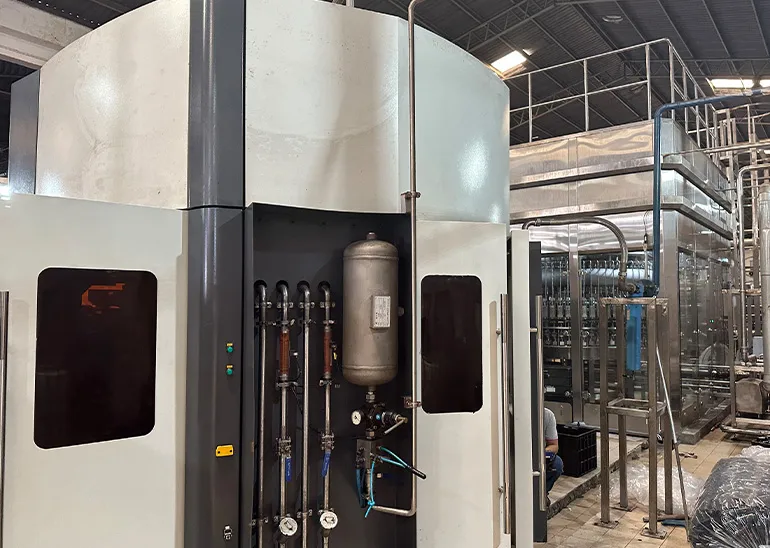
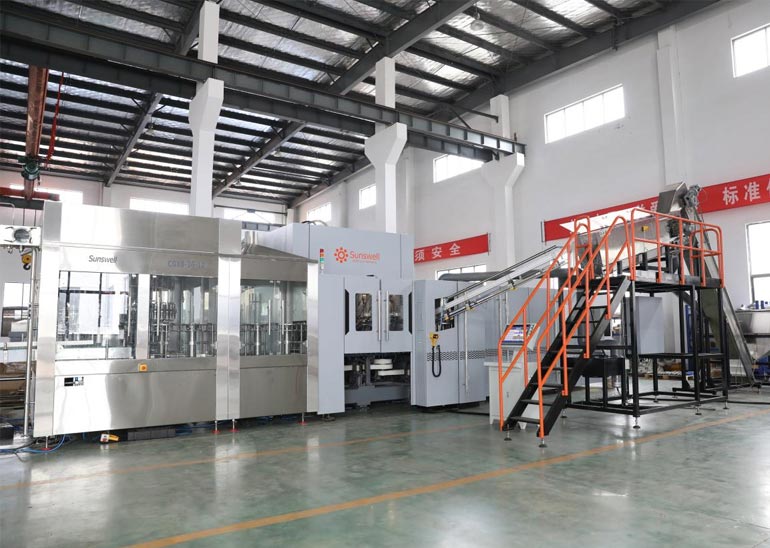
| Destination | Export project |
| Capacity | Set by the order |
| Configuration | combiblock |
| Product | combiblock |
| Supply scope | Supply, factory test, shipping, commissioning |
| Record | Order and delivery notes below |
The advent of automation in the bottling industry has revolutionized production processes, particularly in maintaining sterility. Blow-fill-cap machines exemplify automation at its finest, ensuring precise and consistent filling, capping, and sealing of the bottles. By minimizing human intervention, these machines significantly reduce the risk of contamination, thereby enhancing the overall quality and safety of the bottled water.
Contamination prevention is a multifaceted challenge in the bottled water industry. From the source of water to the final product, every step must be meticulously monitored and controlled to thwart any potential microbial threats. Blow-fill-cap machines play a pivotal role in contamination prevention by creating a hermetic seal on each bottle, safeguarding the water from external pollutants and microorganisms.
| Station | Function in the line |
|---|---|
| Blow moulding | Container making |
The specification sheet for the Blow-fill-cap Combibloc for CSD & Sparkling Water carries the utility figures quoted here.
Call to Action: Elevate Your Bottling Process with Sunwell.
Throughput and change-part lists are on the Blow-fill-cap Combibloc for Still Water page rather than in this note.
The order covers supply, factory test, shipping and commissioning, configured with combiblock. The line was specified for combiblock.
Set by the order at the format named on the order. Rated figures exclude changeover, CIP and downstream stops, so plan production on 0.65-0.85 of that number.
The non-standard items are the ones recorded in the section above. Everything else follows the standard configuration for combiblock.
Factory acceptance test before shipment, then installation and commissioning on site. Operator training is part of the handover, not an extra.
Spare parts for the wear items, remote support, and a commissioning report that records the settings the line was left running at.
Country: Kazakhstan
Product: PET Bottled Carbonated Soft Drinks
Capacity: 12000BPH (1L)
Solution:Carbonated Drinks Production Line
Country: Maldives
Product: PET Bottled Mineralized Water
Capacity: 24,000BPH (500ml); 2 Lines
Solution:Water Production Line



 +86 13921964455
 [email protected]

A2 Dongjiu Industrial Park, 30 East Jintang Road, Tangshi, Zhangjiagang, Jiangsu 215600, China