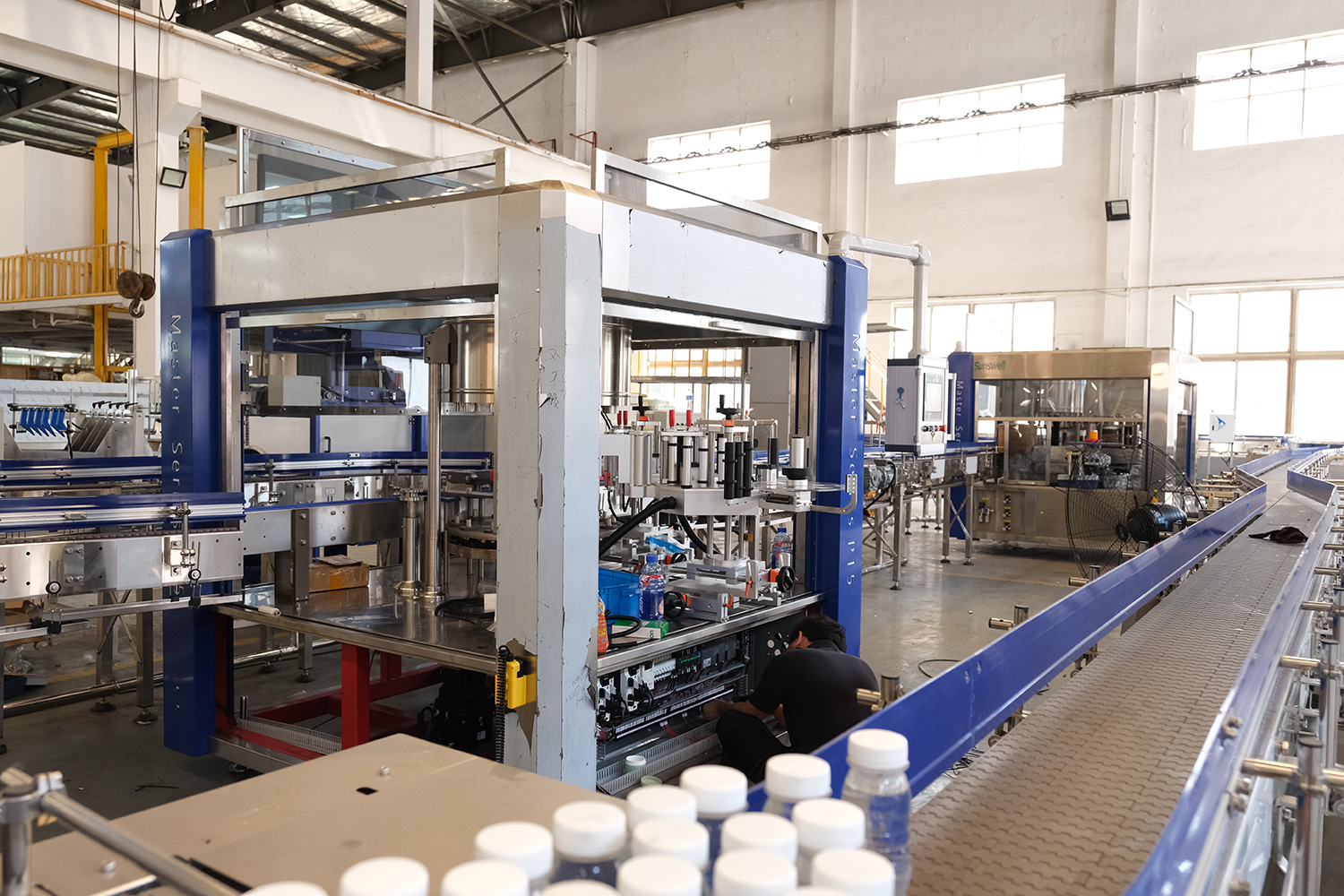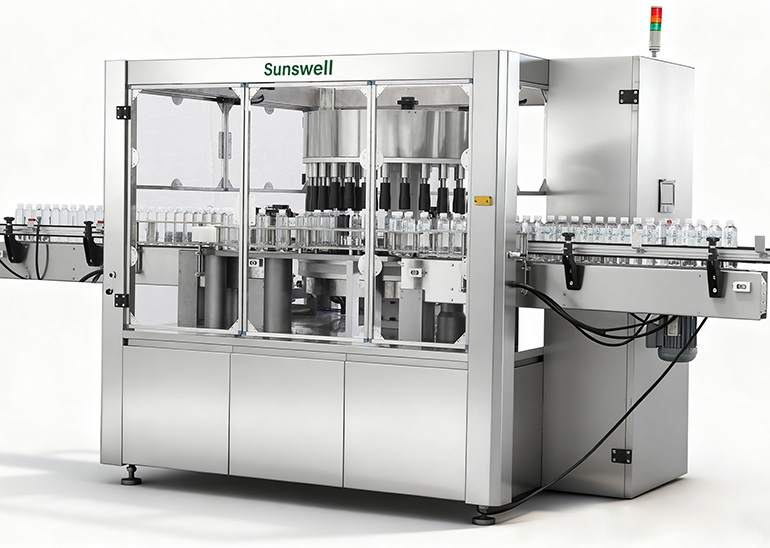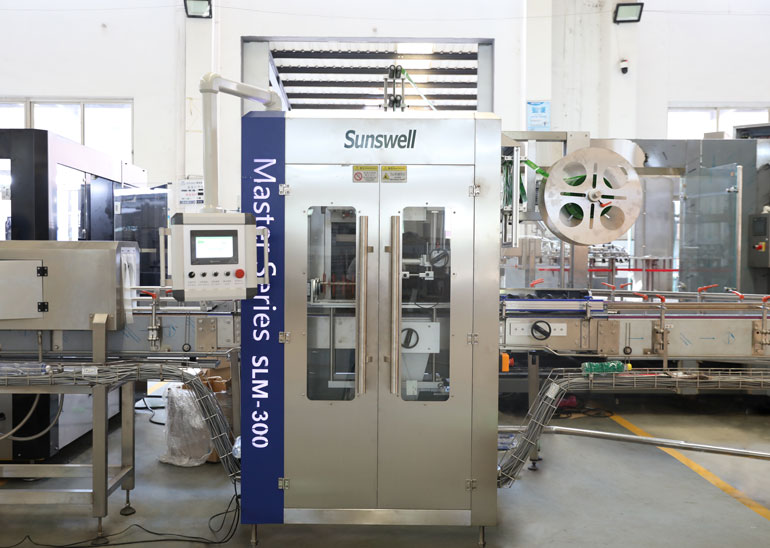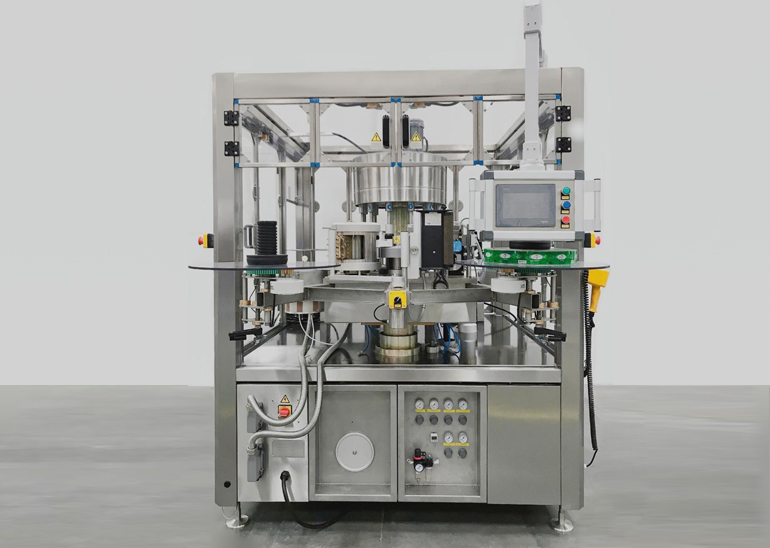
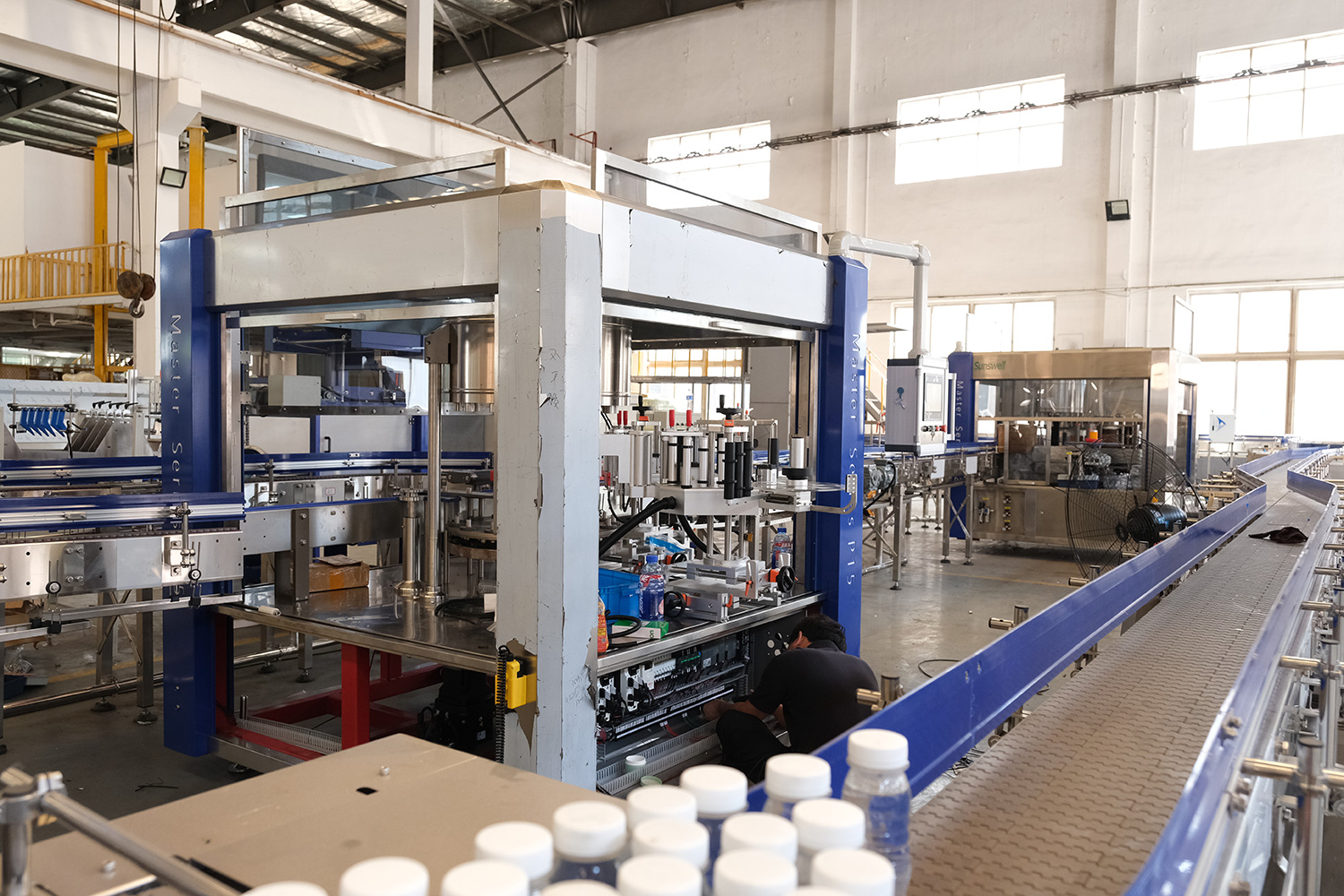
| Types | Sleeve, hot melt glue OPP, rotary sticker, self-adhesive |
| Speed | Matched to the filler, with an accumulator between |
| Key control | Label position, glue pattern, shrinkage, adhesion |
| Contact material | OPP film, PVC or PETG sleeve, paper sticker |
| Key decision | Full sleeve or partial wrap |
| Line position | After filling, before packing |
A full-body sleeve covers the whole bottle and gives the most design freedom, at the cost of film and a shrink tunnel. An OPP wrap-around label is the cheapest per unit at high speed. A sticker suits short runs and curved surfaces where a wrap is impractical.
The label is positioned relative to the bottle, so any variation in bottle rotation, conveyor speed or label feed shows up as drift. On a round bottle the orientation is set by a roller or a star wheel; on a square bottle it is set by a mechanical aligner. Drift is usually a bottle handling problem, not a label problem.
| Label type | Cost per unit | Best for |
|---|---|---|
| OPP wrap-around | Lowest at volume | High-speed round bottles |
| Full-body sleeve | Higher film cost | Full coverage and shaped bottles |
| Self-adhesive sticker | Middle | Short runs and flat or curved panels |
| Paper label with glue | Low material, slower | Glass bottles and craft products |
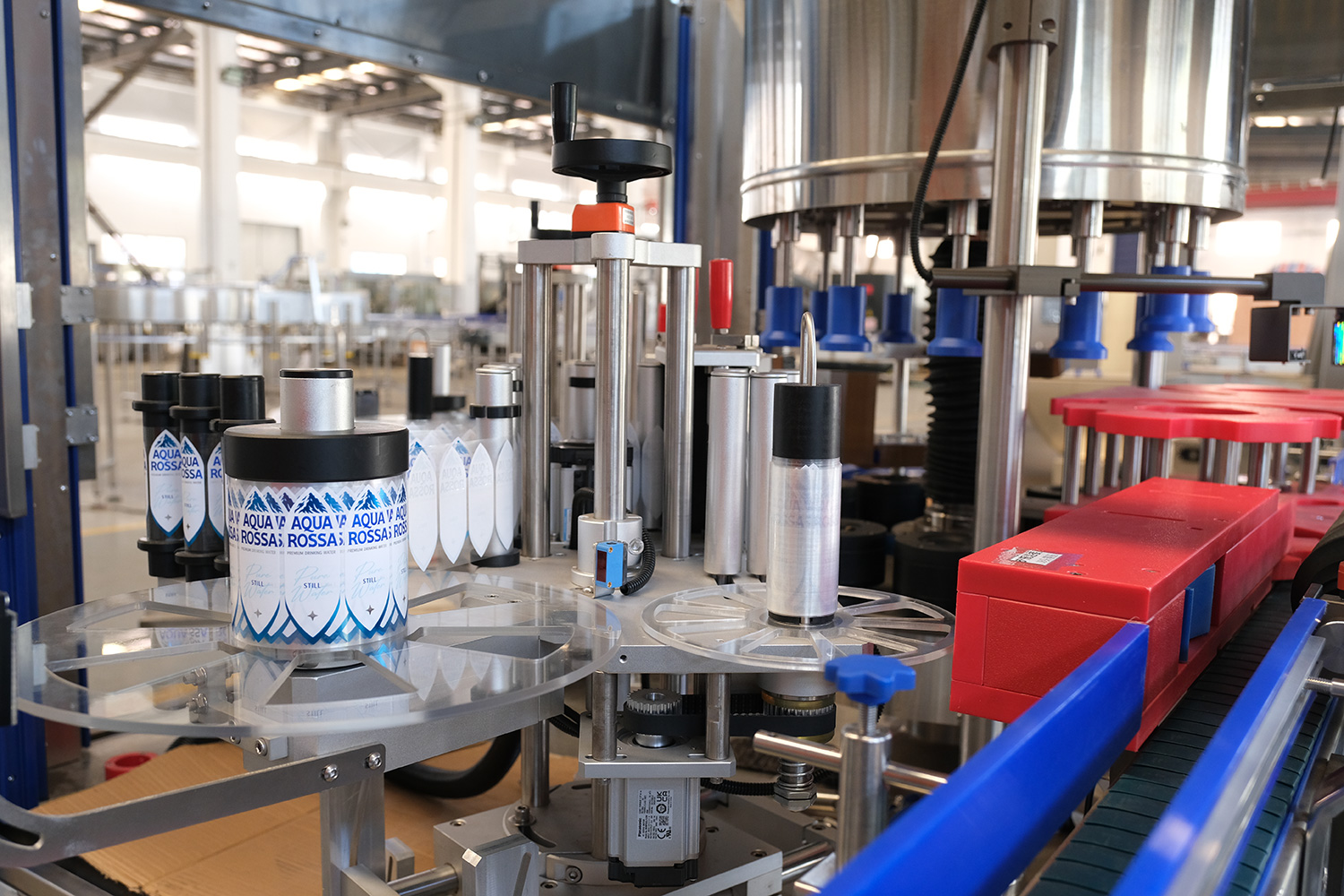
Site requirements, air and power consumption sit with the Rotary Sticker Labeling.
Surface energy, bottle temperature and glue choice. A cold bottle straight from the filler carries condensation, and a water-based adhesive will not bond to it. Hot melt handles a damp surface better, which is why it dominates high-speed beverage lines.
Rated output, change parts and services are listed on the Sleeve Labeling page.
Through the conveyor and an accumulator, not through a mechanical link. The labeller runs slightly faster than the filler and the accumulator absorbs the difference. A labeller matched exactly to the filler speed will stop the line at the first roll change.
Speed Range 6,000 – 24,000 BPH 12,000 – 30,000 BPH 24,000 – 60,000+ BPH.
The same question is worked through from another angle in How to Integrate Labeling and Packaging for Streamlined Workflow.
Not without a change of the applicator. Sleeve and wrap-around are different machines with different film paths, so a plant running both normally has two labellers.
On a fixed production interval set by the glue supplier and the plant, and immediately after any stop long enough for the glue to cure. A clogged nozzle shows as a missing glue line and a label that lifts in the pack.
Perforation strength, film tension and tunnel temperature act together. A tear that appears after shrinkage usually means the perforation was cut too deep for the film gauge.
With two applicators or a combined unit, yes. They are separate stations with separate film paths, so the line needs the space and the changeover time for both.
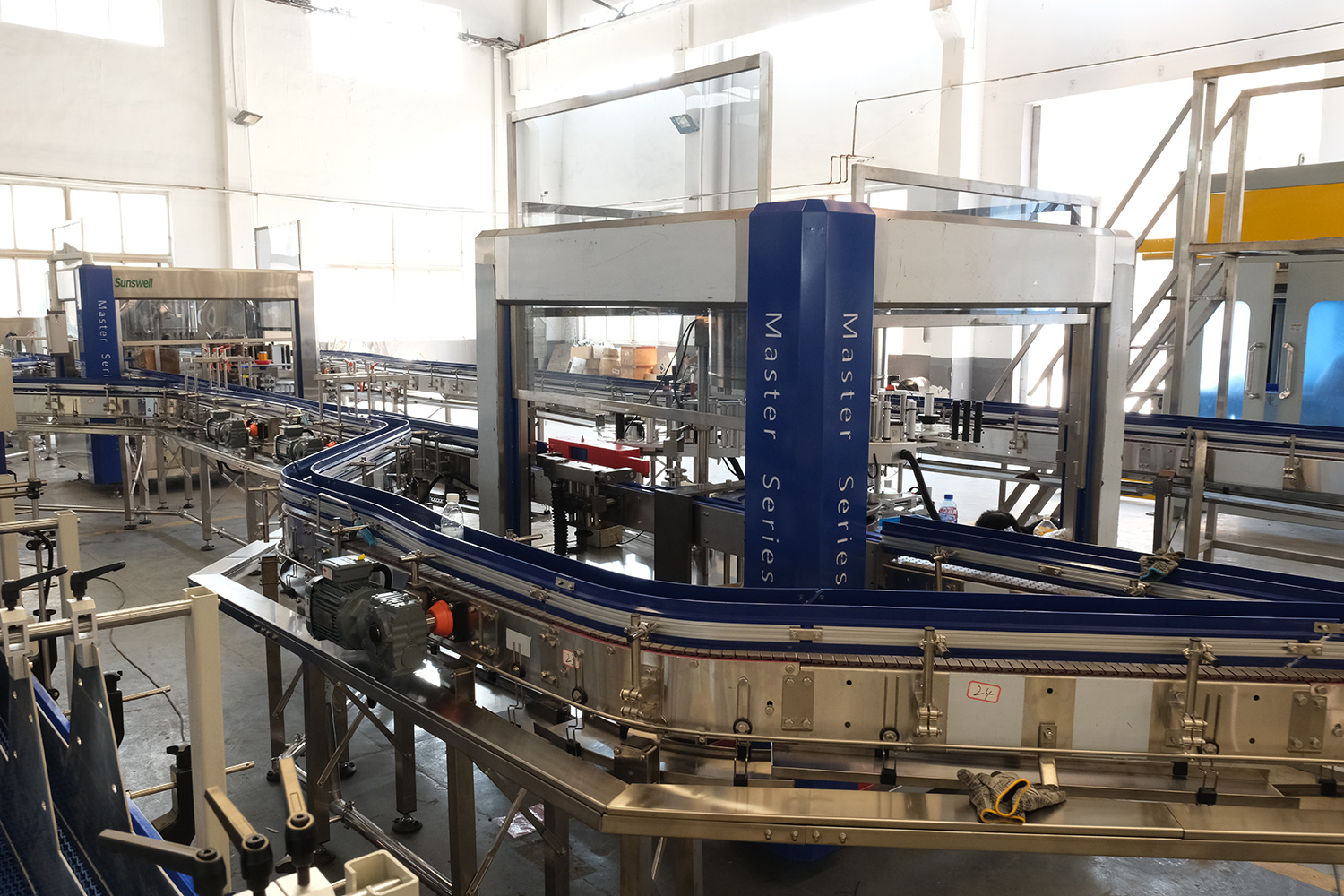
Country:Kazakhstan
Product: PET Bottled Sparkling Water, Canned Soft Drink, Canned Tea
Capacity: 25000CPH (250ml)
Solution:Three Lines,7000BPH(1.5L), 15000CPH(330ml),15000CPH(450ml)



 +86 13921964455
 [email protected]

A2 Dongjiu Industrial Park, 30 East Jintang Road, Tangshi, Zhangjiagang, Jiangsu 215600, China