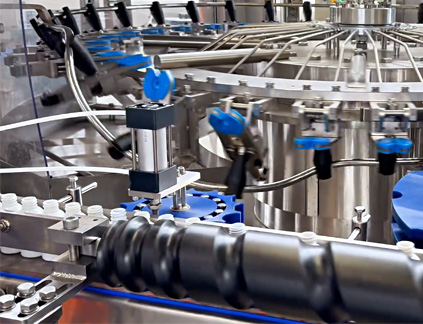
The right upstream and supporting technology decides whether a beverage filling machine line runs efficiently, compliantly and profitably. In this guide Sunswell breaks down Digital Twin Technology for Beverage Filling Line Design and Optimization for B2B buyers planning or upgrading a production line.
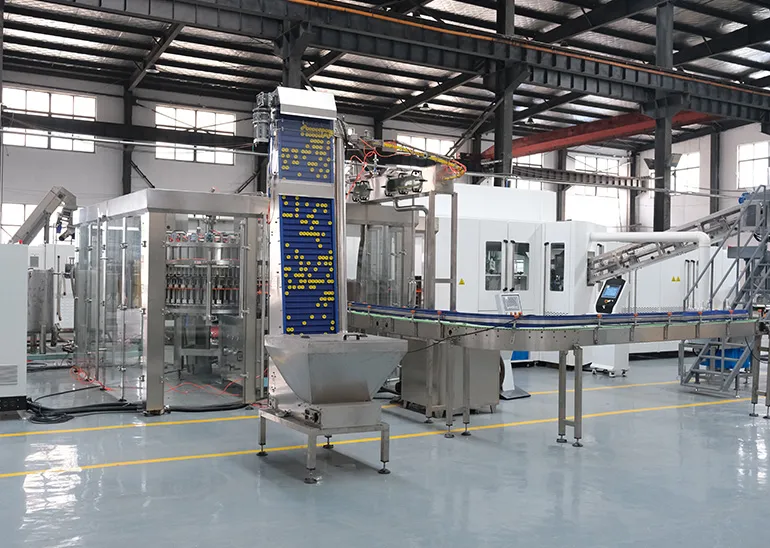
A digital twin is a live virtual replica of the filling machine line — geometry, physics and control logic — used to design, simulate and optimize before steel is cut. On a Combiblock project it enables virtual commissioning, bottleneck prediction and OEE modelling, cutting startup risk and time. This guide explains what a twin is and where it pays back.
Distinct from a static 3D model, a twin runs the same logic as the real line: PLC code, motor curves, fill profiles. It can be a "digital shadow" (read-only mirror) or a full twin used to test changes safely.
Engineers lay out conveyor system, filler and Processing Equipment in the twin, then run the actual PLC program against it to catch interlocks and timing bugs offline.
| Use | Benefit | Stage |
|---|---|---|
| Virtual commissioning | Fewer on-site bugs | Build |
| Bottleneck sim | Right-size buffers | Design |
| Changeover test | Safe recipe trials | Operate |
| OEE modelling | Predict throughput | Optimize |
Feed the twin real telemetry from PE bottle filling machines and the line. Over time it shifts from design aid to live optimizer that proposes setpoints for speed, CIP and changeover.
The twin connects to MES/cloud so simulations use current product mix and order book — turning "what-if" into daily scheduling on the Combiblock.
No — even a single filling machine benefits from virtual commissioning and changeover simulation.
PLC logic, equipment curves and live telemetry; start with design models and enrich with runtime data from the Combiblock.
Adopt digital-twin design for your filling machine and Combiblock with Sunswell.



 +86 13921964455
 [email protected]

A2 Dongjiu Industrial Park, 30 East Jintang Road, Tangshi, Zhangjiagang, Jiangsu 215600, China