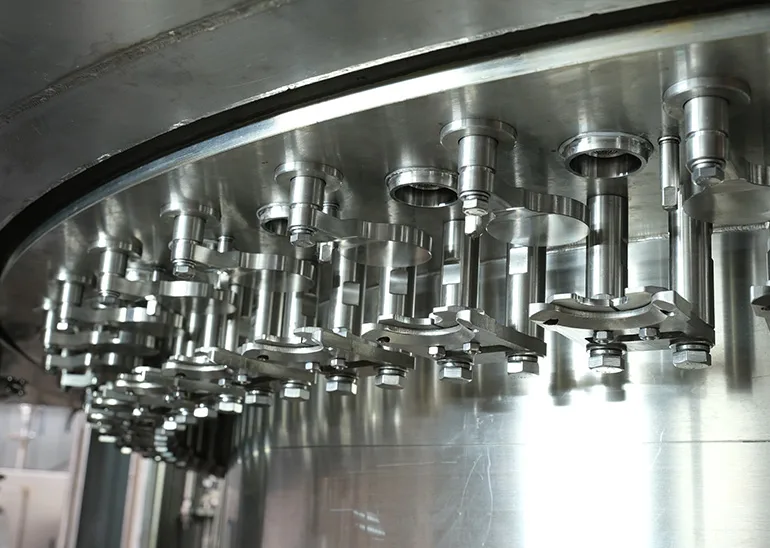
The right upstream and supporting technology decides whether a beverage filling machine line runs efficiently, compliantly and profitably. In this guide Sunswell breaks down Water Stewardship in Beverage Plants for B2B buyers planning or upgrading a production line.
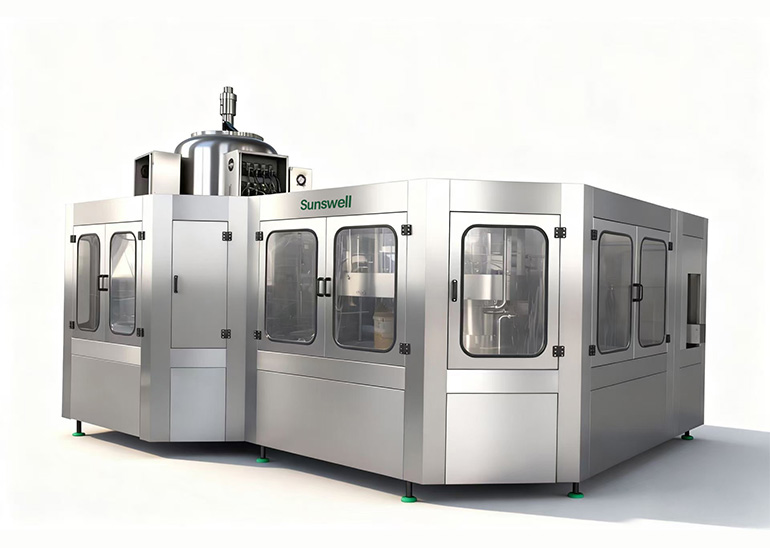
Beverage plants are water-intensive, with CIP and cooling dominating use. Water stewardship — cutting litres per litre of product — is now a buyer and regulator expectation, especially under EU ESG pressure. A filling machine line paired with recovery and optimized Processing Equipment can cut water use 30–50% versus legacy setups. This guide shows where water goes and how to reclaim it.
Roughly half of plant water is CIP/rinsing, a quarter is cooling/compressor, and the rest is product and utilities. The biggest, easiest win is CIP water.
Conductivity-controlled final rinse stops over-rinsing; counter-current recovery reuses rinse water for the next pre-rinse. Modern Water Treatment Systems recover and filter CIP effluent for non-product use.
| Lever | Action | Impact |
|---|---|---|
| CIP control | Conductivity-based rinse | High |
| Recovery | Reuse rinse water | High |
| Cooling | Closed-loop cooling | Medium |
| Dry conveyance | Air vs water rinsing | Medium |
Route recovered CIP water to floor wash, pre-rinse and cooling make-up. A Pasteurizing Tunnel with cascade water use sharply cuts fresh intake.
Meter each circuit; set litres-per-bottle KPIs and review monthly. Pair with the sustainability reporting covered in ESG programmes so savings are auditable for filling machines exports.
No — keep it for non-product use (pre-rinse, cooling, floor). Product contact stays on potable Water Treatment Systems.
30–50% versus an unmanaged legacy line, with most savings from CIP control and recovery.
Build a water-stewarding filling machine line with Sunswell.



 +86 13921964455
 [email protected]

A2 Dongjiu Industrial Park, 30 East Jintang Road, Tangshi, Zhangjiagang, Jiangsu 215600, China