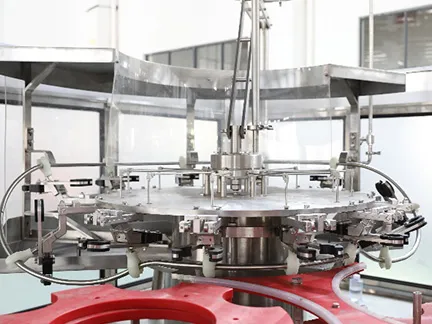
| Application | Still water, RO water, mineral water |
| Filling method | Gravity or volumetric valve |
| Rated output | 5,000-48,000 BPH at 500 ml |
| Bottle sizes | 200 ml to 16 L, by configuration |
| Material | SUS 304 product contact, CIP-ready |
| Line scope | Treatment, blowing, filling, capping, labelling, packing |
A water line stands or falls on three inputs: raw water analysis, neck finish, and how well filler and capper are matched. Most of the meeting goes on BPH; the other two get a fraction of the time. Change the thread by a millimetre and the rinser clamp and capping head have to change with it.
Additionally, optimizing storage conditions, such as controlling temperature and light exposure, is vital for preserving water quality and extending its freshness.
Above 2 L the fill time per valve grows faster than the valve count, so capacity per valve falls and the conveyor has to carry more mass. Handles, cap size and bottle rigidity also change. A 5 L line is usually specified around that format rather than shared with a 500 ml line.
| Filling principle | Best for | Watch out for |
|---|---|---|
| Gravity | Still water, one rigid bottle size | Thin-wall bottles deform under head pressure |
| Volumetric valve | 3-15 L and mixed formats | Valve wear shows as slow drift, not a sudden error |
| Isobaric | Carbonated water only | Needs counter-pressure, so slower per valve |
| Load cell | Oil and high-value liquid | Slower cycle, higher cost per valve |
The unit behind this configuration is the Blow-fill-cap Combibloc for Still Water.
A lighter bottle is less rigid, so it deforms more under the filling head and grips differently in the star wheels. The filler may need a different neck handling and a lower contact pressure. Lightweighting is a bottle project that reaches into the filling line.
For the same duty in another bottle format, the Gravity Filling Machine for Still Water is specified separately.
A monoblock carries the rinser, the filler and the capper on one frame with one drive. It removes two transfers, the floor space between them and the bottle handling at each. Three separate machines are easier to replace one at a time and easier to run at different rates.
The same question is worked through from another angle in Spillage in Large-Volume Water Lines: Monoblock or Separate Machines.
200 bottles per minute. Divide BPH by 60. A 24,000 BPH line runs at 400 bottles per minute, which is why filler and packer have to be matched rather than bought separately.
Yes, with change parts: star wheels, guide rails, grippers and a filling recipe. Budget 40-90 minutes per switch and expect the production factor to drop from about 0.85 to 0.70.
It follows the raw water analysis, not a standard package. Surface water usually needs multi-media filtration, RO and UV or ozone. Low-hardness municipal water may need only carbon filtration and disinfection.
It depends on whether blowing, packing and palletizing sit in the same hall. Fix the footprint by drawing the layout at 1:100 with conveyor radii included, then check the turning radius of the largest format.
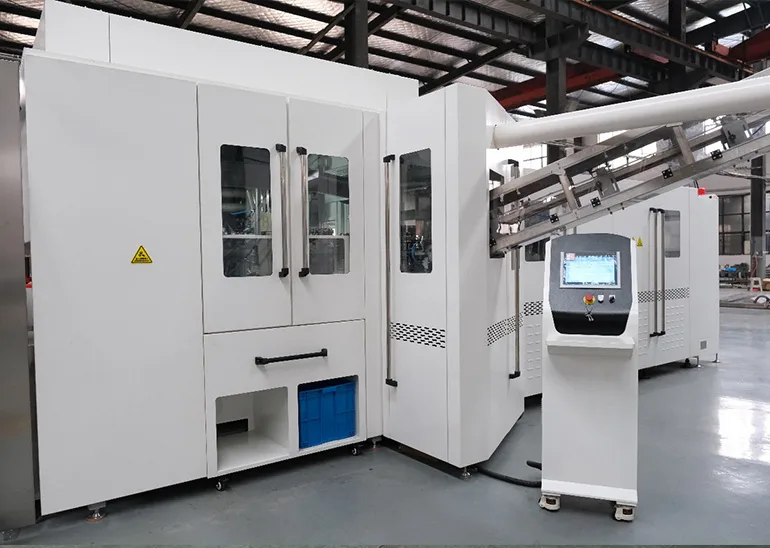
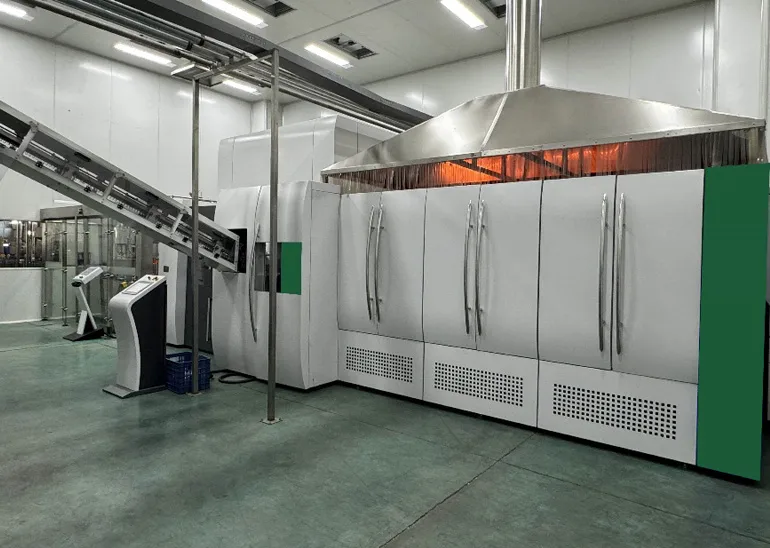
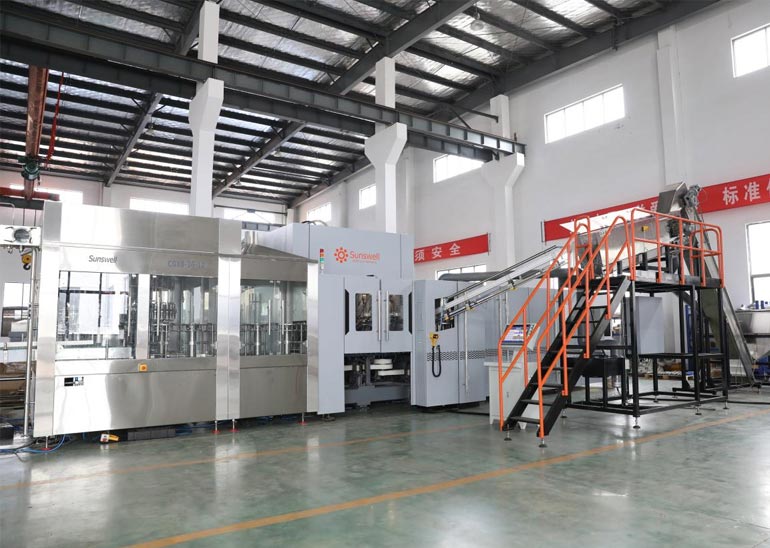
Country: Maldives
Product: PET Bottled Mineralized Water
Capacity: 24,000BPH (500ml); 2 Lines
Solution:Water Production Line
Country:Kazakhstan
Product: PET Bottled Sparkling Water, Canned Soft Drink, Canned Tea
Capacity: 25000CPH (250ml)
Solution:Three Lines,7000BPH(1.5L), 15000CPH(330ml),15000CPH(450ml)



 +86 13921964455
 [email protected]

A2 Dongjiu Industrial Park, 30 East Jintang Road, Tangshi, Zhangjiagang, Jiangsu 215600, China