


After-sales · FAQ
Spare Parts and Warranty FAQ
A line is bought twice: once as a machine, once as a supply chain for the parts that keep it running. The warranty terms and the spare-parts channel are negotiable before order and expensive after. This FAQ answers the questions that decide how long your line actually runs.
12
Months typical warranty
444+
Lines delivered
71+
Countries exported
20,000
m² workshop
80+
Staff
Short answer: Warranty is typically twelve months from commissioning or eighteen from shipment, covering defects in materials and workmanship with named exclusions (wear parts, operator damage, consumables). The after-sales reality is the spare-parts channel: a first-year starter kit at order, a documented reorder channel, a response-time commitment, and remote diagnostics. None of it is a favour; all of it is contract.
🎯 Key takeaways
- Warranty covers defects, with exclusions named in writing — read the exclusion list.
- A first-year starter kit at order beats air-freighting a sensor later.
- Response time for spare parts is a contract term, not a promise.
- Remote diagnostics resolve most routine issues before a visit is needed.
- The reorder channel and its lead times are part of the machine's spec.
On this page
1. What warranty actually covers
Warranty for machinery is typically twelve months from commissioning or eighteen from shipment, whichever comes first, and covers defects in materials and workmanship under normal operation. What matters is the exclusion list: wear parts, operator damage, incorrect operation, and consumables are normally outside warranty, and the list is where the real terms live.
Ask the supplier to write the exclusions explicitly, because 'warranty' means different things to different suppliers. A twelve-month warranty with a short, fair exclusion list is worth more than eighteen months with a long one.
Warranty runs from commissioning or shipment — the difference can be months. Confirm the trigger date in the contract, and schedule commissioning promptly so warranty time is not burned in a crate.
Register the warranty and the machine serial numbers with the supplier after order; that registration is the reference for every claim.
2. Wear parts and exclusions
Wear parts are the components that degrade by design: seals, valves, belts, guide rails, grippers, and the filler valve seats on high-speed lines. They are excluded from warranty and they are exactly the parts that will fail first — which is why the spare-parts plan is not about warranty at all, it is about uptime.
Get the supplier's wear-part list with the order, with expected life under normal duty. That list is the basis of the starter kit and the reorder budget.
3. The first-year starter kit
A first-year starter kit covers the high-wear positions: sensors, seals, valves, belts and the small controls that stop a line when they fail. It is agreed at order, priced as part of the package, and cheaper than air-freighting a single sensor from another continent later — both in money and in downtime.
Stock the kit at the plant and keep an inventory sheet; a kit that is half-used and unrecorded is as useless as no kit.
4. The reorder channel
After year one, parts come from the supplier's spares channel: a catalogue, an order point, and a shipping method with a response-time commitment. Confirm the channel before order — the machine is only as reliable as the parts channel behind it.
Ask which parts are stocked locally (filters, common sensors) versus shipped on order, and confirm the quoted lead times. The honest answer is a spec sheet, not a promise.
5. Remote support and diagnostics
Remote support uses video calls, logged machine data and guided fault-finding to resolve routine issues without a visit. Most first-year issues — sensors, settings, small adjustments — are solvable remotely when the operator can show the technician the machine.
Agree the remote support channel and the response window in the contract. The line should have a documented contact path, not a 'call us if anything happens' arrangement.
6. Technician visits
For major issues and annual overhauls, a technician visit is the answer: travel, accommodation, daily rate and visa (where applicable) are agreed in advance. The trigger for a visit should be defined — remote diagnostics escalate to a visit when the issue exceeds a defined response or severity.
Preventive visits (a scheduled annual check) catch wear before it stops the line. Buyers who skip them save a little and lose more in unscheduled downtime.
7. Building the after-sales plan
Build the plan at order time with four items: warranty terms read line by line, a wear-part list with expected life, a first-year kit priced into the package, and a documented spares channel with response times. All four fit in the contract — and the contract is the only place they survive contact with reality.
The same plan applies to a filling machine, a combiblock or a complete line; the parts differ, the discipline does not.
Frequently asked questions
What does the warranty cover?
Defects in materials and workmanship, typically twelve months from commissioning or eighteen from shipment, with named exclusions (wear parts, operator damage, consumables).
Which parts fail first?
Wear parts by design: seals, valves, belts, guide rails, grippers and valve seats. They are excluded from warranty and covered by the spare-parts plan.
Should I buy a starter kit?
Yes — a first-year kit covering high-wear positions, priced at order, is cheaper than air-freighting a single part later, in both money and downtime.
How fast can I get spare parts?
The response time is a contract term. Confirm which parts are stocked and which are shipped on order, with quoted lead times.
Can issues be fixed remotely?
Most routine issues — sensors, settings, adjustments — are solvable via video and logged data. The remote channel is agreed in the contract.
Does Sunswell provide after-sales support?
Yes — warranty, starter kits, remote diagnostics and technician visits, with the terms written into the contract for every exported line.
About the author
Written by the Sunswell engineering team — led by Howie SUN, Founder & CEO, with 14 years in filling and blow-moulding equipment R&D and turnkey project delivery across 71+ countries.
Last reviewed: 2026-08-28 · Reviewed by Sunswell engineering team
Ask our engineering team →
Project references
-
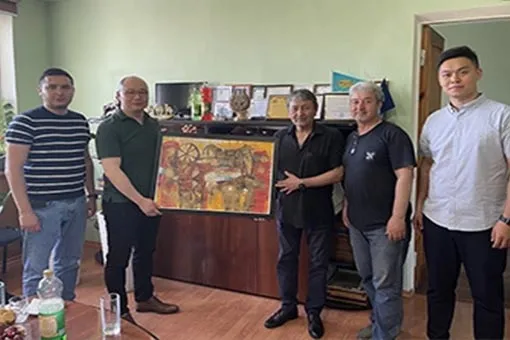
Vizit, 12,000BPH 1L Bottling Line with Combiblock for CSD, Kazakhstan
Country: Kazakhstan
Product: PET Bottled Carbonated Soft Drinks
Capacity: 12000BPH (1L)
Solution:Carbonated Drinks Production Line
Read More + -

Rauan, 8 Sets of Bottlingand Canning Lines from 12,000-24,000BPH for Water, CSD and Juice, Kazakhstan
Country:Kazakhstan
Product: PET Bottled Sparkling Water, Canned Soft Drink, Canned Tea
Capacity: 25000CPH (250ml)
Solution:Three Lines,7000BPH(1.5L), 15000CPH(330ml),15000CPH(450ml)
Read More +
Have a specific project in mind?
Tell us product, target BPH, bottle sizes and market. We reply with a draft layout, equipment list and lead time estimate.
Fill the inquiry form ↑