


How it works · Water
Still & Mineral Water Machine — How It Works and Key Components
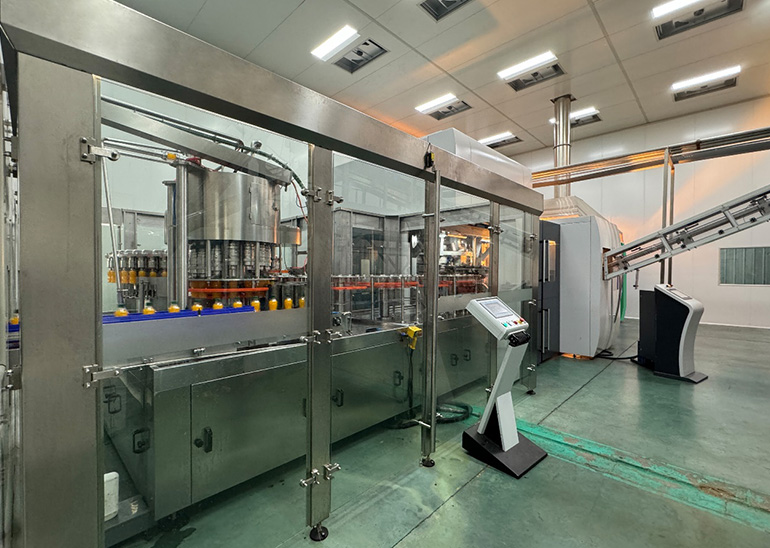
A still water filling machine rinses the bottle, fills it by gravity or volumetric valve, and caps it. No carbonation or heat, so the filler is the simple, fast half of the line.
2,000–24,000
BPH range
0.2–2
L typical
444+
Lines delivered
71+
Countries exported
Gravity/Vol.
Valve types
Short answer: Still water is filled cold with no CO₂ and no heat, so the valve is gravity or volumetric and the bottle is handled by its neck throughout. Speed is set by valve count and bottle size; accuracy by valve type and the tolerance you must hold. The machine is a rinser-filler-capper; the block version blows the bottle first and removes the separate blow stage.
🎯 Key takeaways
- Still water is filled cold — no CO₂, no heat, simple filler.
- Gravity is cheapest; volumetric tightens accuracy for declared weight.
- Speed scales with valve count and bottle size.
- CIP is cheaper specified with the line than retrofitted.
- Above ~8,000 BPH a combiblock usually wins on cost and weight.
On this page
1. The process flow
Bottles arrive (as finished PET from a blow moulder or a combiblock) and enter a rinser that cleans the inside, then a filler that meters product, then a capper. For still water there is no CO₂ or heat anywhere, so the line is short and the filler is the workhorse.
The filler is a rotary carousel; bottles are gripped by the neck and indexed past filling valves. Because there is no pressure to manage, neck handling is simple and speeds are high.
2. Gravity vs volumetric filling
Gravity valves fill by head pressure and time — cheap, rugged, adequate where level tolerance is loose. Volumetric valves fill from a metered chamber, tightening repeatability for declared-content or export markets.
| Valve | Accuracy | Use |
|---|---|---|
| Gravity | Level-based | Still water, loose tolerance |
| Volumetric | Volume repeatable | Declared content, export |
Valve choice is the same decision as on a combiblock; the product is just simpler because it is not carbonated or hot.
3. Key components
The turret and valve set set speed and accuracy. The rinser grade sets hygiene (new bottles get air/water; returnables need washing). The capper must match the closure — screw, crown or press-on — and the cap feeder must keep pace.
Send the bottle drawing and closure before quotation. Pitch, valve count and capper are all set from the bottle geometry; a line specced on a similar bottle may not accept yours.
Downstream, the labeller and packer must keep up without becoming the bottleneck.
4. Speed and accuracy
Speed scales with valve count and falls with bottle size. Accuracy is set by valve type and the tolerance you must legally hold; gravity is fine for level-sold water, volumetric for declared weight.
For a combiblock the same logic applies but the bottle is blown inline, which enables lighter bottles and removes the separate blow stage.
5. Hygiene and water quality
Still water lines need clean product paths and a CIP loop on the filler. Mineral water in particular is filled cold with minimal treatment, so the product path and the rinser grade matter for shelf life. The water treatment upstream is a separate scope — see the water treatment guide.
CIP is cheaper specified with the line than retrofitted; confirm the cleaning loop is in scope at order.
6. Choosing your configuration
Inputs: bottle drawing (0.2–2 L), target output, closure, and whether the bottle is blown in-line (combiblock) or supplied. Below ~8,000 BPH a separate blow moulder plus filler is often cheaper; above that the combiblock's savings compound.
The capacity method is in the water filling selection and the combiblock capacity guide.
7. Specifying the machine
Send the bottle drawing, closure, target speed per format and the CIP scope. The supplier returns valve count, turret size and the capper spec — the real capacity statement, on your bottle, not a generic rating.
Frequently asked questions
Gravity or volumetric for water?
Gravity is cheapest where level tolerance is loose. Volumetric tightens volume repeatability for declared-content or export markets.
How fast can a water line run?
Roughly 2,000 to 24,000 BPH depending on bottle size and valve count; larger bottles run slower per valve.
Does still water need CIP?
Yes. The filler needs a CIP loop; specify it in scope rather than retrofit. Mineral water especially relies on a clean product path.
Is a block or separate line better?
Block wins above ~8,000 BPH on bottle weight and footprint; below that a separate blow moulder plus filler is usually cheaper and more flexible.
What sets fill accuracy?
Valve type and the tolerance you must hold. Gravity is level-based; volumetric meters volume.
What should I send the supplier?
Bottle drawing, closure, target speed per format and the CIP scope. Rated speed must come back on your actual drawing.
About the author
Written by the Sunswell engineering team — led by Howie SUN, Founder & CEO, with 14 years in filling and blow-moulding equipment R&D and turnkey project delivery across 71+ countries.
Last reviewed: 2026-08-28 · Reviewed by Sunswell engineering team
Ask our engineering team →Recommend Products
Have a specific project in mind?
Tell us product, target BPH, bottle sizes and market. We reply with a draft layout, equipment list and lead time estimate.
Fill the inquiry form ↑