


Plant setup · Middle East & GCC
Bottled Water Plant Setup in Middle East & GCC
A Gulf water plant starts from a different premise than a spring-water plant: the feed is often desalinated or municipal, the climate is hot year-round, and the market runs on PET at high volume. This page walks the setup sequence with the regional realities that change the plan.
444+
Lines delivered
71+
Countries exported
20,000
m² workshop
80+
Staff
2011
Sunswell founded
Short answer: The Gulf setup sequence: secure the feed water (desalinated or municipal, with a full analysis) → design treatment to re-mineralise and stabilise it → size the line to year-one sales (Gulf plants run high volume) → choose the package (PET dominates) → run conformity certification in parallel → install and commission. The climate is a design input: hot storage, high ambient temperatures and cooling loads are part of the spec, not footnotes.
🎯 Key takeaways
- Gulf feed water is often desalinated — the treatment re-mineralises and stabilises, not just filters.
- The hot climate drives design: cooling loads, storage conditions and bottle behaviour.
- PET dominates the Gulf package; the line is sized for high retail volume.
- Conformity certification runs in parallel with building, not after.
- Container logistics through major ports (Jebel Ali, Saudi ports) is routine and fast.
On this page
1. The feed water
Most Gulf plants feed from desalinated or municipal water rather than a spring — which is a different starting point. The water is pure but flat: low in minerals, variable in stability, and needing re-mineralisation to the product target. Take a full analysis across seasons before designing anything; the treatment follows the water, and the water here is a recipe input, not a gift.
Confirm the feed's reliability and cost with the utility — a plant sized beyond its feed supply is a plant that cannot run.
Send the desalinated or municipal water analysis with the enquiry. Re-mineralisation dosing is designed on that analysis, and guessing the profile means guessing the taste.
Water cost and availability are strategic questions in the Gulf — they belong in the business model, not just the engineering.
2. Treatment for desalinated feed
Treatment for desalinated feed is about building the profile, not stripping it: filtration for security, re-mineralisation dosing (calcium, magnesium, bicarbonates) to the product target, disinfection, and polishing before the filler. The system is sized on the line output and the feed's variability, and it is where the product's taste consistency is made.
Storage of treated water needs the same care as the feed — warm storage degrades the product and grows the biology, so tank temperature and turnover are design inputs.
3. The climate as a spec
The Gulf climate is a line spec, not a footnote: ambient temperatures push cooling loads, storage heat affects the product and the bottle, and the plant's HVAC and chilled-water systems are sized accordingly. The bottle behaves differently in hot storage — PET creep, cap torque and gas-related issues need design attention.
Plan the warehouse with temperature control and rotation in mind — a palletised water store in a 45°C shed is a product-quality incident waiting to happen.
4. The filling line
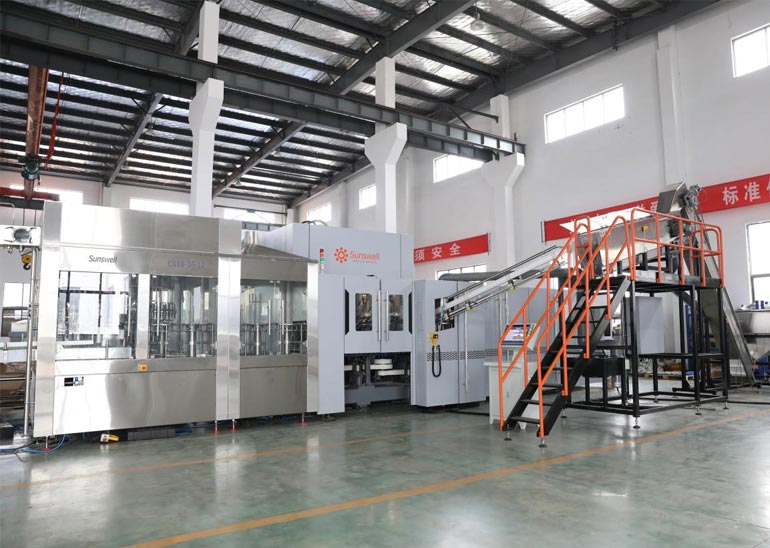
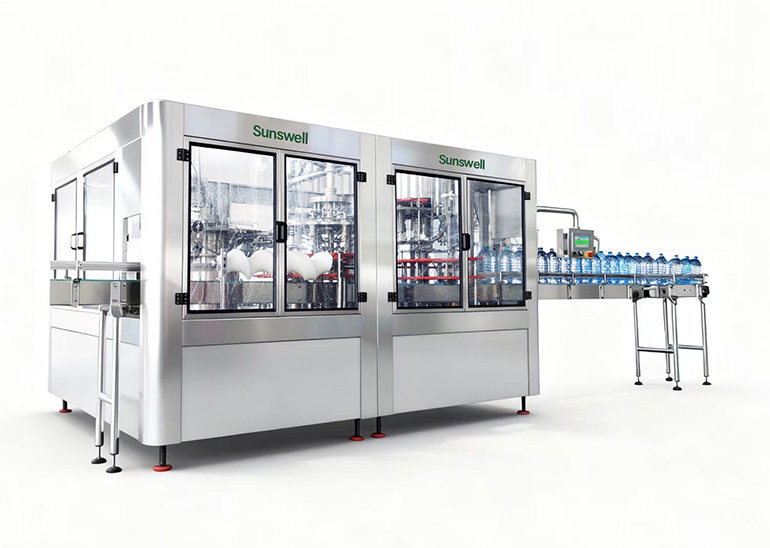
Gulf water plants run high-volume PET: combiblocks dominate because they blow, fill and cap in one block with the lightest bottle and the smallest footprint. Below roughly 8,000 BPH a separate-line configuration is cheaper; above it the combiblock's savings compound. The line is rated on your bottle drawing, and the bottle is heat-and-climate rated for the market.
For the small-format and 5 L home formats, confirm the bottle and cap with the supplier — the Gulf's hot storage makes the bottle spec part of the product decision.
5. Packaging decisions
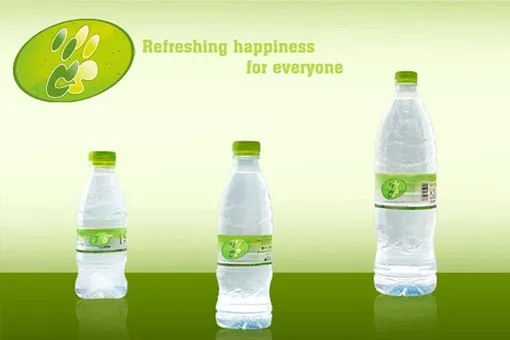
PET small formats (0.33–1.5 L) carry the Gulf retail volume, with 5 L formats for home and catering. The package mix is a line decision — the filler, the capper and the packing follow the bottle. Preform and cap supply is an ongoing cost: confirm local suppliers or budget the import, because the line is only as reliable as its consumables.
Multipack formats (film-wrapped trays) dominate the Gulf shelf — the downstream is specified for the pack the retailers actually buy.
6. Compliance and utilities
Machinery import runs the conformity path for the destination country — confirmed with a broker before order — and the plant carries local food-safety registration for bottled water. Start the product registration early; it can run longer than the line build. Utilities — power, chilled water, compressed air — are sized at design stage, with the climate's cooling load included.
Confirm who clears customs under the delivery term and who bears the duty — a DDP quote includes it, an FOB quote leaves it to you.
7. Staffing and commissioning
A Gulf plant runs on a small, trained crew — operators, a technician and QC — trained before the line arrives. The supplier's commissioning technician trains them during installation, and the acceptance test runs at the rated output on your bottle. Staffing for the climate matters too: shift patterns and plant design for a hot environment are part of the operating plan.
Commissioning ends with the acceptance run — and the first pallet leaves after it, not before.
Frequently asked questions
What water do Gulf plants use?
Mostly desalinated or municipal feed — pure but flat. The treatment re-mineralises to the product target rather than just filtering.
Does the climate change the line spec?
Yes — cooling loads, hot storage, bottle behaviour and warehouse temperature control are all design inputs, not footnotes.
Combiblock or separate line?
Gulf plants run high volume, so combiblocks dominate above roughly 8,000 BPH; below that, separate configurations are cheaper.
What certification do I need?
The conformity path for the destination country plus local food-safety registration for bottled water. Confirm both with a broker and the authority early.
How long is installation?
Typically one to two weeks with the supplier's technician, ending in an acceptance run at the rated output on your bottle.
Can Sunswell deliver a Gulf water plant?
Yes — Sunswell exports to 71+ countries and supplies water plants from treatment to palletising, with climate-aware engineering and the conformity documents for the destination.
About the author
Written by the Sunswell engineering team — led by Howie SUN, Founder & CEO, with 14 years in filling and blow-moulding equipment R&D and turnkey project delivery across 71+ countries.
Last reviewed: 2026-08-28 · Reviewed by Sunswell engineering team
Ask our engineering team →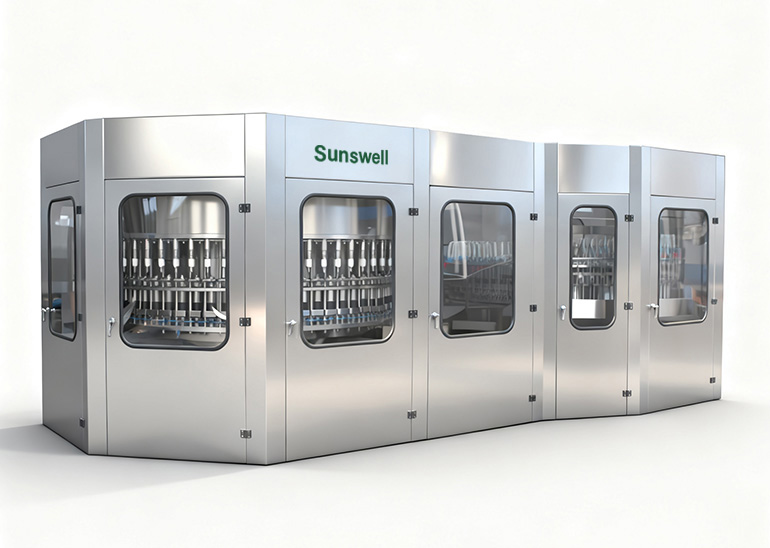
Have a specific project in mind?
Tell us product, target BPH, bottle sizes and market. We reply with a draft layout, equipment list and lead time estimate.
Fill the inquiry form ↑