


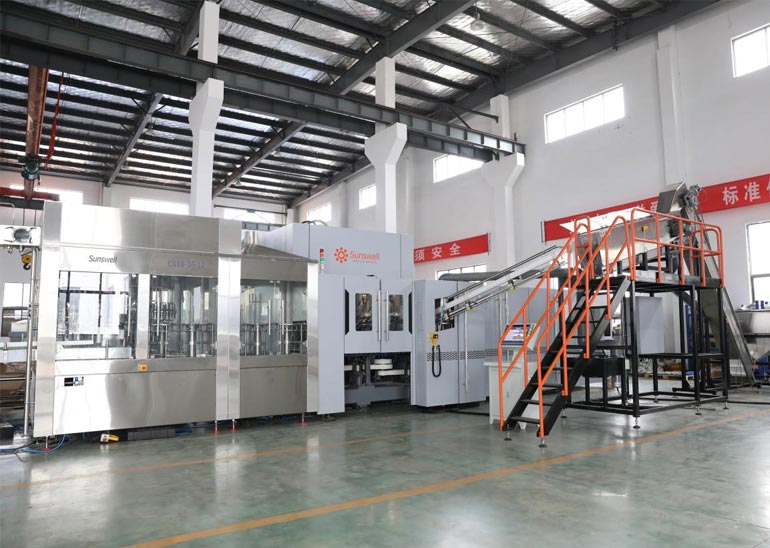
Market · Kazakhstan
Kazakhstan Beverage Market Overview for Equipment Buyers
Kazakhstan imports most of its bottling technology, and the market runs on two facts: EAC certification is mandatory, and delivery from China is faster than from Europe. This overview is written for a buyer who needs the demand picture and the procurement reality, not a tourist brochure.
71+
Countries exported
444+
Lines delivered
12,000
BPH CSD line, Almaty
8
Lines, Rauan plant, KZ
20,000
m² workshop
Short answer: Kazakhstan is the largest beverage market in Central Asia, and its plants are built on imported lines — mostly from China, Turkey and Europe. Water and CSD dominate volumes; juice and beer follow. Buyers in Kazakhstan care about EAC certification, cold-chain-free logistics, lead time and after-sales reach. A line from China typically reaches site faster than one from Europe, and the specification work is the same: bottle, closure, output, product.
🎯 Key takeaways
- Kazakhstan is Central Asia's largest beverage market; water and CSD drive most volume.
- EAC certification is mandatory for imported filling machinery — budget it into the plan.
- Lead time from China is generally shorter than from Europe, which matters for seasonal projects.
- Local plants run a wide output range: small city plants from ~2,000 BPH to large plants at 24,000 BPH.
- After-sales reach (spare parts, service visits) should be agreed in writing before order.
On this page
1. Why Kazakhstan matters
Kazakhstan is the largest economy and the largest beverage market in Central Asia. Its bottled-water and soft-drink segments have grown steadily for a decade, and most production capacity sits with domestic plants that supply a population spread over a huge territory. For equipment suppliers, the country matters because it is both a market and a staging point: plants in Almaty, Astana and Shymkent buy lines, and distribution reaches across the region.
The practical consequence for a buyer is that competition among suppliers is real. Chinese, Turkish, Russian and European manufacturers all quote here. EAC certification is the filter that removes suppliers who cannot document compliance, so a buyer should treat certification evidence as a pre-qualification, not a formality.
2. Market structure: water, CSD, juice, beer
Volume in Kazakhstan is led by still and sparkling water, followed by carbonated soft drinks. Juice and nectar are smaller but steady, and beer production is concentrated in a few large plants. Retail structure matters for packaging: supermarkets and convenience stores drive PET; HORECA and rural distribution keep glass and larger PET alive.
| Segment | Packaging that dominates | Typical line scale |
|---|---|---|
| Still / mineral water | PET 0.5–1.5 L, some 5 L and 19 L returned bottles | 2,000–24,000 BPH |
| CSD / sparkling | PET, some glass and cans | 12,000–24,000 BPH |
| Juice / nectar | PET hot-fill, glass | 6,000–18,000 BPH |
| Beer | Glass, cans | Large, dedicated plants |
For an importer or a new plant, water and CSD are the segments where a single line can pay back fastest, because demand is everyday rather than seasonal.
3. Local production vs import
Kazakhstan produces its own packaging, and a growing share of preforms and closures are made domestically. Filling machinery, however, is overwhelmingly imported. There is no domestic mass production of filling lines, so every plant project is an import project, which means certification, logistics and customs are part of the machinery spec.
This is not a barrier; it is a routine. Suppliers who ship to Kazakhstan do it repeatedly, and a buyer's real task is to verify that the supplier has done it — EAC paperwork, customs codes, and delivery terms that survive the border.
4. What buying equipment really involves
Three things make Kazakhstan procurement different from buying domestically. First, EAC certification: machinery must carry the EAC mark to clear customs, and the certificate should be issued before shipment, not after arrival. Second, logistics: rail and truck routes from China are established, but lead time and winter transit need planning. Third, payment and language: most suppliers sell with T/T terms, and the contract should be written so both sides agree on what happens at FAT and commissioning.
Ask the supplier for EAC certification evidence on the exact machine model before you sign. A certificate for a different model is not proof of compliance for yours.
None of this is exotic, but it rewards a supplier who has done Kazakhstan projects before — the difference shows in documents, not brochures.
5. Cost and lead-time reality
Line cost is set by output, valve type, packaging format and automation level — the same drivers as anywhere. Lead time is where Kazakhstan changes the maths. A line built in China ships to Almaty or Astana by rail or truck in weeks, not months; a European line adds ocean freight and often a longer build slot. For a project tied to a season or a loan approval, the shorter chain is worth real money.
Get the lead-time commitment in the contract with a penalty clause, and plan installation for a season when the hall is dry and staff can be freed.
6. Service, spare parts, training
After-sales is the question every buyer asks and every supplier answers optimistically. Make it concrete: response time for spare parts, whether a technician can reach site, what the warranty covers, and what training is included. Sunswell's own lines run in Kazakhstan, including an eight-line plant near Almaty, so local service experience exists — but put the terms in writing.
Spare parts strategy should be agreed before commissioning: a starter kit on site for the first year, and a defined reorder channel after that. This is cheaper than air-freighting a sensor later.
7. How to start a project
Start with four inputs: product and target output, bottle and closure drawing, hall dimensions and utilities, and the certification scope. Send these to a shortlist of suppliers, ask for a technical proposal with the machine layout and a FAT plan, and visit or video-audit the factory before order. A line is a long-term asset; the supplier's factory, not its website, is the evidence.
The same logic applies whether you buy a water filling machine, a CSD filling machine or a juice filling machine — the market conditions are the same; only the process differs.
Frequently asked questions
Is EAC certification mandatory for filling machines in Kazakhstan?
Yes. Imported machinery must be EAC certified to clear customs. Verify the certificate covers your exact model and is issued before shipment.
Is China or Europe the better source for Kazakhstan?
For lead time and price, China is usually ahead; for very specialised or high-speed technology, European machines still lead. Shortlist by output, product and certification evidence, not by origin.
How long does delivery to Kazakhstan take?
From China by rail or truck it is typically weeks rather than months once the line is built. Confirm the exact commitment in the contract with a penalty clause.
Can a small plant in Kazakhstan afford an imported line?
Yes. Small city plants run from roughly 2,000 BPH. Below that, a semi-automatic or standalone filler is often the smarter buy; ask suppliers to quote both.
What spare parts should I stock for the first year?
Agree a starter kit with the supplier: sensors, seals, valves, belts for the highest-wear positions. Air-freighting one sensor later costs more than the kit.
Does Sunswell support existing lines in Kazakhstan?
Sunswell has delivered multiple projects in Kazakhstan, including an eight-line plant near Almaty, and supports those lines with spare parts and service visits. Put response-time terms in the contract.
About the author
Written by the Sunswell engineering team — led by Howie SUN, Founder & CEO, with 14 years in filling and blow-moulding equipment R&D and turnkey project delivery across 71+ countries.
Last reviewed: 2026-08-28 · Reviewed by Sunswell engineering team
Ask our engineering team →
Project references
-
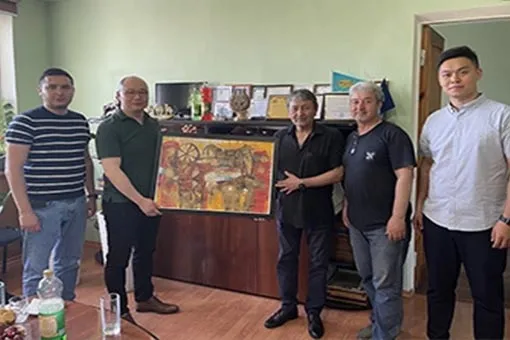
Vizit, 12,000BPH 1L Bottling Line with Combiblock for CSD, Kazakhstan
Country: Kazakhstan
Product: PET Bottled Carbonated Soft Drinks
Capacity: 12000BPH (1L)
Solution:Carbonated Drinks Production Line
Read More + -
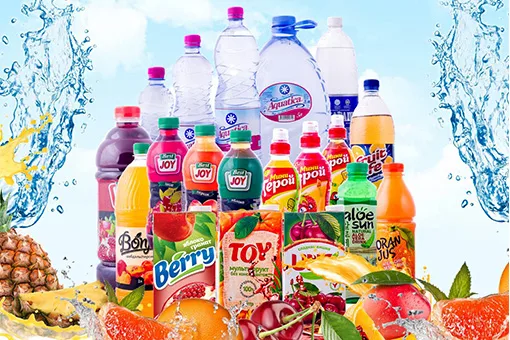
Rauan, 8 Sets of Bottlingand Canning Lines from 12,000-24,000BPH for Water, CSD and Juice, Kazakhstan
Country:Kazakhstan
Product: PET Bottled Sparkling Water, Canned Soft Drink, Canned Tea
Capacity: 25000CPH (250ml)
Solution:Three Lines,7000BPH(1.5L), 15000CPH(330ml),15000CPH(450ml)
Read More +
Have a specific project in mind?
Tell us product, target BPH, bottle sizes and market. We reply with a draft layout, equipment list and lead time estimate.
Fill the inquiry form ↑