


Installation · FAQ
Installation and Commissioning FAQ
The line arriving at your hall is the start of the second project, not the end of the first. Installation, utilities, testing and training are scheduled activities with owners on both sides — and the buyers who treat them as such commission on time. This FAQ covers the questions that decide it.
1–2
Weeks typical install
444+
Lines delivered
71+
Countries exported
20,000
m² workshop
80+
Staff
Short answer: Installation is typically one to two weeks on site: mechanical assembly, utilities connection, dry run, product run and operator training, ending in an acceptance test at the rated output on your bottle. The buyer prepares the hall, utilities, labour and product; the supplier provides the technician, the procedure and the test. Site readiness is the most common cause of delay — and it is entirely in the buyer's control.
🎯 Key takeaways
- Site readiness (hall, utilities, labour) is the buyer's job and the main source of delay.
- Installation runs assembly → utilities → dry run → product run → training.
- Acceptance is a test: rated output on the agreed bottle for an agreed period.
- Operators must be trained before the line arrives, or the training slot is wasted.
- The acceptance criteria belong in the contract, not improvised at the end.
On this page
1. What to prepare before arrival
Before the line arrives, the buyer prepares: a clean hall with the layout marked, power, water, drainage and compressed air connected, labour for unloading and assembly, and the product and packaging materials for the test run. The supplier provides the layout drawing and the utilities spec with the order — use them, because the hall is prepared to the drawing, not to memory.
Prepare the materials too: the bottles, caps and product for commissioning, agreed with the supplier so the test runs on the real format, not an approximation.
Ask for the utilities and site-preparation sheet with the order confirmation. It lists every connection the line needs — a hall without one of them waits, and waiting is expensive.
A readiness checklist signed by both sides before the technician travels is the cleanest way to keep the schedule honest.
2. The installation timeline
A typical sequence: day 1–2 mechanical assembly and alignment; day 3–4 utilities connection and electrical checks; day 5 dry run (no product); day 6–8 product run and adjustment; day 9–10 acceptance test and operator training. The total is one to two weeks depending on line size and automation.
The timeline is a joint schedule: the technician works while the site is ready, and the site is ready because the buyer prepared it. Miss the preparation and the schedule slides regardless of the technician's skill.
3. Utilities and site conditions
The line needs power (confirmed capacity and phase), water at the right flow and pressure, drainage for the product and CIP paths, and compressed air where the blow moulder or pneumatics demand it. The numbers are in the supplier's spec sheet — the buyer's job is to confirm the hall can deliver them before the line arrives.
Hall conditions matter too: level floor for alignment, temperature for electronics, and space around the machine for access and maintenance. A cramped hall passes inspection once and costs you every day after.
4. The supplier's technician
The technician installs, aligns, runs the machine, trains the operators and signs the acceptance report with you. The cost and logistics (travel, accommodation, visa where applicable) are agreed in the contract — either included in the package price or quoted separately, never improvised.
Use the technician's time fully: have your operators and maintenance person working beside them from day one. The knowledge transfer during installation is worth more than any manual.
5. The acceptance test
Acceptance is a test with numbers: the line runs at the rated output on the agreed bottle for an agreed period, with the agreed product quality, and no unresolved leaks or faults. The criteria are written in the contract before shipment, and the acceptance report is signed at the end.
If the test fails, the contract defines the remedy: the supplier fixes it within a period and the test is rerun. Acceptance is not a ceremony; it is the point where the risk passes from supplier to buyer, so it deserves definition.
6. Operator training
Training covers operation, changeover, cleaning and basic fault-finding, delivered during installation by the technician. The buyer's operators should be on site from the start of the product run — the training is hands-on, and it cannot be compressed into the last day.
Train more than the minimum crew, because the people who learn the line are the people who leave for better jobs. A second trained shift is cheap insurance.
7. Common delays
The repeated delays are: hall not ready (power, water, floor), product or packaging not available for the test, operator absence, documentation missing for customs, and acceptance criteria undefined. All five are controllable before the technician arrives — and all five are cheaper to fix in planning than in waiting.
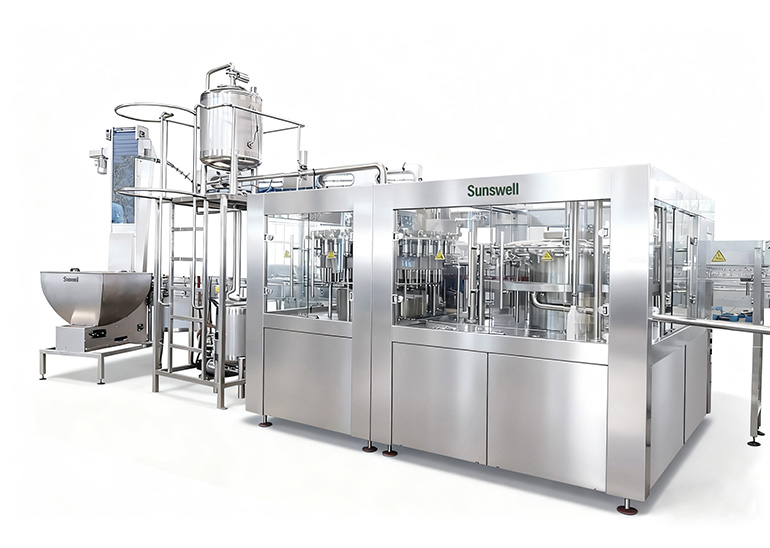
The installation of a filling machine or a combiblock follows the same discipline; the line size changes the days, not the logic.
Frequently asked questions
How long does installation take?
Typically one to two weeks on site, depending on line size and automation: assembly, utilities, dry run, product run, acceptance and training.
Who prepares the site?
The buyer prepares hall, utilities, labour and test materials; the supplier provides the layout drawing, technician and procedure. Site readiness is the buyer's job.
What is the acceptance test?
A defined run at the rated output on the agreed bottle for an agreed period, with agreed quality — with a remedy and retest if it fails.
When should operators be trained?
During installation, hands-on from the product run. Operators must be on site from the start, not the last day.
What delays commissioning most?
Unprepared halls (power, water, floor), missing test materials, absent operators, customs documents, and undefined acceptance criteria.
Is the technician's cost included?
It is agreed in the contract — included in the package or quoted separately. Never improvised after order.
About the author
Written by the Sunswell engineering team — led by Howie SUN, Founder & CEO, with 14 years in filling and blow-moulding equipment R&D and turnkey project delivery across 71+ countries.
Last reviewed: 2026-08-28 · Reviewed by Sunswell engineering team
Ask our engineering team →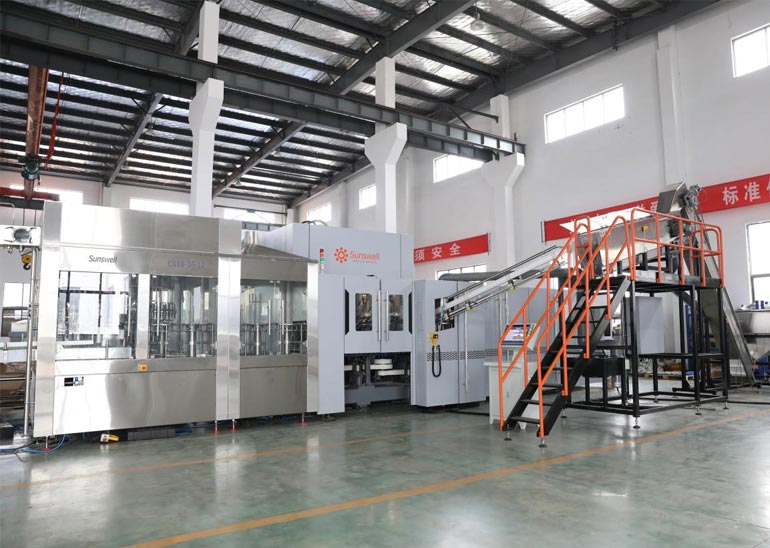
Project references
-
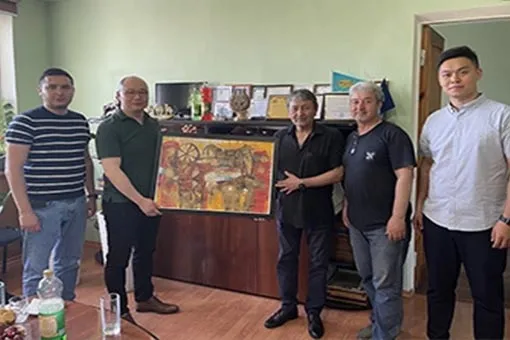
Vizit, 12,000BPH 1L Bottling Line with Combiblock for CSD, Kazakhstan
Country: Kazakhstan
Product: PET Bottled Carbonated Soft Drinks
Capacity: 12000BPH (1L)
Solution:Carbonated Drinks Production Line
Read More + -
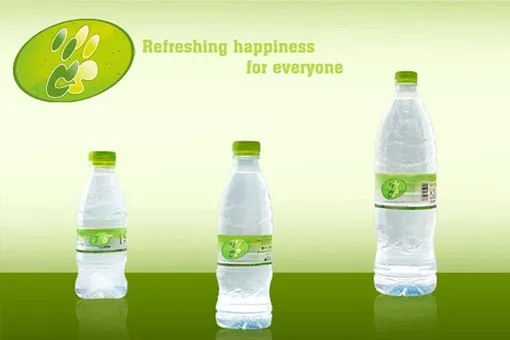
Taza, 4 Sets of 12,000BPH 1.5L Bottling Lines with Combiblock for Water, Maldives
Country: Maldives
Product: PET Bottled Mineralized Water
Capacity: 24,000BPH (500ml); 2 Lines
Solution:Water Production Line
Read More +
Have a specific project in mind?
Tell us product, target BPH, bottle sizes and market. We reply with a draft layout, equipment list and lead time estimate.
Fill the inquiry form ↑