


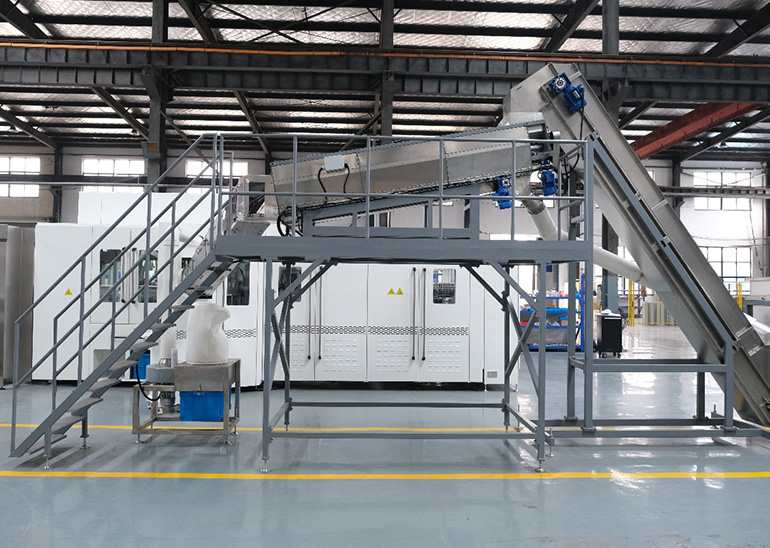
Line configuration · Juice & nectar
Fruit Juice & Nectar — Line Configuration Options and Investment Levels
Juice lines configure around one decision — how you preserve the product — and hot-fill is the mainstream route. Within it, the configuration levels run from a standalone hot-fill filler to integrated lines and combiblocks, and the package decision (PET, glass) sets the machine. This page compares the options.
2×18,000
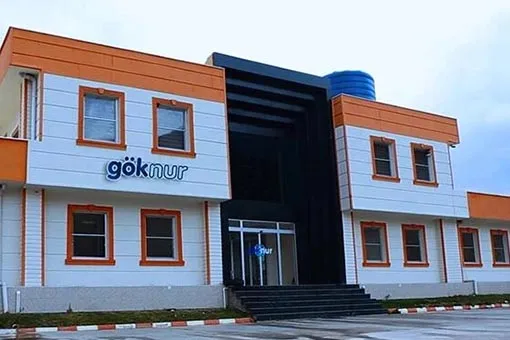
BPH juice case, Turkey
6,000–18,000
BPH typical band
444+
Lines delivered
71+
Countries exported
20,000
m² workshop
Short answer: Juice configurations run: a standalone hot-fill filler with batching and heat treatment upstream; an integrated line linking batching, heat treatment, filler and cooling under shared control; and a hot-fill combiblock for volume PET. The package decision — heat-rated PET or glass — is made before the configuration, because it sets the filler and capper. 6,000–18,000 BPH is the common band for new plants.
🎯 Key takeaways
- Hot-fill is the mainstream preservation route; the package holds the heat.
- The package decision (PET or glass) comes before the configuration.
- Standalone hot-fill fillers suit flexibility; integrated lines suit mid-output stability.
- Combiblocks bring volume PET, light bottles and footprint savings.
- The front end (batching, deaeration, heat treatment) is shared across configurations.
On this page
1. The preservation decision
Juice projects start with one decision: how the product is preserved. Hot-fill is the mainstream for nectar and pulp products — fill hot into a heat-rated bottle, cap, and let the heat held in the package complete the preservation. Cold filling exists as an alternative with its own preservation route (contact Sunswell for the cold-fill option). The preservation route sets the filler, the bottle and the whole upstream process, so it is decided first.
Within hot-fill, the configuration levels differ in output, integration and footprint — not in the preservation logic.
2. The configuration levels
| Level | Configuration | Best fit |
|---|---|---|
| Standalone | Hot-fill filler + batching/heat upstream | Flexible, small-mid output |
| Integrated | Linked batching–filler–cooling | Mid output, tight control |
| Combiblock | Hot-fill blow-fill-cap | Volume PET, light bottle |
Investment rises with integration; the payback shows in footprint, labour and bottle weight. The drink is the same in all three — the levels are an efficiency ladder, not a quality ladder.
3. Standalone hot-fill filler
A standalone hot-fill filler takes prepared, heated product from the batching and heat-treatment skid and fills heat-rated bottles. It handles PET and glass through different infeed handling, changes formats with change parts, and matches small-to-mid output. For a plant that bottles several products or packages, it is the flexible choice.
The standalone route also suits producers who already run batching and heat treatment and are adding filling capacity — the filler slots into an existing front end.
4. Integrated line
An integrated juice line links batching, deaeration, heat treatment, filler, cooling and packing under shared control, with the product path as one engineered system. It tightens footprint and labour versus standalone and gives consistent process control batch after batch — the right tier for a plant running one product family at mid output.
For a plant that will run several flavours on one line, ask about the CIP path and changeover procedure at the integrated level — that is where multi-flavour plants live or die.
Integrated does not mean locked in: change parts and CIP still allow flavour rotation, but the control and piping are designed for it from the start.
5. Hot-fill combiblock
A hot-fill combiblock blows, fills and caps in one carousel, with the product path designed for hot-fill temperatures. It brings the volume-plant advantages — lightest bottle, smallest footprint, lowest labour per bottle — to juice, for plants with stable formats at volume. The bottle is heat-rated and designed with the preform supplier for the hot-fill duty.
The trade is the same as any combiblock: format lock-in and own-bottle commitment. Volume juice plants with one or two formats are the natural home.
6. The package decision
The package sets the machine: heat-rated PET demands a bottle designed for the fill temperature and vacuum, with the corresponding filler and capper spec; glass brings brand weight and heat tolerance at higher weight and cost. The decision comes before the configuration, because the filler and infeed differ between the two.
Send the bottle drawing and the cap to suppliers with the enquiry — the configuration quote follows the package, not the other way around.
7. The front end
The front end — batching, deaeration, homogenising for cloudy product, heat treatment — is shared across configurations and is where the drink is made. It is sized on the line output and the recipe, and it is the station where under-budgeting shows up first: a filler that starves for product runs at half its rating.
The front end also decides the flavour: deaeration protects it, homogenising stabilises pulp, and the hot path is kept short and controlled. The juice filling machine range shows the filler side; the front end is engineered with it as one system.
Frequently asked questions
Which configuration is right for a new juice plant?
The one that matches output and format stability: standalone for flexibility, integrated for mid-output control, combiblock for volume PET.
Is hot-fill the only preservation route?
Hot-fill is the mainstream for nectar and pulp products. Cold filling exists with its own preservation route — contact Sunswell for the cold-fill option.
Does the package decision matter?
Yes — heat-rated PET and glass need different fillers, infeed and cappers. Decide the package before the configuration is quoted.
Can one line run several flavours?
Yes — with change parts and a proper CIP path. Ask how the line handles flavour changeover at the configuration stage.
What output band is typical?
6,000–18,000 BPH covers most new plants. Size to year-one sales and the recipe schedule.
Has Sunswell delivered juice configurations at scale?
Yes — including two 18,000 BPH juice lines in Turkey, plus hot-fill machines for PET and glass.
About the author
Written by the Sunswell engineering team — led by Howie SUN, Founder & CEO, with 14 years in filling and blow-moulding equipment R&D and turnkey project delivery across 71+ countries.
Last reviewed: 2026-08-28 · Reviewed by Sunswell engineering team
Ask our engineering team →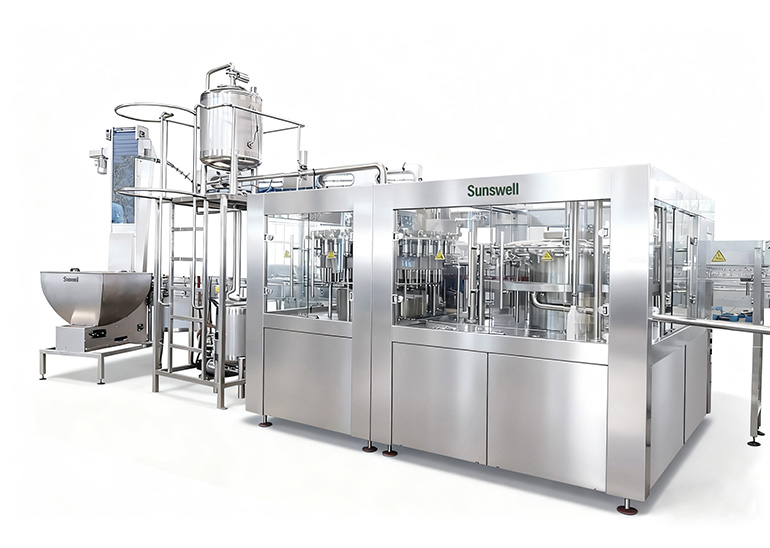
Have a specific project in mind?
Tell us product, target BPH, bottle sizes and market. We reply with a draft layout, equipment list and lead time estimate.
Fill the inquiry form ↑