


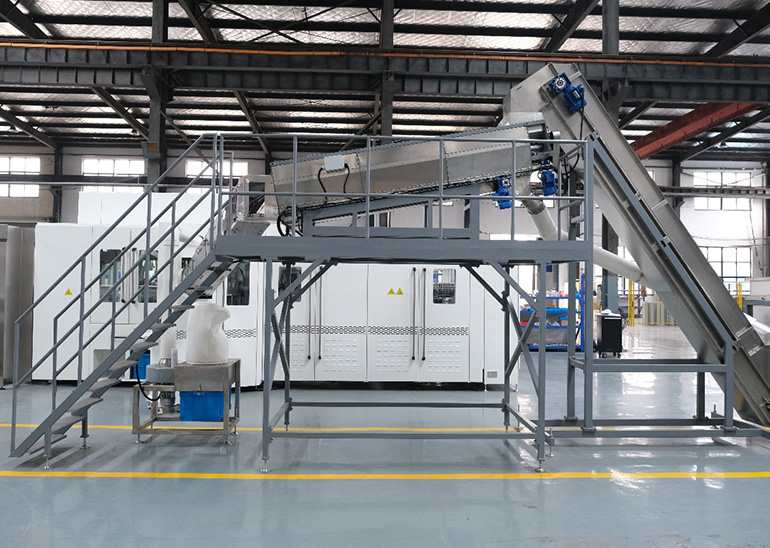
Production line · Energy drinks
Energy & Functional Drinks Production Line
Energy drinks are a recipe-sensitivity product: caffeine, vitamins and flavour compounds that need precise batching and a process that does not degrade them. This page walks the line — from batching to can or bottle — and where it differs from a CSD or juice line.
444+
Lines delivered
71+
Countries exported
24,000
CPH canning case
20,000
m² workshop
2011
Sunswell founded
Short answer: An energy drink line runs: batching (with precise caffeine, vitamin and flavour dosing) → deaeration → heat treatment (pasteurising or hot-fill, depending on the product) → optional carbonation → filling → capping → packing. Cans dominate the format, with a seamer at the filler discharge; PET and glass follow. The differentiators are batching accuracy and the preservation route — not the filling principle.
🎯 Key takeaways
- Batching accuracy is the brand: caffeine, vitamins and flavour are dosed to tight tolerances.
- Cans dominate the energy-drink format, with a seamer and often a nitrogen doser.
- Preservation is heat treatment — pasteurising or hot-fill — per the product and pack.
- Deaeration protects flavour and functional compounds from oxidation.
- The line shares most stations with CSD and juice lines; the recipe side is the difference.
On this page
1. The complete process
The line: water treatment → batching (sugar or sweetener, caffeine, vitamins, flavour, acid) → deaeration → heat treatment (pasteurising or hot-fill) → optional carbonation → filling → capping or seaming → packing → palletising. The station order is the same as CSD or juice; the recipe discipline is stricter, because the functional claims are legal claims.
The preservation route — pasteurising, hot-fill, or cold with an alternative process (contact Sunswell) — is decided by the product and the pack, and it sets the heat treatment section.
2. Batching and dosing
Energy drinks are defined by their declared ingredients, so batching is a precision operation: caffeine, vitamins and flavour are dosed to tight tolerances, and the batch is verified before it goes to the line. Inline dosing with metering pumps and flow control, or gravimetric batching, keeps the recipe repeatable bottle after bottle.
The batching system and its verification (density, brix, ingredient checks) are the heart of the plant — and the part an auditor will examine first.
3. Deaeration
Oxygen degrades flavour, vitamins and the drink's appearance. Deaeration strips dissolved oxygen before batching or before filling, protecting the functional compounds that the label promises. For energy drinks the deaerator is a quality station, not a courtesy — oxidised product is a failed brand, not a failed process.
Keep the deaerated product path closed and inert where the recipe demands, so the oxygen does not come back before filling.
4. Heat treatment
Heat treatment reduces the microbial load: pasteurising for cans and some bottles, hot-fill for heat-rated bottles where the package holds the heat. The route depends on the product's pH, the pack and the shelf-life target — and it is specified with the recipe, not guessed.
Heat degrades some functional compounds, so the heat treatment is designed as short as the safety case allows — the balance between kill and quality is an engineering spec.
5. The carbonation option
Many energy drinks are carbonated, which adds the CSD front end: cooling, carbonation and isobaric filling. Still versions run the still path. Decide the product's gas level at the recipe stage — the filler, the bottle and the gas plant all follow it, and a carbonated drink cannot run on a still filler.
For lightly carbonated cans, a nitrogen doser adds pressure without carbonation — a common configuration in the canning route.
6. Cans, PET, glass
Cans dominate energy drinks: a canning line counts in cans per hour, seams the lid at the filler discharge, and often adds a nitrogen doser. PET and glass serve the same recipe with a capped bottle and the corresponding filler. The package decision sets the filler discharge — seamer vs capper — and is made before the line is quoted.
The brand typically decides: a can for energy and on-the-go, PET or glass for the same recipe in retail formats. One plant often runs both lines.
7. Equipment list
| Station | Typical equipment | Notes |
|---|---|---|
| Water treatment | Filtration, softening, deaeration | Same front end as CSD |
| Batching | Tank farm, inline dosing, verification | Precision is the brand |
| Heat treatment | Pasteuriser or hot-fill loop | Short to protect compounds |
| Filling | Isobaric (carbonated) or still valve | Can seamer or capper |
| Packing | Shrink or carton + palletiser | Can lines: tray + wrap |
The energy-drink line is a hybrid of the CSD filling machine and juice filling machine families — the filling principle is shared; the recipe side is the difference.
Frequently asked questions
Is an energy drink line a CSD line?
Often, with the carbonation front end — but the batching and heat treatment differ, and the functional-ingredient dosing is much stricter.
Cans or bottles?
Cans dominate energy drinks; PET and glass serve the same recipe. The filler discharge (seamer vs capper) follows the package.
Do energy drinks need heat treatment?
Yes — pasteurising or hot-fill, per product and pack. It is designed as short as safety allows to protect functional compounds.
What is the nitrogen doser for?
It adds pressure to lightly carbonated or still cans, giving the can its rigidity without full carbonation.
Why is batching so precise?
Because the label declares caffeine, vitamins and other functional ingredients — the doses are legal claims, verified batch by batch.
Can Sunswell supply an energy drink line?
Yes — water treatment, batching, heat treatment, carbonation and filling for cans, PET and glass, with the canning route including a seamer and nitrogen dosing.
About the author
Written by the Sunswell engineering team — led by Howie SUN, Founder & CEO, with 14 years in filling and blow-moulding equipment R&D and turnkey project delivery across 71+ countries.
Last reviewed: 2026-08-28 · Reviewed by Sunswell engineering team
Ask our engineering team →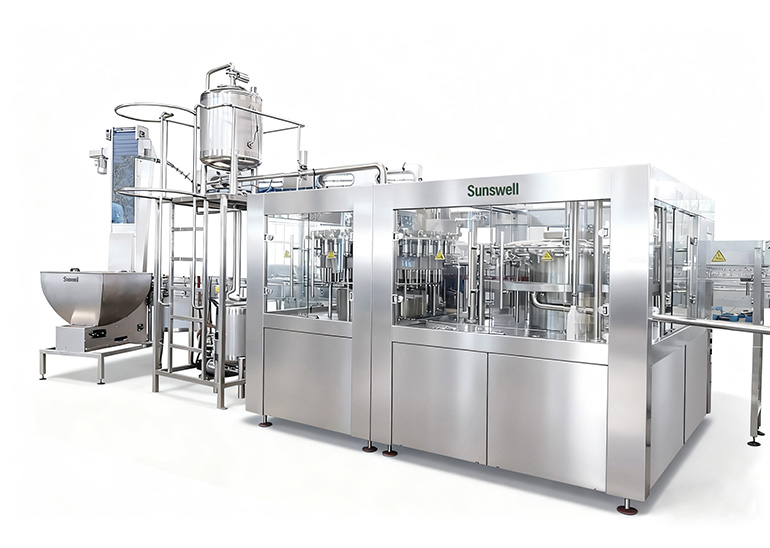
Have a specific project in mind?
Tell us product, target BPH, bottle sizes and market. We reply with a draft layout, equipment list and lead time estimate.
Fill the inquiry form ↑