


How it works · Edible oil
Edible Oil Filling Machine — How It Works and Key Components
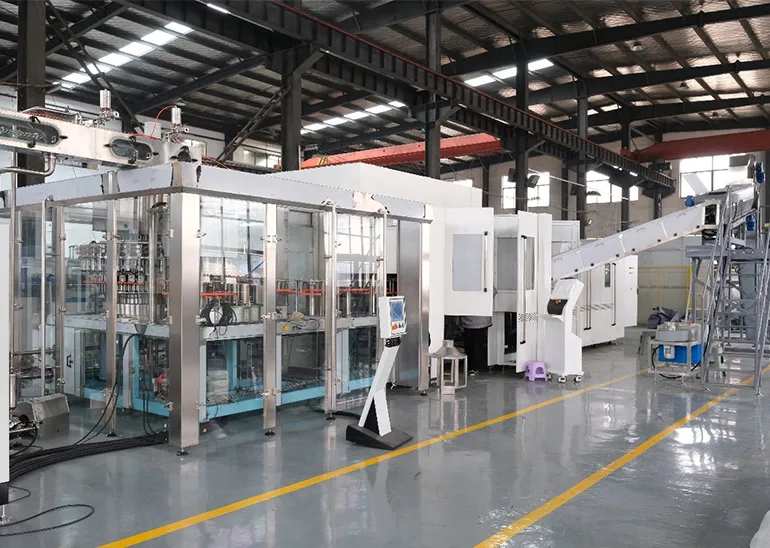
An edible oil filling machine doses a viscous, density-sensitive liquid by weight (load cell) or by volume (piston). The bottle is filled from the bottom to control foam and dripping.
1–15
L bottle range
Load/Piston
Dosing type
444+
Lines delivered
71+
Countries exported
±1–2
g typical (load cell)
Short answer: Edible oil is viscous and its density shifts with temperature, so volume metering drifts while weight does not. Load-cell fillers weigh each bottle and cut give-away on an expensive, dense product; piston fillers meter volume for steady, slower lines. Fill is bottom-up to limit foaming and the post-fill drip, and the product path is heated or insulated where the climate demands it. Accuracy is the buying decision because oil is sold by declared weight.
🎯 Key takeaways
- Oil is dosed by weight (load cell) or volume (piston).
- Load cell cuts give-away on a dense, declared-weight product.
- Fill is bottom-up to control foam and drip.
- Viscosity and temperature change fill rate and accuracy.
- Size on oil grade and main format; confirm speed on your product.
On this page
1. The oil filling flow
Oil bottles are rinsed, filled and capped like any line, but the fill is bottom-up through a diving nozzle so the stream stays submerged and foam and dripping are controlled. Because oil is viscous, the nozzle and valve are sized for flow, not speed, and the post-fill suck-back matters for a clean bottle and label.
There is no carbonation and no heat process (unless the product is hot-filled, a separate spec), so the line is mechanically simple — the skill is in dosing accuracy and handling viscosity.
2. Load cell vs piston dosing
A load-cell filler places the bottle on a scale and fills to target weight, compensating for bottle-weight variation and oil density in real time. A piston filler draws a fixed volume per stroke; it is simpler and cheaper but drifts if density or temperature changes.
| Method | Best for | Accuracy driver |
|---|---|---|
| Load cell | Declared weight, give-away | Weighs each bottle, density-proof |
| Piston | Steady volume, lower cost | Stroke volume; drifts with density |
Oil is sold by weight and is dense, so give-away is expensive. Load cell pays for itself where declared net content is enforced; piston suits lower-volume or less strict lines.
3. Viscosity and temperature
Oil viscosity falls as it warms, so fill rate and accuracy improve with a tempered product. Lines in cold climates heat or insulate the product path and the fill head. The nozzle dive speed and suck-back are tuned to the oil grade — a light oil and a heavy one fill differently.
Specify the oil grade and the ambient temperature at quotation; both change the fill-head design and the heating scope.
4. Key components
The dosing system (load cell or piston) is the core. The diving nozzle and suck-back set drip and foam. The capper matches the closure (screw or press-on for oil). For larger formats (3–15 L) the same logic applies but with fewer, slower fill heads.
The filling machine range covers the broader family; edible oil is the viscous, weight-critical case.
5. Speed and accuracy
Oil lines run slower per head than water because of viscosity and the dwell needed for clean cut-off. Accuracy is the priority: load cell lands around ±1–2 g on a 1 L fill, which directly cuts give-away on a high-volume line. Speed scales with fill-head count, confirmed on your bottle and oil grade.
Size on the oil grade and the main format. A line quoted on a light oil will under-perform on a heavy one; confirm speed on your actual product.
6. Choosing your configuration
Inputs: oil grade, bottle range (1–15 L), target output, closure, and whether declared weight is enforced. Load cell for strict markets and high volume; piston for steady, lower-volume lines. The valve/filler comparison covers dosing choices across products.
7. Specifying the machine
Send the oil grade, bottle drawing and range, closure, target speed and the ambient temperature. The supplier returns dosing method, fill-head count and the heating scope — the real accuracy and capacity statement, on your product.
Frequently asked questions
Load cell or piston for oil?
Load cell for declared weight and to cut give-away on a dense product; piston for steady, lower-volume or less strict lines.
Why does oil need bottom-up filling?
To keep the stream submerged and control foam and post-fill drip, which matter more for a viscous liquid.
Does temperature affect fill?
Yes. Oil flows faster and more accurately when tempered; cold climates need heated or insulated product paths.
How accurate is load cell?
Around ±1–2 g on a 1 L fill, compensating for bottle and density variation in real time.
What bottle sizes are typical?
Roughly 1–15 L; larger formats use fewer, slower fill heads but the same dosing logic.
What should I send the supplier?
Oil grade, bottle drawing and range, closure, speed and ambient temperature. Rated speed must come back on your actual product.
About the author
Written by the Sunswell engineering team — led by Howie SUN, Founder & CEO, with 14 years in filling and blow-moulding equipment R&D and turnkey project delivery across 71+ countries.
Last reviewed: 2026-08-28 · Reviewed by Sunswell engineering team
Ask our engineering team →
Have a specific project in mind?
Tell us product, target BPH, bottle sizes and market. We reply with a draft layout, equipment list and lead time estimate.
Fill the inquiry form ↑