


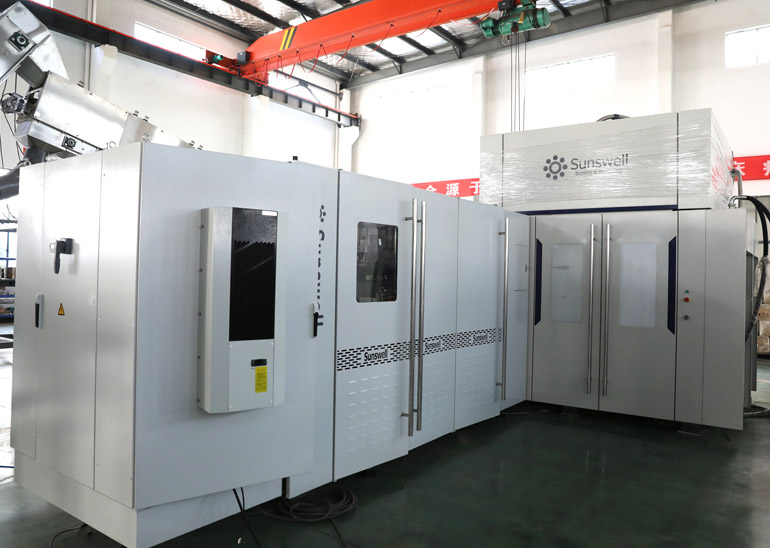
Filling technology · Combiblock
How to Choose a Filling Valve for Your Combiblock — Load Cell, Volumetric or Mechanical
The valve decides fill accuracy, give-away and which products a combiblock can run. Mechanical, volumetric, semi-electric and load-cell valves trade cost against precision differently.
3
Main valve families
±1–2
g typical on load cell
2,000–48,000
BPH combiblock range
444+
Lines delivered
71+
Countries exported
Short answer: A mechanical (gravity/isobaric) valve is cheapest and adequate for non-declared, level-based fills. A volumetric valve meters by chamber volume and tightens accuracy for still and carbonated product. A load-cell valve weighs each bottle and is the choice where declared net content, viscous or pulpy product drives give-away cost. Semi-electric valves sit between volumetric and load cell for CSD. Match the valve to the product and the tolerance you must legally hold — paying for load-cell accuracy on still water you sell by level wastes money.
🎯 Key takeaways
- Mechanical valves are cheapest; load cell is most accurate and most expensive.
- Volumetric meters by chamber; semi-electric adds flow metering for CSD.
- Load cell weighs each bottle — pick it for declared weight, oil, sauce, pulp.
- Valve type is fixed at specification; it cannot be upgraded in the field.
- Size the line on the strictest product you will actually run.
On this page
1. Why the valve is the core buying decision
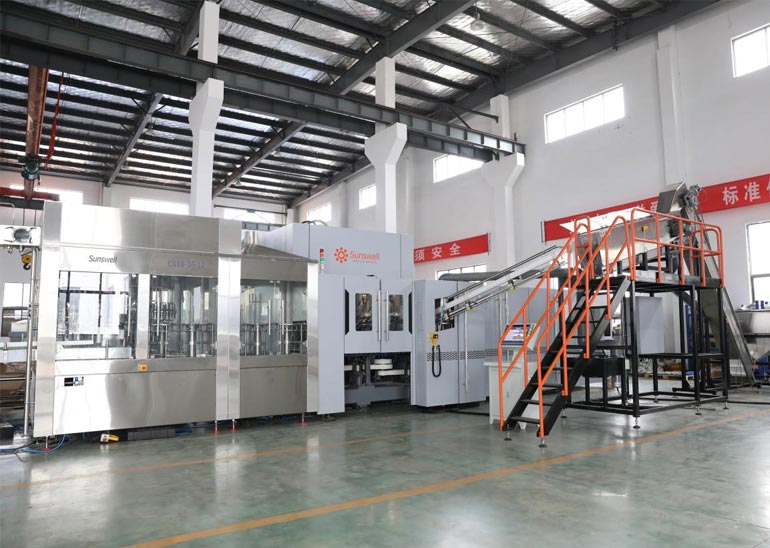
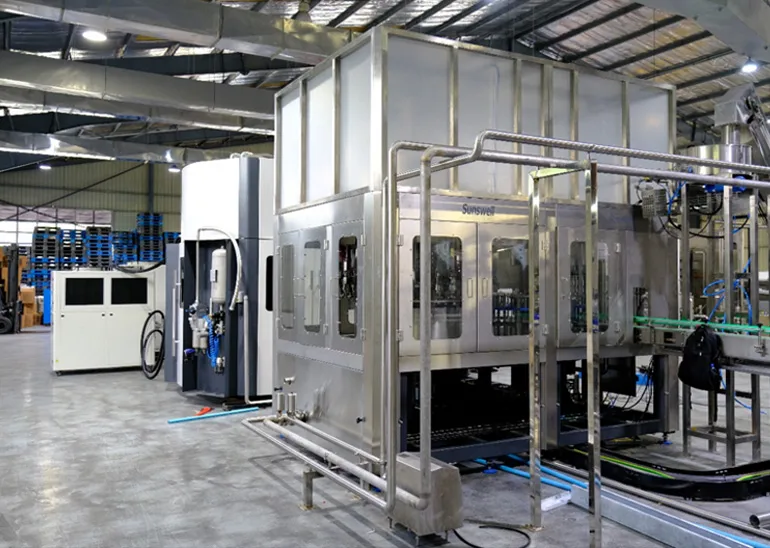
A combiblock is a blow-fill-cap block: it forms the PET bottle, fills it and caps it in one carousel. The blow moulder and capper are fixed by bottle and closure; the filler valve is the variable that sets accuracy, speed and which products you can run. Two lines that look identical from the turret back can differ completely at the fill, and that difference shows up as give-away, rework and customs disputes on declared weight.
Valves are not upgradeable in the field the way a servo or a touchscreen is. The valve type is cast into the filler bowl, the product path and the control logic, so the choice is made at specification, not at commissioning. Frame the decision around the product and the tolerance you must legally hold, then let cost follow.
2. Mechanical valves: gravity and isobaric
Mechanical valves are the simplest. A gravity valve opens a fixed orifice and lets product flow by head pressure and time; an isobaric (counter-pressure) valve first equalises the bottle with the tank using CO₂ before opening, so carbonated drink enters a pressurised bottle without foaming or gas loss.
| Valve | Product | Accuracy | Notes |
|---|---|---|---|
| Gravity (mechanical) | Still water, wine | Level-based, loose | Cheapest; adequate where declared volume is not tight |
| Isobaric (mechanical) | Beer, CSD | Level-based | Holds CO₂ in solution; foam controlled by counter-pressure |
Mechanical valves are rugged and cheap to maintain, but they meter by time and level, not by measured volume. For a product sold by level or where tolerance is loose, that is enough. For declared net content, it is not.
3. Volumetric valves: fixed-chamber metering
A volumetric valve fills each bottle from a metered chamber of fixed volume, so accuracy depends on chamber machining and fill time rather than on bottle posture. It is a step up from mechanical for still and carbonated product where you want repeatable volume without weighing every bottle.
Volumetric fillers suit water filling machine lines and many CSD lines where the product is thin, stable and run at volume. They cost more than mechanical valves and need clean, consistent product, but they remove most of the level scatter you get from pure time-based fill.
4. Semi-electric valves: CSD middle ground
Semi-electric (flow-meter or electronically timed) valves add a flow meter or electronic timing to the isobaric path. They keep the CO₂ handling of an isobaric valve while tightening repeatability versus a pure mechanical isobaric valve, at a lower cost than full load-cell weighing.
For CSD filling machine lines that want better consistency than mechanical isobaric without load-cell price, semi-electric is the pragmatic tier. It is common on mid-range carbonated combiblocks.
5. Load-cell valves: weigh every bottle
A load-cell valve places the bottle on a scale and fills to a target weight, compensating for bottle weight variation and product density in real time. Accuracy lands around ±1–2 g on a 1 L fill, which directly cuts give-away on high-volume lines.
Load cell is the right call for edible oil, sauce, viscous and pulpy product, and for any market where declared net content is enforced and audited. It is the most expensive valve family and the slowest per station, so reserve it for where the give-away saving or the legal requirement pays for it.
Load cell pays back where product is expensive or dense, or where weight is declared and checked. On cheap still water sold by level, it is capex you will not recover.
6. Choosing by product
The product decides the valve family outright; bottle and budget only tune within it.
| Product | Recommended valve | Why |
|---|---|---|
| Still / mineral water | Mechanical or volumetric | Thin, stable; volume tolerance often loose |
| CSD / sparkling | Isobaric or semi-electric | CO₂ must stay in solution |
| Juice / tea (hot-fill) | Volumetric or mechanical hot-fill | Temperature-tolerant path; level often accepted |
| Edible oil / sauce | Load cell or piston | Viscous, declared weight, give-away cost |
| Pulpy juice | Load cell | Particulates defeat volumetric chambers |
Where one line must run several products, pick the valve for the strictest product and accept that easier products run on an over-specified filler. That is cheaper than two fillers.
7. Cost, speed and trade-offs
Valve cost rises mechanical < volumetric ≈ semi-electric < load cell. Speed per station falls the same way, because weighing and tighter metering need dwell time. A load-cell combiblock therefore needs more valves for the same rated BPH than a mechanical one.
Size the line on the strictest product you will actually run, confirm speed on your bottle drawing, and treat valve choice as a tolerance-and-product decision first. The broader filler picture across packages is in the filling machine range.
Frequently asked questions
Which valve do I need for sparkling water in PET?
An isobaric or semi-electric counter-pressure valve. It pre-pressurises the bottle with CO₂ so carbonation stays in solution. A plain gravity valve would foam and lose gas.
Is load cell worth it for still water?
Usually not, if you sell by level and tolerance is loose. Load cell earns its cost on declared-weight markets, viscous product, or where give-away on expensive liquid is material.
Can a volumetric valve run CSD?
Volumetric valves are built for still and some hot-fill product. Carbonated drink needs isobaric or semi-electric CO₂ handling, which volumetric chambers do not provide.
Does valve type affect line speed?
Yes. Load-cell and tighter-metering valves dwell longer per station, so they need more valves for the same BPH than mechanical valves.
Can I upgrade the valve later?
No. The valve type is built into the filler bowl and product path. Choose at specification; it cannot be swapped at commissioning.
Which valve handles pulp or particles?
Load cell. Volumetric chambers clog or meter poorly with pulp; load cell weighs the bottle regardless of consistency.
About the author
Written by the Sunswell engineering team — led by Howie SUN, Founder & CEO, with 14 years in filling and blow-moulding equipment R&D and turnkey project delivery across 71+ countries.
Last reviewed: 2026-08-28 · Reviewed by Sunswell engineering team
Ask our engineering team →Recommend Products
Have a specific project in mind?
Tell us product, target BPH, bottle sizes and market. We reply with a draft layout, equipment list and lead time estimate.
Fill the inquiry form ↑