


Project reference · Combiblock
Combiblock Project Reference Library
A reference library is how a buyer verifies a supplier: delivered combiblock lines, their outputs, their packages and their markets. This page lists Sunswell's delivered combiblock and related lines, and how to use the references in your own qualification.
444+
Lines delivered
71+
Countries exported
12,000
BPH typical BFC output
20,000
m² workshop
2011
Sunswell founded
Short answer: Sunswell's delivered combiblock lines include a 12,000 BPH blow-fill-cap line for CSD in Kazakhstan, four 12,000 BPH combiblock water lines in the Maldives, and a multi-line water, CSD and juice plant in Kazakhstan running 12,000–24,000 BPH. The library is maintained as a qualification tool: match the line type and output, then verify the reference with the owner.
🎯 Key takeaways
- The library covers CSD and water combiblocks from 12,000 BPH, plus multi-line plants.
- Use the references to match a delivered line to your output and product.
- A reference is verified by calling the owner — not by reading the brochure.
- The library grows with every delivered project; the list is current, not exhaustive.
- Sunswell's workshop and export base support the full blow-fill-cap scope.
On this page
1. The reference library
A delivered-project list is the supplier's proof of competence: it shows the machine types, the outputs, the packages and the markets a supplier has actually built for. Sunswell's library includes combiblock lines for CSD and water, delivered across export markets — and it is maintained as a working qualification tool, not a marketing page.
| Project | Line type | Output | Market |
|---|---|---|---|
| Vizit | Combiblock BFC for CSD | 12,000 BPH, 1 L | Kazakhstan |
| Taza | 4× combiblock BFC for water | 12,000 BPH, 1.5 L each | Maldives |
| Rauan | Bottling and canning lines, water/CSD/juice | 12,000–24,000 BPH | Kazakhstan |
The library is matched to your enquiry by line type and output — the closest delivered project is the reference that matters most to you.
2. CSD combiblock reference
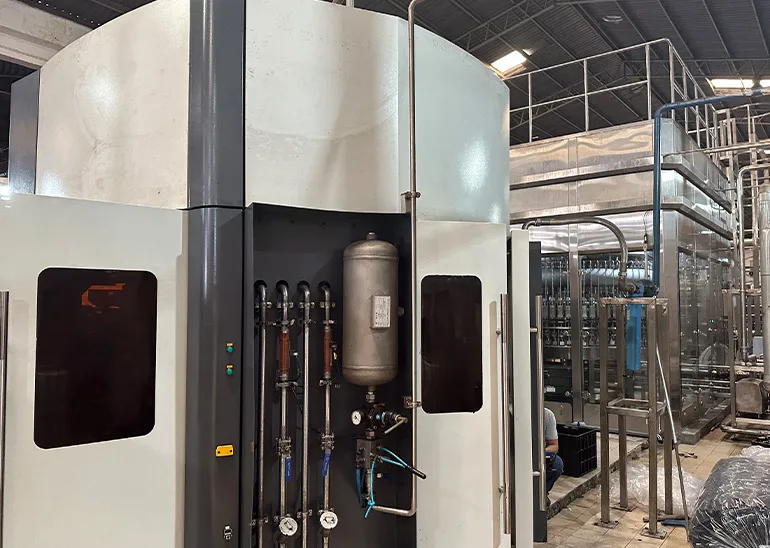
The Vizit project is a blow-fill-cap combiblock for carbonated soft drinks in Kazakhstan: 12,000 BPH on a 1 L PET bottle. It is a direct reference for a CSD plant — the isobaric filling, the CO2 handling and the EAC-certified import route are all in the delivered scope, and the line type matches the question a CSD buyer is asking.
For a CSD enquiry, the closest references are the CSD combiblock and the multi-line plant that runs CSD alongside water and juice.
3. Water combiblock reference
The Taza project is four combiblock lines for bottled water in the Maldives: 12,000 BPH on a 1.5 L PET bottle each. It is a reference for a water plant — blow-fill-cap at volume, island-market logistics and a hot-climate operation — and it shows the combiblock's value where bottle weight and footprint matter.
For a water enquiry at volume, the Taza lines are the direct match; for a small plant, the standalone water machine range is the reference instead.
4. Multi-line plant reference
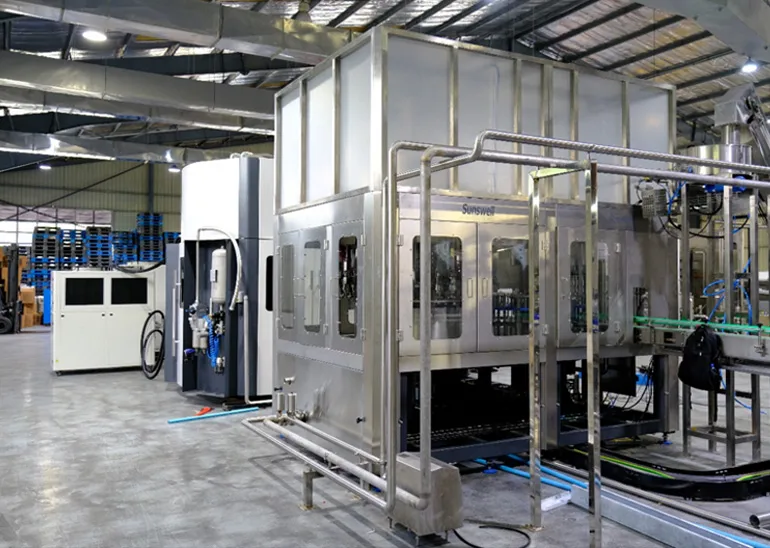
The Rauan project is a multi-line plant in Kazakhstan: eight bottling and canning lines from 12,000 to 24,000 BPH covering water, CSD and juice. It is the reference for a plant that runs several products — the lines share the infrastructure, the services and the compliance path, and the project shows the turnkey scope Sunswell carries.
A multi-product plant is a different scope than a single line; the Rauan reference is the evidence that the scope has been delivered, not just quoted.
5. How to use the references
Match three things before using a reference: the line type (combiblock, separate machines, canning), the output band (12,000 BPH vs 24,000 BPH), and the product (CSD, water, juice). The closest match is the reference worth verifying — and the verification is a call to the owner, not a look at the photo.
Ask the supplier for the reference owner's contact and call. One honest conversation with a plant manager is worth a folder of brochures.
The references are also the evidence for EAC certification and delivery routes — a supplier who has shipped the same line to the same market has the documents on file.
6. Verifying a reference
Verification is three questions to the owner: does the line run at the rated output on your bottle, how is the after-sales support in practice, and would you buy the same configuration again. The answers separate a reference from a photo. For export projects, also verify the compliance path the supplier used — it is the path your line will take.
Sunswell's projects are delivered with contactable owners, and the export base (71+ countries) means the compliance and logistics paths are practised, not improvised.
7. From reference to your line
Take the closest reference and ask for its specification: valve type, drive spec, bottle and cap, downstream scope and the compliance documents. Then ask for the same specification on your bottle and output — the quote follows the reference, and the reference is the reason the quote is realistic. The combiblock range is the starting point; the reference library is the evidence.
Frequently asked questions
Which combiblock references are closest to my project?
Match the line type, output and product: CSD at 12,000 BPH — the Vizit line; water at volume — the Taza lines; multi-product plants — the Rauan plant.
How do I verify a reference?
Call the owner and ask three questions: rated output in practice, after-sales reality, and whether they would buy the same configuration again.
Are the references current?
The library is maintained with every delivered project — the list shown is current and grows as lines are delivered.
Do the references include EAC and compliance?
Yes — delivered projects include the compliance path used, which is the evidence your line's documents will follow.
Can Sunswell share project specifications?
Yes — the closest reference can be specified for your bottle and output. The quote follows the reference, which is why it is realistic.
What is the typical combiblock output band?
Delivered lines range from 12,000 to 24,000 BPH; the range starts lower for standalone configurations.
About the author
Written by the Sunswell engineering team — led by Howie SUN, Founder & CEO, with 14 years in filling and blow-moulding equipment R&D and turnkey project delivery across 71+ countries.
Last reviewed: 2026-08-28 · Reviewed by Sunswell engineering team
Ask our engineering team →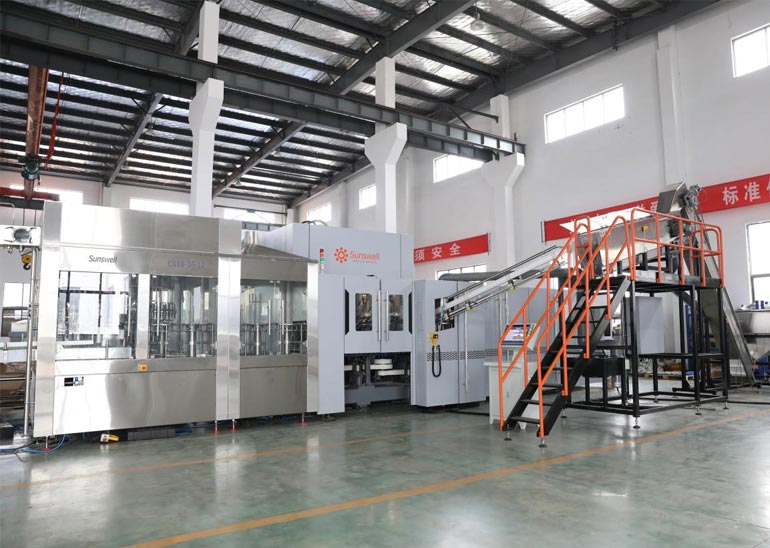
Project references
-
Vizit, 12,000BPH 1L Bottling Line with Combiblock for CSD, Kazakhstan
Country: Kazakhstan
Product: PET Bottled Carbonated Soft Drinks
Capacity: 12000BPH (1L)
Solution:Carbonated Drinks Production Line
Read More + -
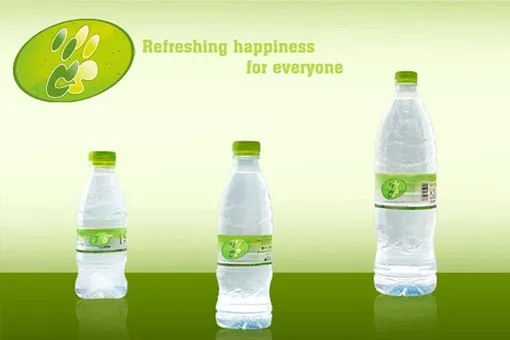
Taza, 4 Sets of 12,000BPH 1.5L Bottling Lines with Combiblock for Water, Maldives
Country: Maldives
Product: PET Bottled Mineralized Water
Capacity: 24,000BPH (500ml); 2 Lines
Solution:Water Production Line
Read More + -
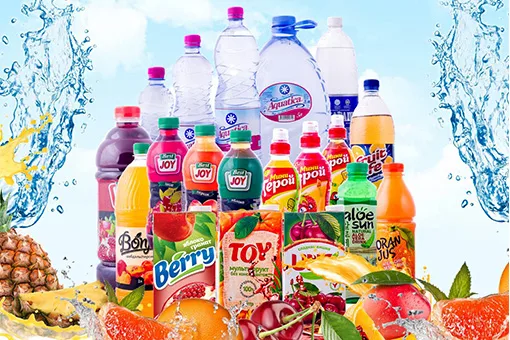
Rauan, 8 Sets of Bottlingand Canning Lines from 12,000-24,000BPH for Water, CSD and Juice, Kazakhstan
Country:Kazakhstan
Product: PET Bottled Sparkling Water, Canned Soft Drink, Canned Tea
Capacity: 25000CPH (250ml)
Solution:Three Lines,7000BPH(1.5L), 15000CPH(330ml),15000CPH(450ml)
Read More +
Have a specific project in mind?
Tell us product, target BPH, bottle sizes and market. We reply with a draft layout, equipment list and lead time estimate.
Fill the inquiry form ↑