


Logistics · Central Asia
Shipping, Lead Time and Installation Support in Central Asia
The logistics chain to Central Asia is established and predictable — when it is planned. Rail and truck move complete lines from China to Almaty, Astana, Tashkent and Bishkek in weeks, and the winter season is the only real variable. This page sets out the chain, the schedule and the support that follows it.
71+
Countries exported
Weeks
Transit once built
1–2
Weeks on-site install
8
Lines, one KZ plant
20,000
m² workshop
Short answer: Total lead time = build + transit + install. Build is set by the machine; transit from China by rail or truck is typically weeks; installation is one to two weeks on site with a technician. The plan should carry buffer for winter transit, and the support structure — spare parts, remote diagnostics, technician visits — is agreed in the contract before the cargo ships.
🎯 Key takeaways
- Rail and truck routes to Central Asia are established; transit is weeks, not months, once built.
- Winter (November–March) is the main variable — ship before the cold season if the date is hard.
- Installation is one to two weeks with a technician, including operator training.
- The buyer prepares the hall and utilities; the supplier provides the procedure and technician.
- Spare parts, remote support and visit terms are contract items, not favours.
On this page
1. The logistics chain
Complete lines move to Central Asia by rail or truck from China. Rail serves Almaty, Astana and Tashkent on established corridors; truck adds flexibility for smaller loads and last-mile delivery. Sea routes exist but add time and a second handling at a Black Sea or Baltic port — for Central Asia, overland is usually the faster, simpler chain.
The chain is proven because the region imports machinery continuously. The risk is not the route; it is the planning around it — documents, customs and season.
2. Lead time anatomy
Total time = build + transit + install. Build is set by the machine and typically dominates; transit is weeks; installation is one to two weeks on site. Buyers who quote 'delivery time' usually mean build, and buyers who discover transit only after the build finishes have lost a month of planning. Get all three numbers in writing.
| Stage | Typical span | Who controls it |
|---|---|---|
| Build | Weeks to months | Supplier (production slot) |
| Transit | Weeks | Logistics + border |
| Install | 1–2 weeks | Joint (site readiness) |
| Commissioning | Days | Supplier technician |
The contract should name each stage and the penalty for the delivery stage slipping.
3. The winter factor
Between November and March, frozen sections and border queues can add weeks to transit. This is the single most predictable variable in Central Asia logistics — and the one most often ignored in optimistic schedules. If commissioning has a hard date (season launch, loan condition), the shipment must leave before the cold season, not after.
Winter also affects installation: utilities and concrete work slow in cold halls, so plan site preparation for the warmer season where possible.
4. Customs and delivery terms
Delivery terms (FOB, CIF, DAP) decide who owns the cargo where — and who clears customs. The EAC certificate and the document set (invoice, packing list, transport document, certificate of origin) must be complete and consistent, because the broker clears on the documents, not on the cargo.
Confirm with the broker which party handles clearance and who bears the duty and VAT. A price that is lowest at the factory gate is not lowest at the site gate.
5. Installation schedule
Installation follows a standard sequence: mechanical assembly, utilities connection, dry run, product run, operator training — typically one to two weeks with the supplier's technician on site. The buyer prepares the hall, utilities, labour and the product; the supplier provides the technician, the procedure and the acceptance test.
Site readiness is the buyer's job and the most common source of delay: a hall without power or water waits, and the technician's clock runs regardless.
6. After-sales support
Support has three channels: remote diagnostics (video, logged data), spare parts (response-time commitment), and technician visits (for major issues and overhauls). All three are contract items. A first-year spare-parts kit ordered with the line covers the high-wear positions while the reorder channel is established.
Sunswell's Central Asian service pattern is established — multiple projects in Kazakhstan, including an eight-line plant near Almaty — so the support structure is proven, not promised.
7. Planning the project
Work backwards from the commissioning date: install (1–2 weeks), transit (weeks plus winter buffer), build (weeks to months), certification (parallel). Then sign the contract with those dates and a penalty on the delivery stage. The plan is the contract; the contract is the plan.
The same logistics plan applies whether the cargo is a combiblock, a filling machine or a complete line — the package changes, the chain does not.
Frequently asked questions
How long does shipping to Central Asia take?
Transit from China by rail or truck is typically weeks once the line is built. Winter can add weeks — plan the shipment before the cold season.
Who prepares the site for installation?
The buyer prepares the hall, utilities and labour; the supplier provides the technician, the procedure and the acceptance test.
What do delivery terms (FOB, CIF, DAP) mean for me?
They decide who owns the cargo and who clears customs at each point. Confirm the term and the clearance party in the contract.
How long is installation?
Typically one to two weeks on site: assembly, utilities, dry run, product run and operator training.
What if a part fails after commissioning?
Remote diagnostics first, then a spare-part shipment on the agreed response time, then a technician visit for major issues. All three are contract items.
Does Sunswell support installed lines in Central Asia?
Yes — Sunswell has multiple projects in Kazakhstan and provides spare parts, remote support and technician visits across the region.
About the author
Written by the Sunswell engineering team — led by Howie SUN, Founder & CEO, with 14 years in filling and blow-moulding equipment R&D and turnkey project delivery across 71+ countries.
Last reviewed: 2026-08-28 · Reviewed by Sunswell engineering team
Ask our engineering team →
Project references
-
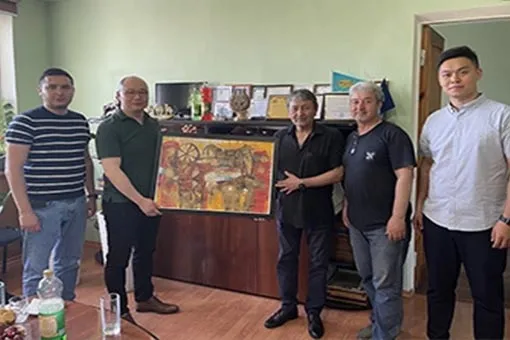
Vizit, 12,000BPH 1L Bottling Line with Combiblock for CSD, Kazakhstan
Country: Kazakhstan
Product: PET Bottled Carbonated Soft Drinks
Capacity: 12000BPH (1L)
Solution:Carbonated Drinks Production Line
Read More + -

Rauan, 8 Sets of Bottlingand Canning Lines from 12,000-24,000BPH for Water, CSD and Juice, Kazakhstan
Country:Kazakhstan
Product: PET Bottled Sparkling Water, Canned Soft Drink, Canned Tea
Capacity: 25000CPH (250ml)
Solution:Three Lines,7000BPH(1.5L), 15000CPH(330ml),15000CPH(450ml)
Read More +
Have a specific project in mind?
Tell us product, target BPH, bottle sizes and market. We reply with a draft layout, equipment list and lead time estimate.
Fill the inquiry form ↑