


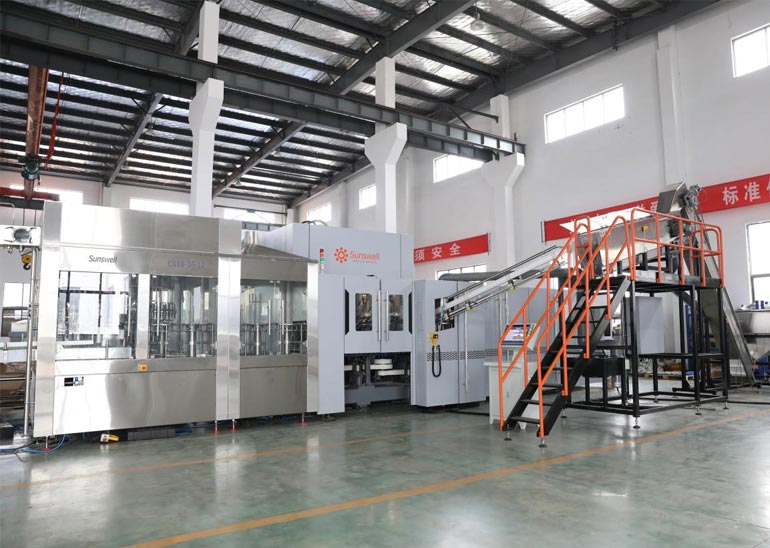
Plant setup · Central Asia
Bottled Water Plant Setup in Central Asia
A bottled water plant is a water source, a treatment system, a filling line, a package and a distribution route working as one project. This page walks the setup sequence for Central Asia — from source and site to the first palletised bottle — with the regional realities that change the plan.
2,000–24,000
BPH typical scale
4×12,000
BPH water lines, one case
444+
Lines delivered
71+
Countries exported
20,000
m² workshop
Short answer: Setup sequence: confirm the water source and its analysis → size the plant to year-one sales → design water treatment to the source → choose the line (combiblock or separate machines) → fix the package (PET sizes, 19 L where relevant) → run EAC certification in parallel → install, commission and train. The water source is the project's foundation: treatment is designed around it, and the plant is located on it.
🎯 Key takeaways
- The water source and its analysis drive the treatment design — test it before you design the plant.
- Size the line to year-one sales; Central Asian plants run from 2,000 to 24,000 BPH.
- A combiblock saves footprint and bottle weight; a separate line keeps flexibility.
- EAC certification runs in parallel with building, not after.
- Commissioning ends with a performance run on your bottle at the rated output.
On this page
1. The water source
The water source decides the project: its analysis drives the treatment design, its yield drives the plant size, and its location usually fixes the site. Take a full water analysis (minerals, hardness, microbiology, seasonal variation) before designing anything — the difference between a spring and a well, or between seasons, changes the treatment spec.
In arid regions of Central Asia, water availability and cost are strategic questions, not technical details. A plant sized beyond the source's reliable yield is a plant that cannot run.
Send the full water analysis to suppliers with the enquiry. The treatment quote follows the water, and the water analysis is the cheapest insurance in the project.
If the source is a spring or well, lock the supply right (extraction rights, bore licence) before committing to the plant.
2. Site and hall
The hall must fit the line, the water plant, the warehousing and the truck access — in that order of priority. The line layout comes from the supplier's drawing; the hall is designed around it, not the other way around. Utilities (power, water in, drainage) must be confirmed before the equipment order, because a line that arrives to an undersized power connection waits weeks.
Leave room for the next line: successful plants double within a few years, and a hall that cannot take a second line forces a rebuild.
3. Water treatment
Treatment is designed around the source and the product: filtration, softening or demineralisation to the target profile, disinfection, and polishing before the filler. The system is sized on the line output and the source quality — hard, mineral-heavy water needs a different plant than a clean spring.
Water treatment is the station buyers most often under-budget, because it is invisible in photos. It is also the station that decides whether the product is consistent, so it is the wrong place to save.
4. The filling line
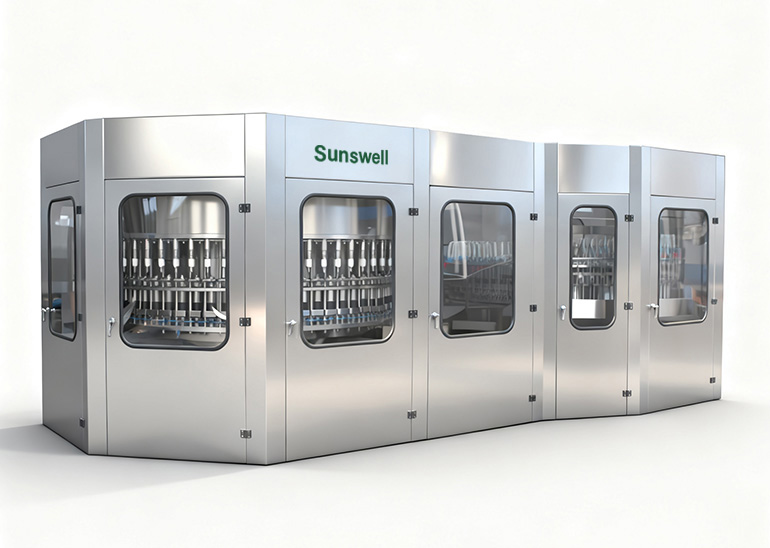
Two routes dominate: a blow-fill-cap combiblock that blows, fills and caps in one block — saving footprint and bottle weight — or separate blowing, filling and capping machines for flexibility, including bought-in bottles. Below roughly 8,000 BPH the separate route is often cheaper; above it the combiblock's savings compound.
| Option | Best for | Trade-off |
|---|---|---|
| Combiblock (BFC) | Own preforms, one or two formats, 8,000+ BPH | Light bottle, small footprint; fixed format |
| Separate machines | Bought-in bottles, flexible formats | Bigger footprint, more labour, flexible |
Either way, the line is rated on your bottle drawing — send it with the enquiry, and ask for rated BPH on that format.
5. Packaging decisions
PET small formats (0.5–1.5 L) carry the retail volume; 5 L and 19 L returned bottles serve home and office delivery. Each package is a line decision: the 19 L route adds a returned-bottle washer, and 5 L formats change the filler spec. Decide the package mix before the line is quoted, because the machine follows the package.
Preform and cap supply is an ongoing cost: confirm local suppliers or budget the import, because the line is only as reliable as its consumables.
6. Compliance and utilities
EAC certification for the line runs in parallel with manufacturing; starting it at build time keeps it ready before shipment. Drinking-water production also carries local food-safety registration for the plant — confirm the product registration path with the local authority early, as it can run longer than the line build.
Utilities: power, water, drainage, and compressed air for the blow moulder where fitted. Size them at design stage; retrofitting a bigger transformer is costlier than ordering it right.
7. Staffing and commissioning
A line needs operators, a technician who understands the machine, and a QC person for water and bottle quality — fewer than buyers fear, but they must be trained before the line arrives. The supplier's commissioning technician trains the operators during installation; plan the staffing so the trained people stay on the line.
Commissioning ends with a performance run at the rated output on your bottle. Acceptance in the contract is defined as that run, and the first pallet leaves after it, not before.
Frequently asked questions
What comes first in a bottled water plant project?
The water source and its full analysis. Treatment is designed around the water, and the plant is located on it.
Combiblock or separate machines for a first plant?
Below about 8,000 BPH, separate machines are often cheaper and more flexible; above that, a combiblock's footprint and bottle-weight savings compound.
What line size for Central Asia?
2,000–24,000 BPH covers the range from small city plants to national producers. Size to year-one sales.
Do I need local food-safety registration for the plant?
Yes — drinking-water production carries local product and plant registration. Start it early; it can run longer than the line build.
Is EAC certification needed for the line?
Yes, for EAEU markets. Run it in parallel with manufacturing so it is ready before shipment.
Can Sunswell deliver a complete water plant?
Yes — from water treatment to palletising, including combiblocks and standalone water fillers. Delivered water projects include multiple lines in Central Asia and the Maldives.
About the author
Written by the Sunswell engineering team — led by Howie SUN, Founder & CEO, with 14 years in filling and blow-moulding equipment R&D and turnkey project delivery across 71+ countries.
Last reviewed: 2026-08-28 · Reviewed by Sunswell engineering team
Ask our engineering team →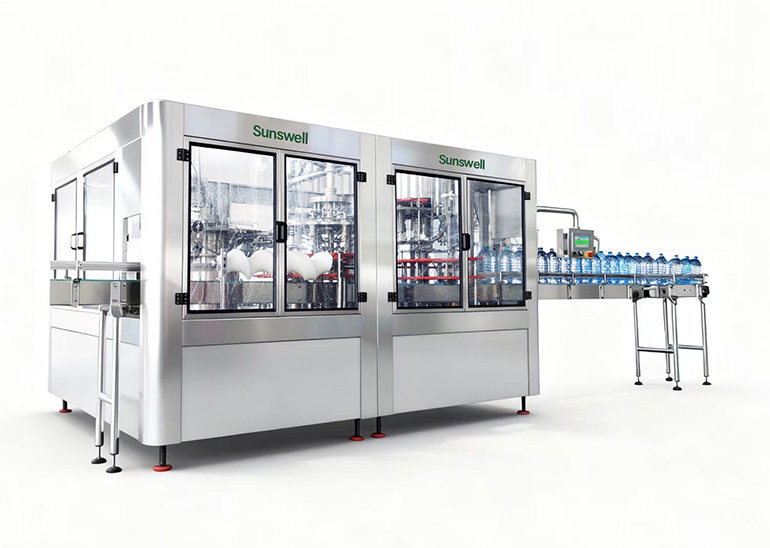
Project references
-
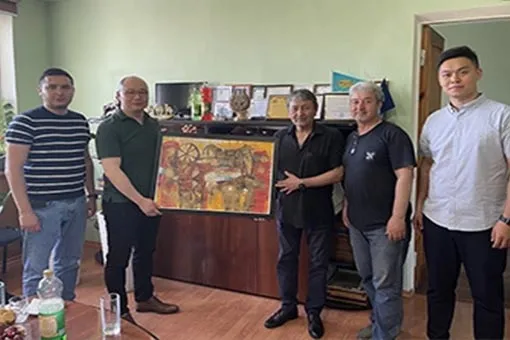
Vizit, 12,000BPH 1L Bottling Line with Combiblock for CSD, Kazakhstan
Country: Kazakhstan
Product: PET Bottled Carbonated Soft Drinks
Capacity: 12000BPH (1L)
Solution:Carbonated Drinks Production Line
Read More + -
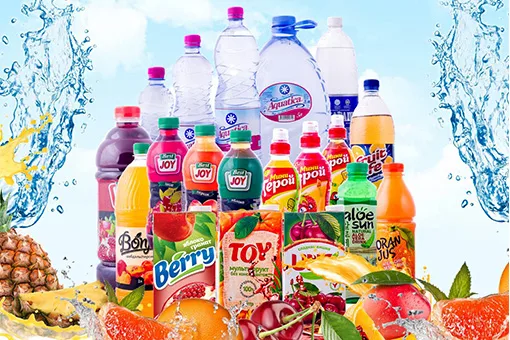
Rauan, 8 Sets of Bottlingand Canning Lines from 12,000-24,000BPH for Water, CSD and Juice, Kazakhstan
Country:Kazakhstan
Product: PET Bottled Sparkling Water, Canned Soft Drink, Canned Tea
Capacity: 25000CPH (250ml)
Solution:Three Lines,7000BPH(1.5L), 15000CPH(330ml),15000CPH(450ml)
Read More +
Have a specific project in mind?
Tell us product, target BPH, bottle sizes and market. We reply with a draft layout, equipment list and lead time estimate.
Fill the inquiry form ↑