


Buyer's guide · Central Asia
Beverage Filling Equipment for Central Asia — Buyer's Guide
Buying a filling line in Central Asia is an import project with a regional flavour: EAC certification, rail and truck logistics, and a market that runs from small city plants to large national producers. This guide walks the procurement path for Kazakhstan, Uzbekistan, Kyrgyzstan and neighbouring markets.
71+
Countries exported
8
Lines, one KZ plant
2,000–24,000
BPH typical scale
444+
Lines delivered
20,000
m² workshop
Short answer: The Central Asia buyer's path: pick the market and product, size the line to year-one sales, verify EAC certification for the exact model, agree payment stages tied to FAT and shipment, plan rail or truck delivery with a lead-time commitment, and fix installation and after-sales in the contract. The same five steps apply in every country of the region; only the certificates and the border points differ.
🎯 Key takeaways
- Size the line to year-one sales — a small line at capacity beats a big line idle.
- EAC certification for the exact model must be in hand before shipment.
- Rail and truck delivery from China is established; winter adds weeks — plan around it.
- Payment stages tied to FAT and shipment protect both sides.
- Installation, training and a first-year spare-parts kit belong in the contract.
On this page
1. The market in one paragraph
Central Asia buys filling lines to serve a growing, price-sensitive beverage market: water and CSD lead the volume, juice and tea follow, and the retail base is shifting from loose distribution to branded bottled product. Every plant is an import project — no country in the region builds filling machinery domestically — so the equipment decision is always also a logistics and certification decision.
The opportunity is that competition among suppliers is real and the buyer holds the cards: EAC certification, delivery terms and after-sales support are all negotiable in writing before order.
2. Sizing the line
Central Asian plants range from small city operations at roughly 2,000 BPH to national producers at 24,000 BPH and above. The sizing rule is the same as anywhere: size to what you can sell in year one, not to the market size in year five. A 2,000–6,000 BPH line running two shifts beats a 12,000 BPH line running one.
Ask every supplier to quote the line at your bottle and your output, not at 'typical' rates. Rated BPH on the actual format is the only number that matters.
For small plants, standalone fillers or compact monoblocs cost far less than full combiblocks and match the demand. The upgrade path is a second line, not a bigger first one.
3. Certification and customs
EAC certification is the common requirement across the EAEU markets, and it must cover the exact machine model with the certificate issued before shipment. Uzbekistan adds national registration on top for some equipment; other markets follow EAEU rules closely. Ask the supplier to itemise certification in the package price.
Customs clearance is handled by a broker at the border point; the supplier should provide the document set (invoice, packing list, transport document, certificate) that the broker needs. Suppliers who ship to the region regularly have this process; first-timers learn on your cargo.
4. Payment and contract
T/T in stages is the norm: deposit with order, payment at FAT or before shipment, balance after installation or acceptance. L/C works for larger values. The contract should name the machine by spec, define acceptance as rated output on the agreed bottle, and carry a late-delivery penalty.
Keep the final payment until the line runs at the agreed output. That is not distrust; it is the standard structure that makes cross-border projects work.
5. Logistics and lead time
Rail and truck routes from China to Almaty, Astana, Tashkent and Bishkek are established and routine. Transit is typically measured in weeks once the line is built; winter (November–March) can add delays at frozen sections and border queues. If commissioning has a hard date, ship before the cold season.
Confirm the delivery terms (FOB, CIF, DAP) and who clears customs at the destination. The price that looks lowest may be the one that stops at the border.
6. Installation and after-sales
Installation is normally one to two weeks with the supplier's technician: assembly, utilities, dry run, product run and operator training. The buyer prepares the hall, utilities and labour; the supplier provides the technician and the procedure.
After-sales terms belong in writing: spare-part response time, remote support, technician visits and warranty exclusions. A first-year starter kit ordered with the line is cheaper than air-freighting a sensor later.
7. The buyer's checklist
Eight steps cover it: (1) product and market, (2) output on your bottle, (3) bottle and cap drawing, (4) hall and utilities, (5) EAC and customs scope, (6) payment structure, (7) delivery terms and penalty, (8) installation and spares. Send the same set to three suppliers and compare the technical proposals, not the brochures.
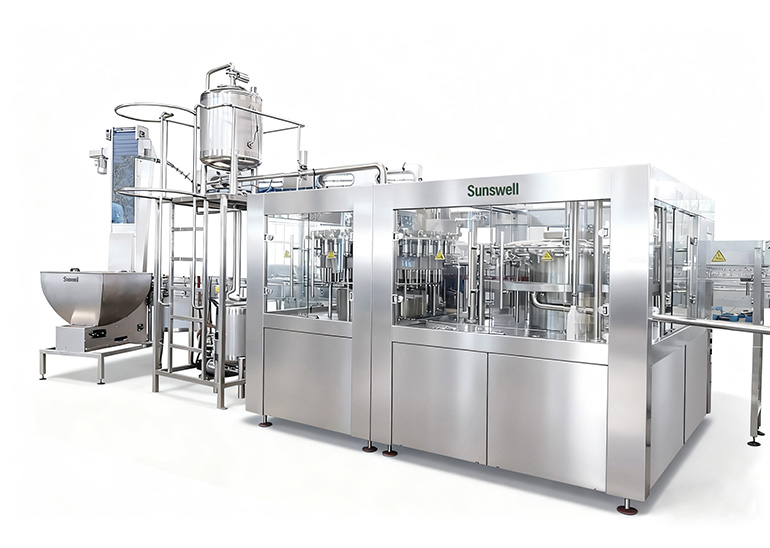
Whether the front of the line is a combiblock, a water filling machine or a CSD filling machine, the buyer's process is identical — the machine changes, the discipline does not.
Frequently asked questions
What is the right line size for a first Central Asian plant?
Size to year-one sales. Small city plants run from about 2,000 BPH; a smaller line running full beats a bigger one running idle.
Is EAC certification mandatory?
Yes for EAEU markets, and Uzbekistan adds national registration on top for some equipment. The certificate must cover your exact model and be issued before shipment.
How long does delivery take?
Build time plus transit; by rail or truck from China, transit is typically weeks once built. Winter can add weeks — plan the shipment before the cold season.
What payment structure is normal?
T/T in stages tied to FAT, shipment and acceptance, or L/C for larger values. Keep the final payment until the line runs at agreed output.
Do I need a customs broker?
Yes, for clearance at the border point. The supplier provides the document set; the broker handles the clearance.
Does Sunswell ship to Central Asia?
Yes — Sunswell has delivered multiple projects in Kazakhstan, including an eight-line plant near Almaty, and ships across the region with EAC documentation.
About the author
Written by the Sunswell engineering team — led by Howie SUN, Founder & CEO, with 14 years in filling and blow-moulding equipment R&D and turnkey project delivery across 71+ countries.
Last reviewed: 2026-08-28 · Reviewed by Sunswell engineering team
Ask our engineering team →
Project references
-
Vizit, 12,000BPH 1L Bottling Line with Combiblock for CSD, Kazakhstan
Country: Kazakhstan
Product: PET Bottled Carbonated Soft Drinks
Capacity: 12000BPH (1L)
Solution:Carbonated Drinks Production Line
Read More + -
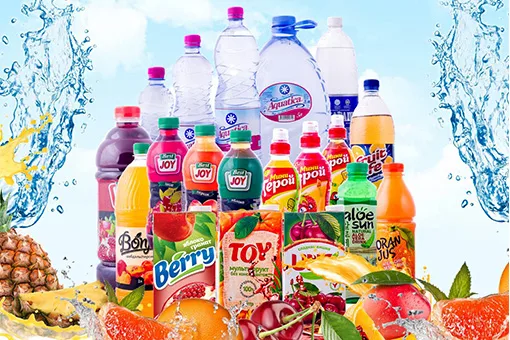
Rauan, 8 Sets of Bottlingand Canning Lines from 12,000-24,000BPH for Water, CSD and Juice, Kazakhstan
Country:Kazakhstan
Product: PET Bottled Sparkling Water, Canned Soft Drink, Canned Tea
Capacity: 25000CPH (250ml)
Solution:Three Lines,7000BPH(1.5L), 15000CPH(330ml),15000CPH(450ml)
Read More +
Have a specific project in mind?
Tell us product, target BPH, bottle sizes and market. We reply with a draft layout, equipment list and lead time estimate.
Fill the inquiry form ↑