
| Where it fits | Still water, RO water, mineral water |
| Filling method | Gravity or volumetric valve |
| Rated output | 5,000-48,000 BPH at 500 ml |
| Container range | 200 ml to 16 L, by configuration |
| Material | SUS 304 product contact, CIP-ready |
| Line scope | Treatment, blowing, filling, capping, labelling, packing |
A water line stands or falls on three inputs: raw water analysis, neck finish, and how well filler and capper are matched. Most of the meeting goes on BPH; the other two get a fraction of the time. Rinser clamps and capping heads are cut for one neck finish; a 1 mm thread change means new change parts rather than a new machine.
Work backwards from cases per day. Divide bottles per day by productive hours, then divide again by a production factor of 0.65-0.85. The factor covers changeover, CIP, label roll changes and downstream stops. Sizing at 1.0 is the most common and most expensive mistake in a water project, because the shortfall only appears once the line is running.
| Filling principle | Best for | Watch out for |
|---|---|---|
| Gravity | Still water, one rigid bottle size | Thin-wall bottles deform under head pressure |
| Volumetric valve | 3-15 L and mixed formats | Valve wear shows as slow drift, not a sudden error |
| Isobaric | Carbonated water only | Needs counter-pressure, so slower per valve |
| Load cell | Oil and high-value liquid | Slower cycle, higher cost per valve |
The Blow-fill-cap Combibloc for Still Water is the matching unit when this becomes a line project.
A small line gives up automation, not quality. Manual or semi-automatic packing, fewer accumulation buffers, and a simpler CIP usually follow. What it should not give up is the filling valve and the capping head, because those two decide whether the product is saleable.
A different bottle format means a different unit; see the Gravity Filling Machine for Still Water.
A lighter bottle is less rigid, so it deforms more under the filling head and grips differently in the star wheels. The filler may need a different neck handling and a lower contact pressure. Lightweighting is a bottle project that reaches into the filling line.
The same question is worked through from another angle in Mongolia Bottled Water: How to Plan Capacity, Winter Operation.
200 bottles per minute. Divide BPH by 60. A 24,000 BPH line runs at 400 bottles per minute, which is why filler and packer have to be matched rather than bought separately.
Gravity holds a fill level, so accuracy depends on bottle geometry. Because volumetric filling doses by chamber volume, accuracy holds across bottle sizes. For one rigid bottle size, gravity is enough; for 3-10 L or mixed formats, volumetric is safer.
Plan for 380 V three-phase power, 0.6-0.8 MPa compressed air, and a chiller if blow molding runs in-house. Exact consumption belongs in the utility schedule of the quotation, not in a rule of thumb.
Commercial practice is a stated band per bottle size, typically checked by weight at the filler outlet. The band belongs in the acceptance protocol. A line without a written tolerance will argue about it at commissioning.
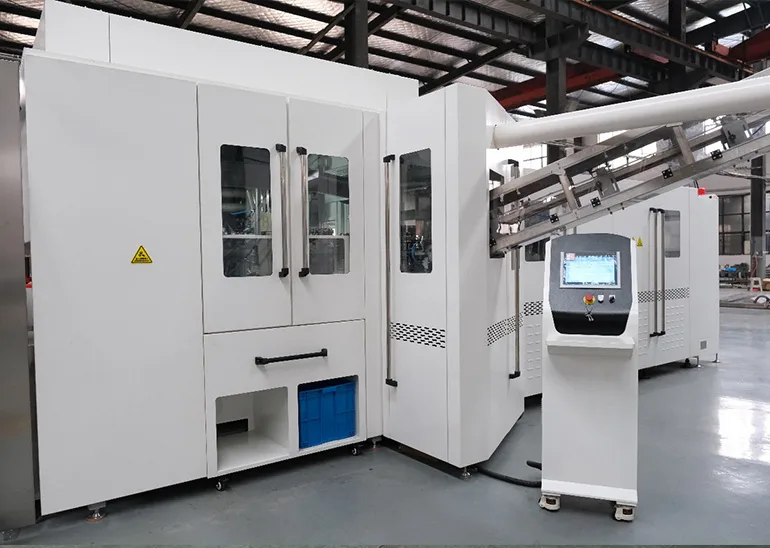
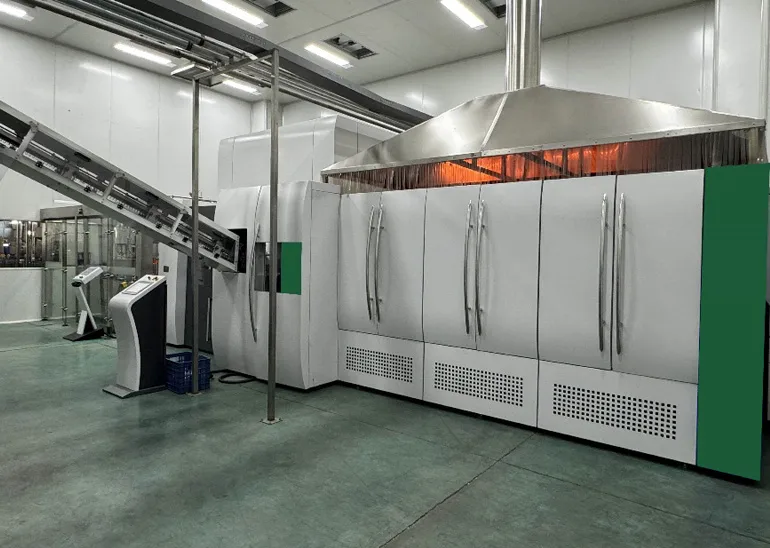
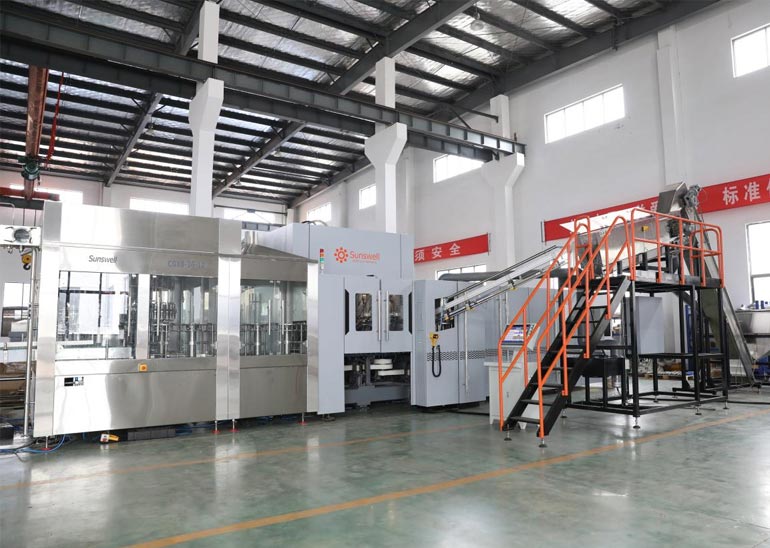
Country: Maldives
Product: PET Bottled Mineralized Water
Capacity: 24,000BPH (500ml); 2 Lines
Solution:Water Production Line
Country:Kazakhstan
Product: PET Bottled Sparkling Water, Canned Soft Drink, Canned Tea
Capacity: 25000CPH (250ml)
Solution:Three Lines,7000BPH(1.5L), 15000CPH(330ml),15000CPH(450ml)



 +86 13921964455
 [email protected]

A2 Dongjiu Industrial Park, 30 East Jintang Road, Tangshi, Zhangjiagang, Jiangsu 215600, China


