
| Product fit | Still water, RO water, mineral water |
| Filling principle | Gravity or volumetric valve |
| Capacity range | 5,000-48,000 BPH at 500 ml |
| Bottle sizes | 200 ml to 16 L, by configuration |
| Wetted parts | SUS 304 product contact, CIP-ready |
| Line scope | Treatment, blowing, filling, capping, labelling, packing |
Gravity filling holds a level in a rigid bottle and costs least per valve. Volumetric filling doses a fixed volume into a chamber, so it holds accuracy across 3 L, 5 L and 10 L formats without changing the head. Isobaric filling is for carbonated product only, because it keeps CO2 in solution under counter-pressure. A still water line never needs it.
Ask for the rated capacity of the slowest station, the changeover checklist, the CIP cycle time, and the water and power consumption per 1,000 bottles. Those four numbers decide the real cost per bottle. A quotation that lists only the filler capacity and a total price leaves the buyer comparing incomparable offers.
| Filling principle | Best for | Watch out for |
|---|---|---|
| Gravity | Still water, one rigid bottle size | Thin-wall bottles deform under head pressure |
| Volumetric valve | 3-15 L and mixed formats | Valve wear shows as slow drift, not a sudden error |
| Isobaric | Carbonated water only | Needs counter-pressure, so slower per valve |
| Load cell | Oil and high-value liquid | Slower cycle, higher cost per valve |
The Blow-fill-cap Combibloc for Still Water is the reference unit for this configuration.
A water line is cleaned on a fixed cycle plus a changeover clean. The circuit covers the filler bowl, the product pipes and the filling valves. Ozone or heat is used for disinfection, and the cycle time is a planned stop rather than an incident.
The specification sheet for the Gravity Filling Machine for Still Water carries the utility figures quoted here.
A lighter bottle is less rigid, so it deforms more under the filling head and grips differently in the star wheels. The filler may need a different neck handling and a lower contact pressure. Lightweighting is a bottle project that reaches into the filling line.
The same question is worked through from another angle in Maximizing Uptime: Essential Maintenance Checklist for Your Water Filling.
200 bottles per minute. Divide BPH by 60. A 24,000 BPH line runs at 400 bottles per minute, which is why filler and packer have to be matched rather than bought separately.
It depends on whether blowing, packing and palletizing sit in the same hall. Fix the footprint by drawing the layout at 1:100 with conveyor radii included, then check the turning radius of the largest format.
For a complete line with blowing, filling, labelling and packing, plan several weeks on site after arrival, plus operator training. Civil work and utility readiness are the usual delay, not the machinery.
Commercial practice is a stated band per bottle size, typically checked by weight at the filler outlet. The band belongs in the acceptance protocol. A line without a written tolerance will argue about it at commissioning.
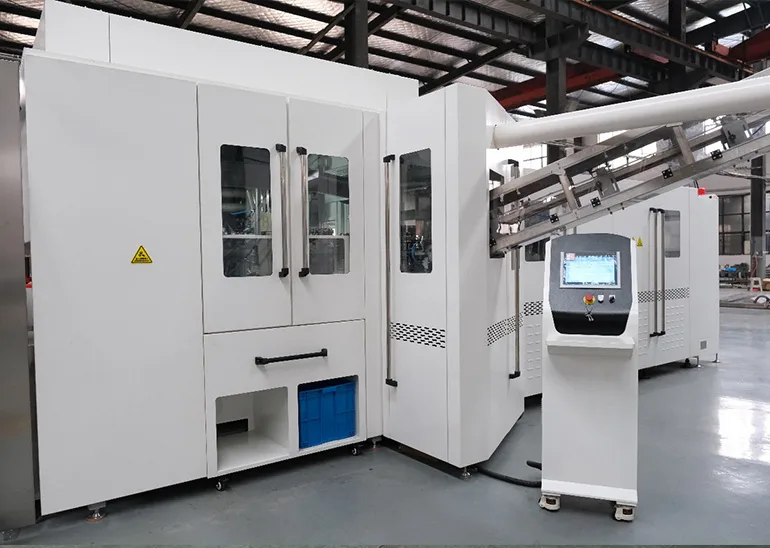
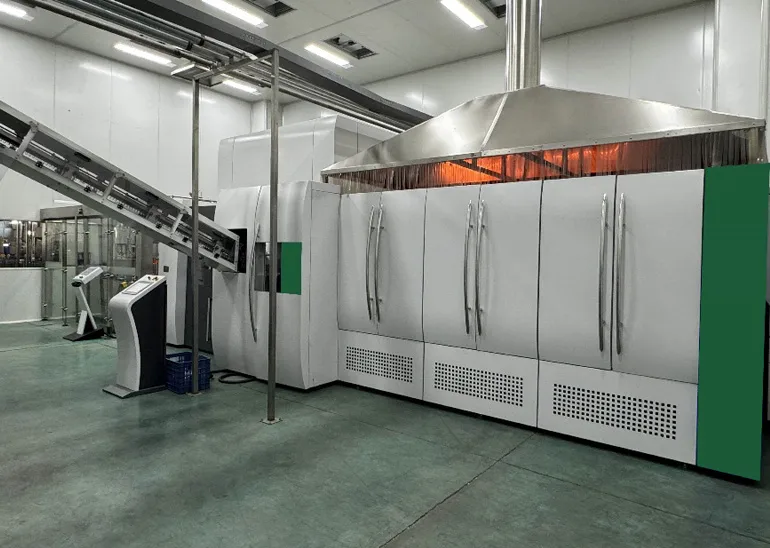
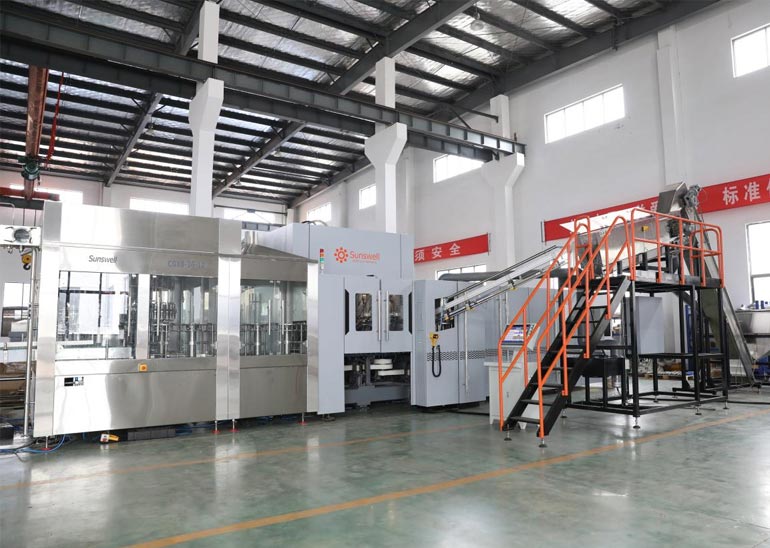
Country: Maldives
Product: PET Bottled Mineralized Water
Capacity: 24,000BPH (500ml); 2 Lines
Solution:Water Production Line
Country:Kazakhstan
Product: PET Bottled Sparkling Water, Canned Soft Drink, Canned Tea
Capacity: 25000CPH (250ml)
Solution:Three Lines,7000BPH(1.5L), 15000CPH(330ml),15000CPH(450ml)



 +86 13921964455
 [email protected]

A2 Dongjiu Industrial Park, 30 East Jintang Road, Tangshi, Zhangjiagang, Jiangsu 215600, China


