
| Types | Shrink wrap, wrap-around carton, carton packing, tray |
| Rate | Matched to the filler; usually the line bottleneck |
| Key control | Film tension, seal temperature, case squareness |
| Wetted parts | PE film, corrugated board, tray board |
| Key decision | Shrink, carton or tray |
| Line position | After labelling, before palletizing |
Shrink wrap is the cheapest per case and the fastest, and it suits retail where the pack is the display unit. A wrap-around carton gives print area and stack strength for distribution. A tray with shrink is a compromise used where the pack needs both protection and visibility.
A filler is rated on bottles per hour at a steady state; a packer is rated on cases per hour including film roll changes, seal cooling and pattern changes. Buyers compare the filler rating and forget that a packer rated below it sets the line rating for the whole shift.
| Pack format | Cost per case | What it protects |
|---|---|---|
| Shrink wrap | Lowest | Retail display, short distribution |
| Tray + shrink | Middle | Stacking and visibility |
| Wrap-around carton | Higher | Print area and long distribution |
| Regular slotted carton | Highest board use | Fragile packs and export |
Site requirements, air and power consumption sit with the Wrap-round Film Shrink Wrapping.
When the market needs print on the case, when the pack has to stack high in a warehouse, or when the product is sold through distribution rather than direct to retail. A carton costs more per case, and it protects the bottles and carries the brand where shrink film cannot.
Site requirements, air and power consumption sit with the Carton Packing.
It reaches the pallet, the film width and the truck. A pattern that does not fit the pallet footprint wastes cube, and a pattern that does not match the retail unit costs the customer a repack. Pattern is a commercial decision as much as an engineering one.
The same question is worked through from another angle in How Palletizers Streamline Beverage Packaging.
At 24 bottles per case, 1,000 cases per hour. The packer, the palletizer and the label supply all have to carry that number, and the line rating is the lowest of them.
It follows the pack weight and the transport distance, and it is set with the film supplier. A thinner film saves cost per pack and fails earlier in a long distribution chain.
Usually insufficient wrap around the base or a seal that opened. Check the film width, the lap position and the seal temperature together, because changing one alone moves the failure elsewhere.
Too much heat, too little tension, or a film that is too thin for the pack weight. A pack that sags after cooling was sealed outside its window.
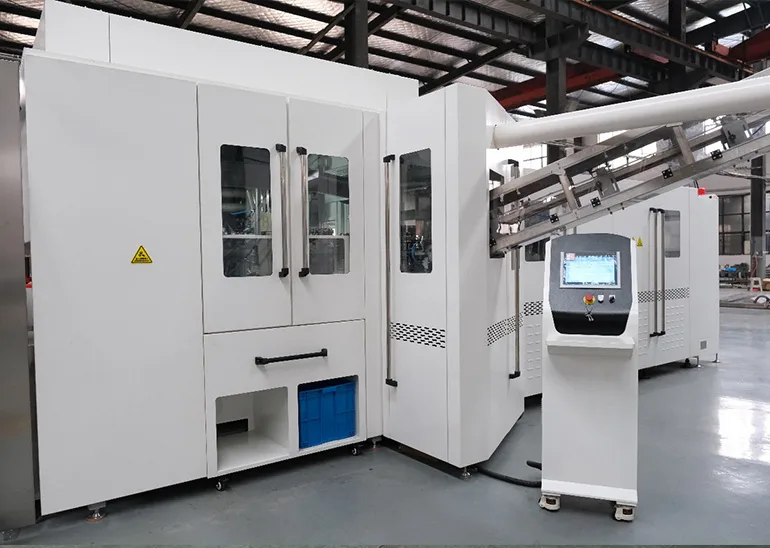
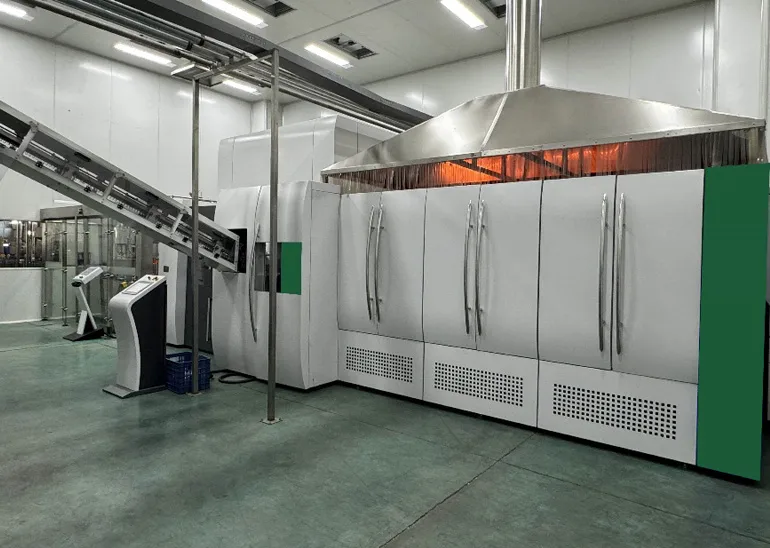
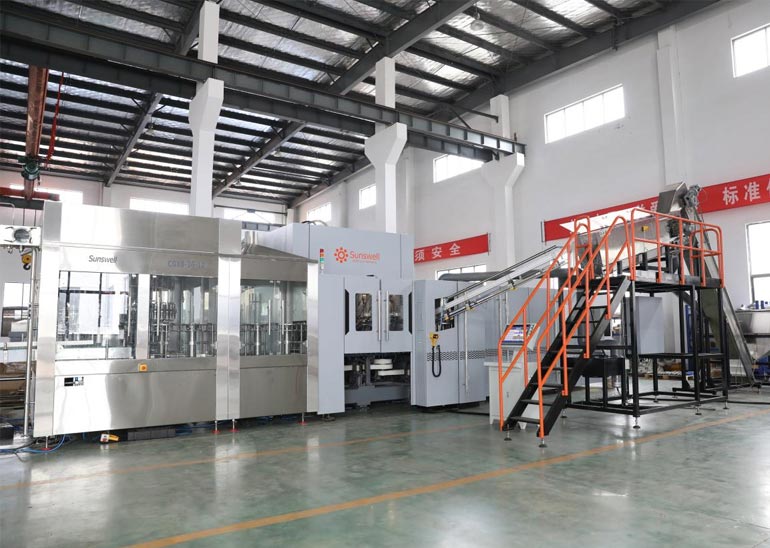
Country: Maldives
Product: PET Bottled Mineralized Water
Capacity: 24,000BPH (500ml); 2 Lines
Solution:Water Production Line
Country:Kazakhstan
Product: PET Bottled Sparkling Water, Canned Soft Drink, Canned Tea
Capacity: 25000CPH (250ml)
Solution:Three Lines,7000BPH(1.5L), 15000CPH(330ml),15000CPH(450ml)



 +86 13921964455
 [email protected]

A2 Dongjiu Industrial Park, 30 East Jintang Road, Tangshi, Zhangjiagang, Jiangsu 215600, China


