
| Where it fits | Still water, RO water, mineral water |
| Filling principle | Gravity or volumetric valve |
| Capacity range | 5,000-48,000 BPH at 500 ml |
| Bottle range | 200 ml to 16 L, by configuration |
| Material | SUS 304 product contact, CIP-ready |
| Line scope | Treatment, blowing, filling, capping, labelling, packing |
Raw water, neck finish and the filler-capper match decide more about a water line than its BPH. Most of the meeting goes on BPH; the other two get a fraction of the time. Rinser clamps and capping heads are cut for one neck finish; a 1 mm thread change means new change parts rather than a new machine.
Factors such as temperature fluctuations, humidity levels, and vibrations can influence the readings obtained from load cells.
Star wheels, guide rails, grippers, cap chute and filling recipe all change with the format. The parts are not the cost; the time is. Two formats on one line typically cost 40-90 minutes per switch, which is why the production factor falls from about 0.85 to 0.70 and why a second small line is sometimes cheaper than one flexible line.
| Filling principle | Best for | Watch out for |
|---|---|---|
| Gravity | Still water, one rigid bottle size | Thin-wall bottles deform under head pressure |
| Volumetric valve | 3-15 L and mixed formats | Valve wear shows as slow drift, not a sudden error |
| Isobaric | Carbonated water only | Needs counter-pressure, so slower per valve |
| Load cell | Oil and high-value liquid | Slower cycle, higher cost per valve |
Valve count, utility schedule and footprint sit on the Blow-fill-cap Combibloc for Still Water page.
Above 2 L the fill time per valve grows faster than the valve count, so capacity per valve falls and the conveyor has to carry more mass. Handles, cap size and bottle rigidity also change. A 5 L line is usually specified around that format rather than shared with a 500 ml line.
The Gravity Filling Machine for Still Water is the matching unit when this becomes a line project.
A lighter bottle is less rigid, so it deforms more under the filling head and grips differently in the star wheels. The filler may need a different neck handling and a lower contact pressure. Lightweighting is a bottle project that reaches into the filling line.
The same question is worked through from another angle in The Benefits of Stainless Steel 316 vs 304 in.
It follows the raw water analysis, not a standard package. Surface water usually needs multi-media filtration, RO and UV or ozone. Low-hardness municipal water may need only carbon filtration and disinfection.
Gravity holds a fill level, so accuracy depends on bottle geometry. A volumetric filler measures a chamber volume, which keeps it accurate when the format changes. For one rigid bottle size, gravity is enough; for 3-10 L or mixed formats, volumetric is safer.
For a complete line with blowing, filling, labelling and packing, plan several weeks on site after arrival, plus operator training. Civil work and utility readiness are the usual delay, not the machinery.
Not on the same filler. Carbonation needs isobaric valves, a CO2 dosing and mixing unit, and a different bowl. A combiblock can carry both valve sets, but they are separate specifications, not a field conversion.
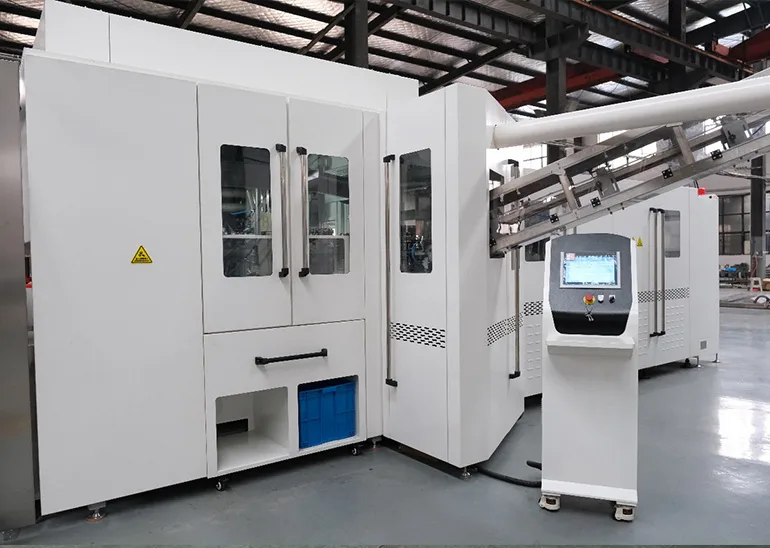
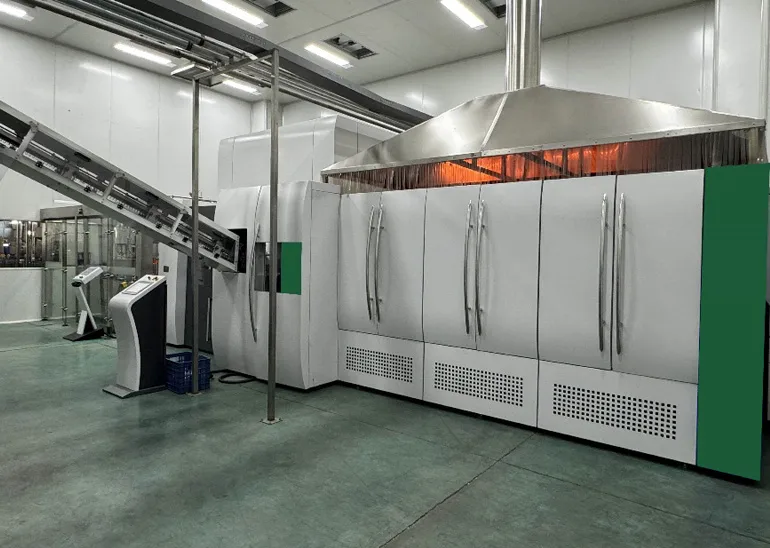
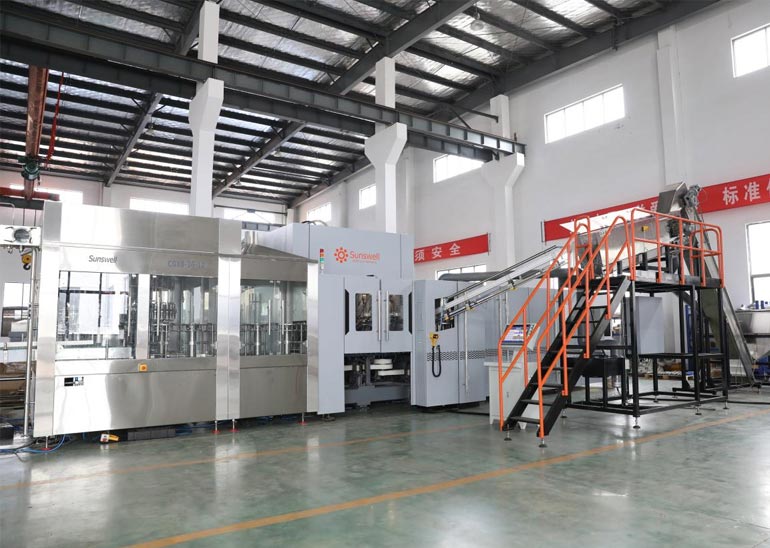
Country: Maldives
Product: PET Bottled Mineralized Water
Capacity: 24,000BPH (500ml); 2 Lines
Solution:Water Production Line
Country:Kazakhstan
Product: PET Bottled Sparkling Water, Canned Soft Drink, Canned Tea
Capacity: 25000CPH (250ml)
Solution:Three Lines,7000BPH(1.5L), 15000CPH(330ml),15000CPH(450ml)



 +86 13921964455
 [email protected]

A2 Dongjiu Industrial Park, 30 East Jintang Road, Tangshi, Zhangjiagang, Jiangsu 215600, China


