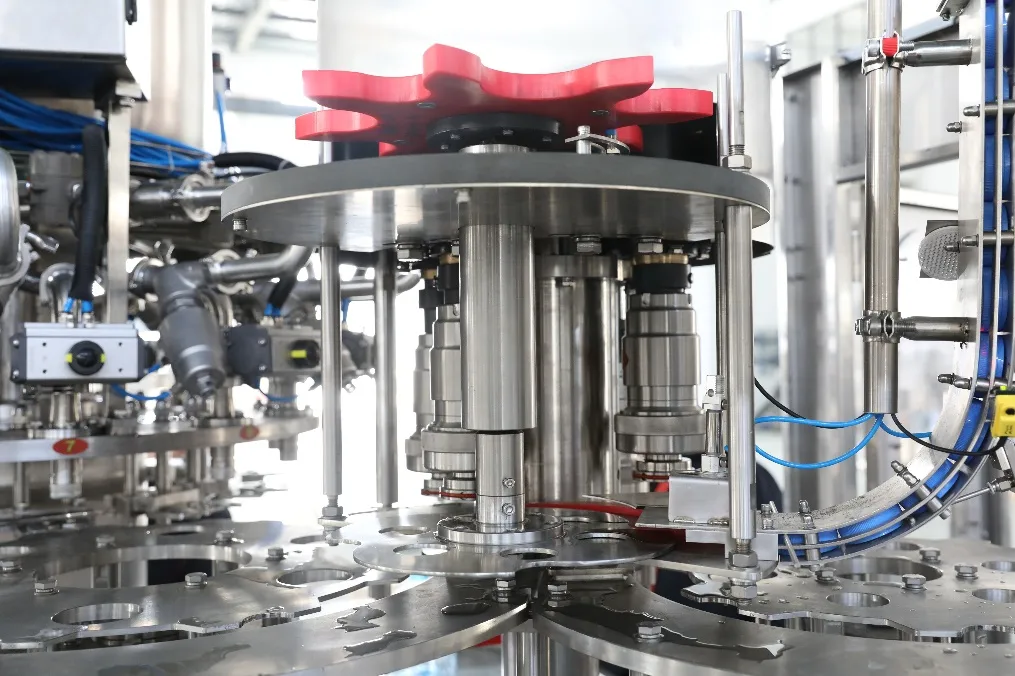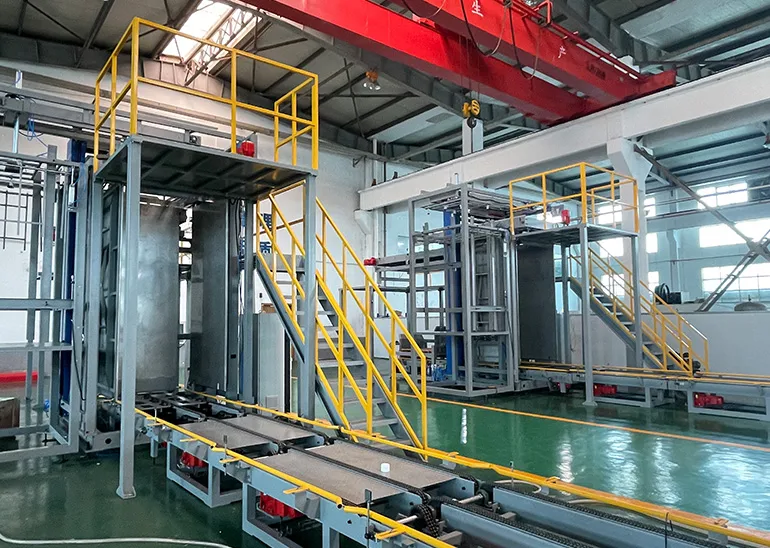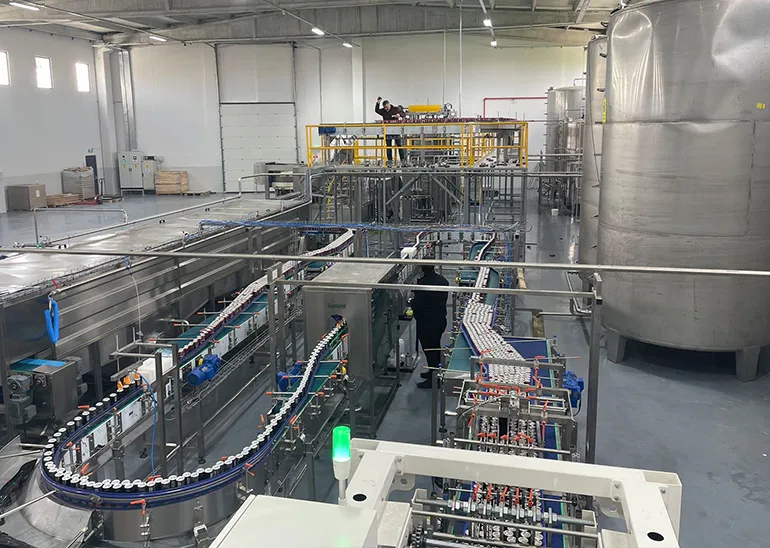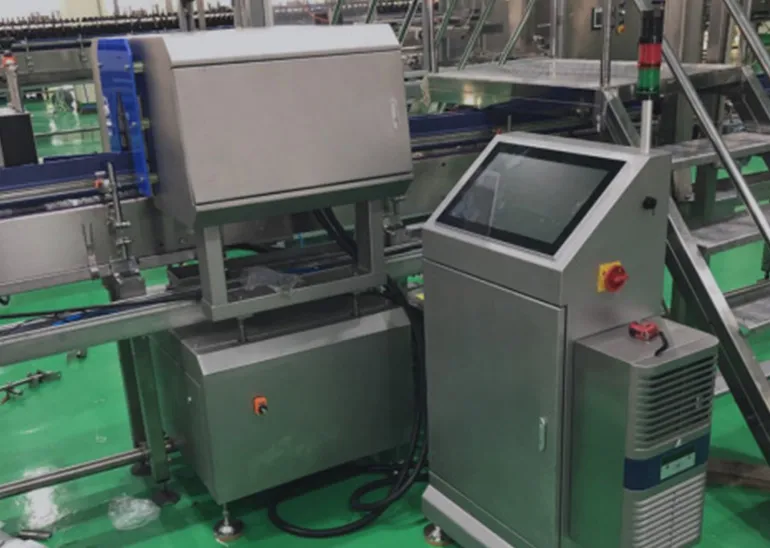
| What is included | Air conveyor, roller conveyor, depalletizer, palletizer |
| Function | Move bottles and cases without damage, stack outbound pallets |
| Key control | Accumulation pressure, guide rail gap, pattern repeatability |
| Types | Semi-automatic and automatic palletizing |
| Key decision | Manual, semi-automatic or robotic palletizing |
| Automation | Manual, semi-automatic or robotic |
Automatic palletizing pays when the labour it replaces is continuous and the pattern is stable. A plant running two shifts at high case rates reaches payback faster than a single-shift plant with mixed patterns, because a robot needs the pattern defined before it can be programmed.
Enough to cover the longest normal stop downstream without stopping the filler, and no more. Extra accumulation hides a problem instead of solving it, and it adds floor space plus a place for bottles to sit and collect dust. The buffer size is a calculation, not a default.
| Function | Manual | Automatic |
|---|---|---|
| Depalletizing empty bottles | Rack or hand stack | Layer depalletizer |
| Case palletizing | Operator with pattern sheet | Layer or robotic palletizer |
| Pallet wrapping | Hand wrapper | In-line stretch wrapper |
| Accumulation | None, line stops together | Buffer sized to longest stop |
The specification sheet for the Depalletizing & Palletizing carries the figures quoted here.
When the pattern mix is wide and the pack is fragile. A layer palletizer is faster on one stable pattern; a robot changes pattern by program. Most plants with more than three patterns choose the robot for that reason alone.
Reference unit for this duty: the Conveying.
Square pallets, consistent layer sheets and a stable stack. Empty bottles are light, so a leaning pallet becomes a fallen layer at the depalletizer. The machine can only work with the stack it is given.
The same question is worked through from another angle in Palletizers and Depalletizers: Automating the Start and End of.
A depalletizer unloads empty bottles or full cases from a pallet at the start of a line. A palletizer stacks finished cases onto a pallet at the end. They are separate machines with separate footprints.
Guide rail gap and transfer plate height. Both are set for one bottle diameter and both drift when a second format is introduced. Re-set them at every changeover, not once at installation.
A robot is more flexible across patterns and gentler on the pack; a layer palletizer is faster for a single stable pattern. The choice follows the pattern mix, not the technology.
Low air pressure, a worn layer clamp, or a pallet that is not square. Empty bottle layers are light, so small errors become fallen bottles at the infeed.
Country:Kazakhstan
Product: PET Bottled Sparkling Water, Canned Soft Drink, Canned Tea
Capacity: 25000CPH (250ml)
Solution:Three Lines,7000BPH(1.5L), 15000CPH(330ml),15000CPH(450ml)



 +86 13921964455
 [email protected]

A2 Dongjiu Industrial Park, 30 East Jintang Road, Tangshi, Zhangjiagang, Jiangsu 215600, China