

| Stages | Pre-treatment, RO, disinfection |
| Pre-treatment | Multi-media filter, carbon filter, softener |
| RO | Reverse osmosis with a storage and buffer tank |
| Disinfection | UV, ozone, or both |
| Key control | Raw water analysis, recovery rate, conductivity |
| Key decision | Which stages the raw water actually needs |
The raw water analysis decides it. Surface water usually needs multi-media filtration, carbon and RO; hard well water needs softening before the RO; low-hardness municipal water may only need carbon and disinfection. A package bought without an analysis is either oversized or short of a stage.
Set up in 2008, Sunswell leads the market in the field of liquid bottling, blow molding, labeling, packaging machinery and process technology for water, tea, juice, carbonated drinks, energy drinks, liquid, beer, edible oil, dairy and daily care products, etc.
RO produces permeate and rejects concentrate. The recovery rate sets how much of the feed becomes product water, and the buffer tank size sets how long the line can run when the RO is in flush or maintenance. A filler that outruns the RO starves at shift start, which looks like a filler problem and is not.
It provides three working program for acid wash, alkali wash and water wash, and it is available to automatically set acid and alkali concentration and hot water temperature.
| Stage | Removes | Driven by |
|---|---|---|
| Multi-media filter | Suspended solids | Turbidity of raw water |
| Carbon filter | Chlorine and organics | Municipal dosing and taste |
| Softener | Hardness | Calcium and magnesium in the analysis |
| RO | Dissolved salts | Conductivity target of the product |
| UV or ozone | Micro-organisms | Storage time and final barrier |
Reference unit for this duty: the Water Treatment.
Flow, temperature, concentration and time, all four together. A CIP that meets the temperature but not the flow does not clean the far end of the circuit, and the failure appears as a micro result weeks later. The station is sized on the largest circuit it serves.
Water supply and concentrate acid/alkali dosing and temperature control are conducted automatically.
Site requirements, air and power consumption sit with the Pre-treatment.
Conductivity at the RO outlet, turbidity before and after the filters, and a microbial sample on a fixed schedule. Continuous sensors catch drift; the microbial sample catches what the sensors cannot see.
The same question is worked through from another angle in CIP order from Saudi Arabia clients.
It can be used only after analysis. Borehole water often carries hardness, iron or manganese, all of which need a stage before the RO or before filling.
RO removes minerals as well as contaminants, and very low-mineral water tastes flat. Some plants blend or re-mineralise. The target is a specification set with the product, not the lowest possible conductivity.
It depends on the recovery rate set for the feed water. The reject stream is a design output and should be metered, because it is the number that moves when recovery is improved.
On chlorine breakthrough and on the supplier recommendation, not on a fixed calendar. A carbon bed that is exhausted lets chlorine reach the RO membrane.
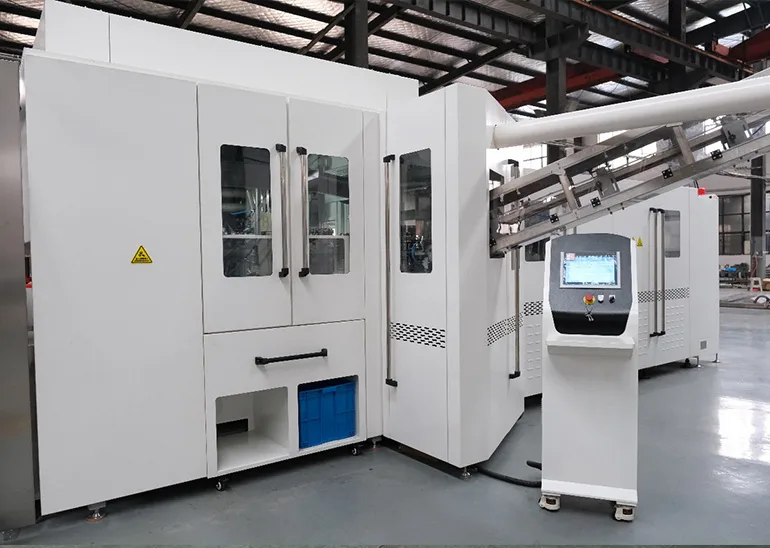
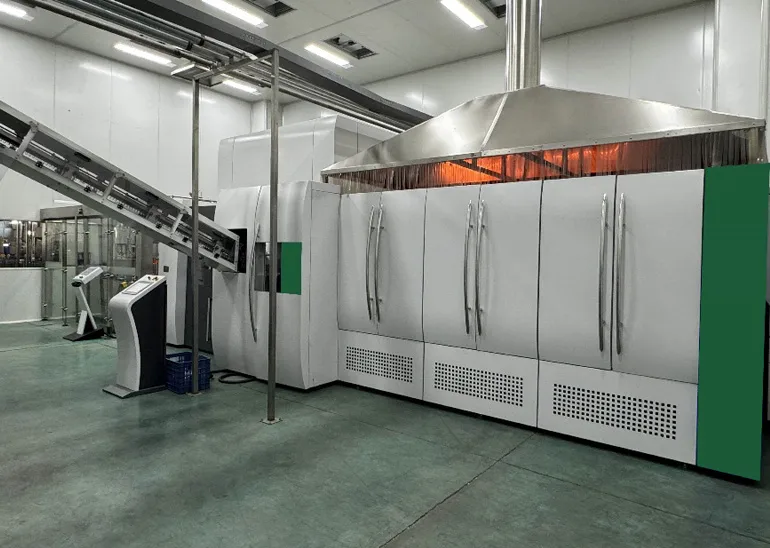
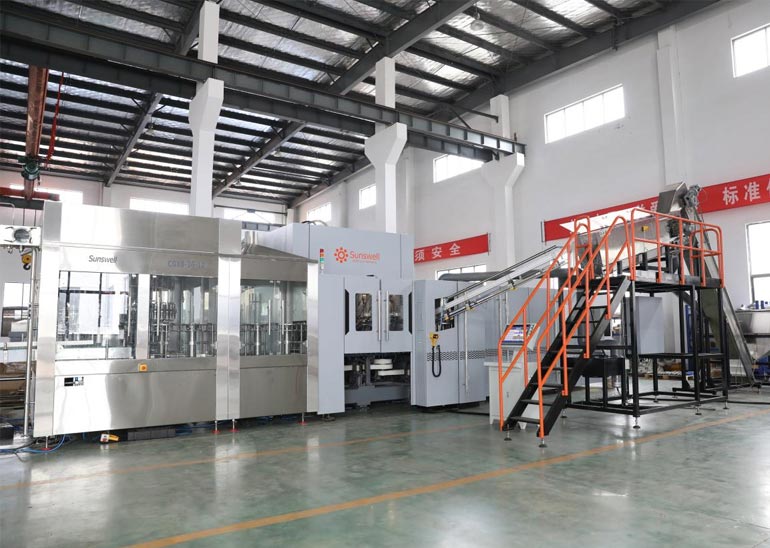
Country:Kazakhstan
Product: PET Bottled Sparkling Water, Canned Soft Drink, Canned Tea
Capacity: 25000CPH (250ml)
Solution:Three Lines,7000BPH(1.5L), 15000CPH(330ml),15000CPH(450ml)



 +86 13921964455
 [email protected]

A2 Dongjiu Industrial Park, 30 East Jintang Road, Tangshi, Zhangjiagang, Jiangsu 215600, China


