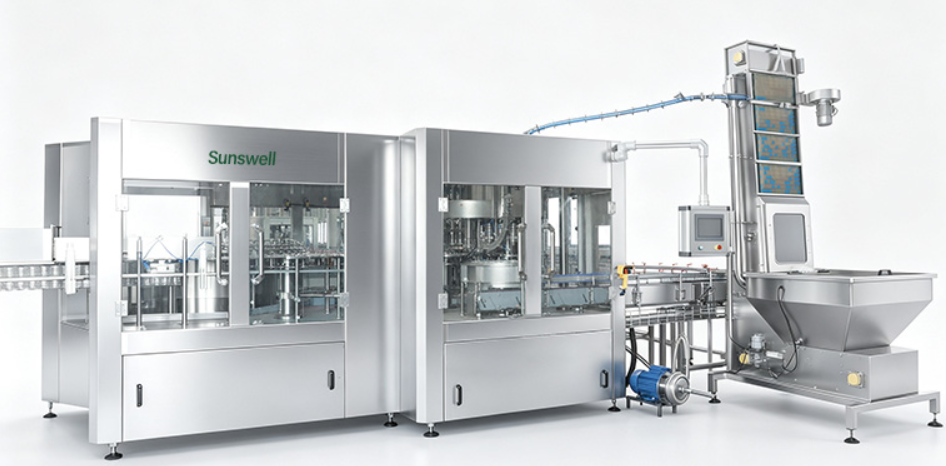
Réponse directe : A Mongolia bottled-water project should be sized from confirmed distribution routes and designed for the actual site's cold-season conditions, water source and replenishment lead times. Choose a serviceable capacity, protect water-containing systems from freezing and qualify packaging for storage and transport. A small line can be a sensible first stage, but only when its complete operating model fits the intended sales.
It means entering an existing beverage-production environment, rather than introducing bottling to an empty market. MCS Coca-Cola's histoire de l'entreprise documents its development in Mongolia across beverages, water and packaging. That establishes the presence of an incumbent operator; it does not establish a new entrant's attainable sales or the performance of equipment from another supplier.
Define a narrow commercial starting point. A plant serving selected Ulaanbaatar districts, a hospitality route or an institutional contract has a different delivery model from one seeking broad national coverage. Identify the actual outlets, order frequency and service expectations. Count repeat demand rather than opening stock placed with distributors.
No verified current national consumption or monthly seasonality series was established for this guide. Treat summer demand, tourism demand and cold-season sales changes as hypotheses until supported by customer records. Build a monthly sales profile from evidence and test a lower-demand case before committing to capacity.
Create a route-level volume model with the number of active outlets, order size, delivery frequency and expected returns or damaged packs. Distinguish distributor purchases from final consumer sell-through. A long route with small drops can tie up vehicles and stock even when the filler has ample spare capacity.
For an illustrative sizing exercise, assume confirmed demand of 360,000 bottles per month, 20 operating days, eight scheduled hours daily and a 60% combined production factor. The required nominal rate is 3,750 BPH. These inputs are assumptions for demonstrating the method, not a market forecast or a Sunswell performance promise.
Check peak orders separately. Compare a longer shift, additional production days and a hygienically managed inventory buffer with a higher-speed installation. More machinery capacity does not solve insufficient vehicles, warehouse space or packaging stock. Select the investment that removes the actual constraint in the sales-to-delivery system.
| Condition de fonctionnement | Preuves à recueillir | Design response to evaluate |
|---|---|---|
| Concentrated urban routes | Order records, delivery times and drop sizes | Match daily output with dispatch and finished-goods storage |
| Distant customer routes | Actual freight quotations and receiving schedules | Test packaging, inventory and minimum shipment economics |
| Seasonal order peaks | Monthly customer demand records | Compare additional shifts with extra line capacity |
| Uncertain new accounts | Signed terms versus sales estimates | Keep speculative expansion separate from launch capacity |
Record the outdoor design conditions, indoor operating conditions, shutdown pattern and heating arrangements for the proposed building. Ask a qualified local engineer to determine the environmental design basis. Avoid selecting a national average temperature as if it defined the lowest temperature at every pipe or loading area.
Trace every water-containing component: raw-water intake, tanks, treatment skids, pumps, sanitary loops, rinse circuits, drains and utility piping. Identify which systems remain heated, which need insulation or another engineered protection and which can be safely drained. A warm filling hall does not protect an exposed connection outside the building.
Plan controlled shutdown and restart. Water left in low points, instruments or membrane housings can create damage or hygiene problems. Ask the treatment and equipment suppliers for preservation and restart instructions for the agreed conditions. Document who checks the system before production resumes and what product or water tests are required.
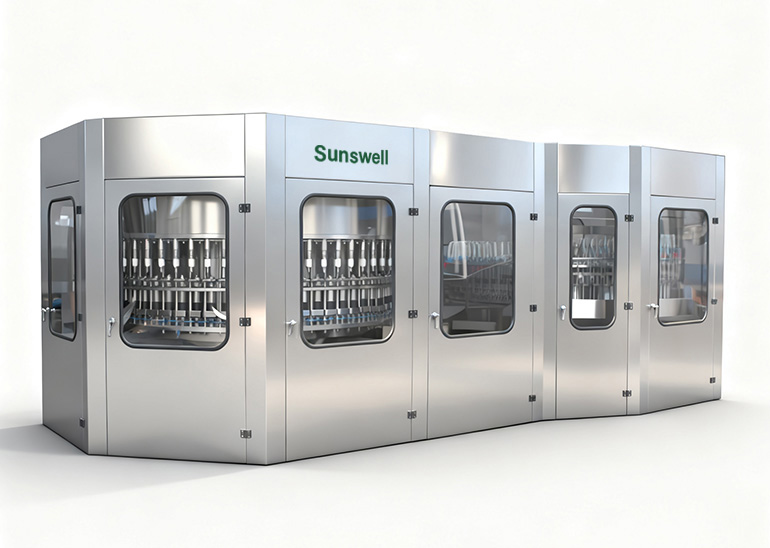
Commission representative source-water testing and confirm legal access and sustainable quantity for the intended operation. Source identity, sampling point and dates belong in the design file. Do not apply another Ulaanbaatar plant's water report to a new well or supply connection.
Define the legally permitted finished-water category before specifying treatment. Purified drinking water, spring water and natural mineral water can have different product-identity requirements. Membrane separation may suit a purified-water objective while changing characteristics important to a source-defined category. Confirm this distinction with the relevant local authority.
Discuter de la Système de traitement de l'eau using the source analysis, outlet specification, temperature range and operating calendar. Feed-water temperature affects membrane performance, so ask the designer to state the temperature basis behind its output projection. Request the expected permeate duty under the relevant seasonal conditions rather than relying on a single catalogue LPH figure.
Include cleaning, membrane preservation, sampling access and reject-water handling. Size raw and treated storage from the hourly supply and production balance. Large tanks are not automatically more dependable if they introduce long residence times or difficult cleaning. Each storage volume should solve a defined operational mismatch.
Select initial formats from actual customer requirements and transport trials. Small individual bottles, family packs and returnable large containers impose different handling and sanitation demands. Do not infer the most profitable format from price per liter alone; include the delivered margin and the amount of packaging working capital required.
Request drawings and samples for bottles, preforms, caps, labels and final packs. Check closure integrity, bottle stability, label adhesion and bundle performance after representative storage and transport exposure. Where products may encounter freezing or low temperatures, establish acceptable conditions and test the actual package rather than relying on appearance after a short indoor trial.
Map replenishment routes for every critical packaging item. State the supplier, normal lead time, customs and delivery steps, minimum order and alternative source. A quoted rail or road transit time is only one part of the replenishment interval. Add purchasing, production, dispatch, clearance and final delivery, using actual quotations instead of promising a generic China-to-Mongolia schedule.
Purchased bottles reduce the initial blowing-equipment scope but create empty-container storage and inbound handling requirements. In-house blowing shifts inventory toward preforms and adds compressor demand, molds, maintenance and bottle-quality control. Compare the two systems using verified local bottle availability and the forecast production calendar.
Review Sunswell's ligne de production d'eau for the complete flow, including bottle supply and final packs. Examine the water rinsing, filling and capping equipment against the chosen bottle drawings and required cleaning access. Ask for a layout with maintenance access, cleaning routes and space for packaging materials. If blowing is included, ensure the utility design covers simultaneous operation of the blower, treatment and packing equipment.
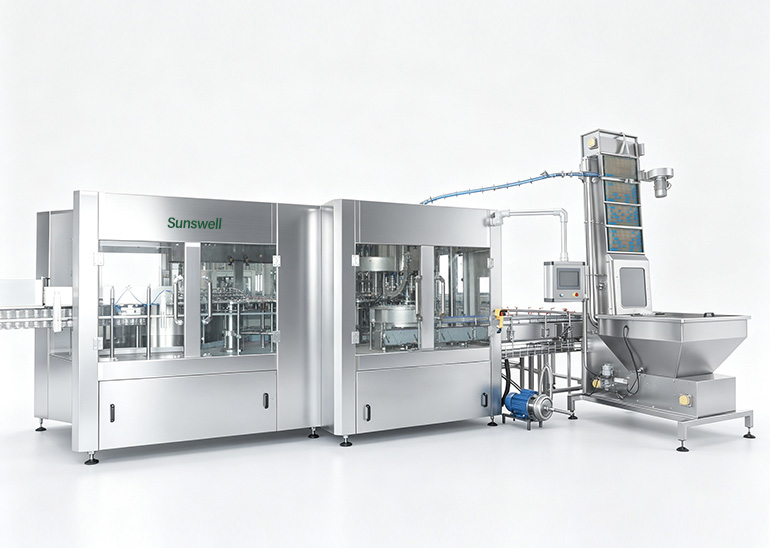
Keep any future upgrade visible in the layout, but do not assume a later combiblock conversion is a simple plug-in operation. Integrated blowing, filling and capping changes interfaces, layout and utility requirements. Price a realistic expansion path and compare it with adding shifts to the first line.
Create a spare-parts list based on stoppage consequences. Sensors, seals, wear guides and selected drive or control components have different failure risks and replacement routes. Ask the supplier to identify critical parts and manufacturer references. Confirm which items can be sourced locally and which depend on the original equipment supplier.
Train the local team to handle format changes, alarm diagnosis, cleaning and routine maintenance. Agree documentation language, remote-support arrangements where offered and access to software backups. Do not assume that an international supplier has a resident Mongolian service team unless that arrangement is explicitly verified.
Keep a stock register with part number, machine location, minimum stock and replenishment owner. Set levels using lead time and the consequence of an outage, rather than an arbitrary percentage of machinery value. Include consumables for water treatment and quality testing, since the line can stop without a mechanical failure.
Identify the food operator's obligations, source permissions, relevant product standards and label requirements with competent local support. Mongolia's Law on Ensuring the Safety of Food Products is an official starting reference for food-safety and information requirements. Confirm the current implementation and the correct authority for the actual factory; do not rely on an outdated agency name from a foreign trade guide.
Keep the product specification, laboratory results, packaging approval and batch-traceability procedure in one controlled file. Run a trial recall using the proposed coding system before launch. A clear batch code and ingredient or packaging records help the operator investigate a complaint without holding every product produced that month.
No. Compare saleable output with confirmed orders, production hours and delivery capability. The number is a capacity option, not a market-based recommendation by itself.
Do not assume it can. Cooling duty, hygienic separation and control across seasons need an engineered solution. Verify performance under the actual operating envelope.
Base stock on component criticality and replenishment time. A cheap sensor with a long delivery time may deserve more attention than an expensive component available locally.
Send the source report, site conditions, monthly format volumes, delivery model, packaging drawings and utility survey. Add the cold-season shutdown and restart requirements to the specification.



 +86 13921964455
 [email protected]

Parc industriel A2 Dongjiu, 30 East Jintang Road, Tangshi, Zhangjiagang, Jiangsu 215600, Chine