


Instalación de planta · Oriente Medio y CCG
Instalación de plantas embotelladoras de agua en Oriente Medio y los países del CCG.
Una planta potabilizadora del Golfo parte de una premisa diferente a la de una planta de agua de manantial: el agua de alimentación suele ser desalinizada o municipal, el clima es cálido todo el año y el mercado se basa en grandes volúmenes de PET. Esta página describe la secuencia de instalación, teniendo en cuenta las realidades regionales que modifican el plan.
444+
Líneas entregadas
71+
Países exportadores
20,000
taller de m²
80+
Personal
2011
Se fundó Sunswell
Respuesta corta: La secuencia de instalación en el Golfo Pérsico es la siguiente: asegurar el agua de alimentación (desalinizada o municipal, con un análisis completo) → diseñar el tratamiento para remineralizarla y estabilizarla → dimensionar la línea según las ventas del primer año (las plantas del Golfo operan a gran volumen) → elegir el paquete (predomina el PET) → realizar la certificación de conformidad en paralelo → instalar y poner en marcha. El clima es un factor clave en el diseño: el almacenamiento en caliente, las altas temperaturas ambiente y las cargas de refrigeración forman parte de las especificaciones, no son notas a pie de página.
🎯 Conclusiones clave
- El agua que alimenta los ríos del Golfo a menudo se desaliniza; el tratamiento la remineraliza y estabiliza, no solo la filtra.
- El clima cálido condiciona el diseño: las necesidades de refrigeración, las condiciones de almacenamiento y el comportamiento de las botellas.
- El PET predomina en el empaque de Gulf; la línea está diseñada para un alto volumen de ventas minoristas.
- La certificación de conformidad se realiza en paralelo con la construcción, no después.
- La logística de contenedores a través de los principales puertos (Jebel Ali, puertos saudíes) es rutinaria y rápida.
En esta página
1. El agua de alimentación
La mayoría de las plantas del Golfo se abastecen de agua desalinizada o municipal en lugar de agua de manantial, lo que supone un punto de partida diferente. El agua es pura pero estancada: baja en minerales, de estabilidad variable y necesita remineralización para alcanzar el producto deseado. Es fundamental realizar un análisis completo a lo largo de las estaciones antes de diseñar cualquier proceso; el tratamiento depende del agua, y en este caso, el agua es un ingrediente clave, no un recurso gratuito.
Confirme la fiabilidad y el coste del suministro con la compañía eléctrica; una planta cuyo tamaño supera la capacidad de su suministro es una planta que no puede funcionar.
Adjunte el análisis del agua desalinizada o municipal a su consulta. La dosificación de la remineralización se basa en dicho análisis, y adivinar el perfil de agua implica adivinar el sabor.
El coste y la disponibilidad del agua son cuestiones estratégicas en el Golfo; deben formar parte del modelo de negocio, no solo de la ingeniería.
2. Tratamiento para piensos desalinizados
El tratamiento del pienso desalinizado consiste en mejorar su perfil nutricional, no en alterarlo: filtración para garantizar su seguridad, dosificación de remineralización (calcio, magnesio, bicarbonatos) según el producto deseado, desinfección y pulido antes del llenado. El sistema se dimensiona en función del caudal de la línea y la variabilidad del pienso, y es allí donde se logra la consistencia del sabor del producto.
El almacenamiento del agua tratada requiere el mismo cuidado que el alimento: el almacenamiento en caliente degrada el producto y favorece el crecimiento de microorganismos, por lo que la temperatura y la circulación del agua en el tanque son factores clave en el diseño.
3. El clima como especificación
El clima del Golfo es una especificación de línea, no una nota al pie: las temperaturas ambiente aumentan las cargas de refrigeración, el calor de almacenamiento afecta al producto y a la botella, y los sistemas de climatización y agua fría de la planta están dimensionados en consecuencia. La botella se comporta de manera diferente en almacenamiento a altas temperaturas: la deformación del PET, el par de apriete del tapón y los problemas relacionados con los gases requieren atención en el diseño.
Planifique el almacén teniendo en cuenta el control de la temperatura y la rotación de existencias: almacenar agua paletizada en un cobertizo a 45 °C es un riesgo inminente para la calidad del producto.
4. La línea de llenado
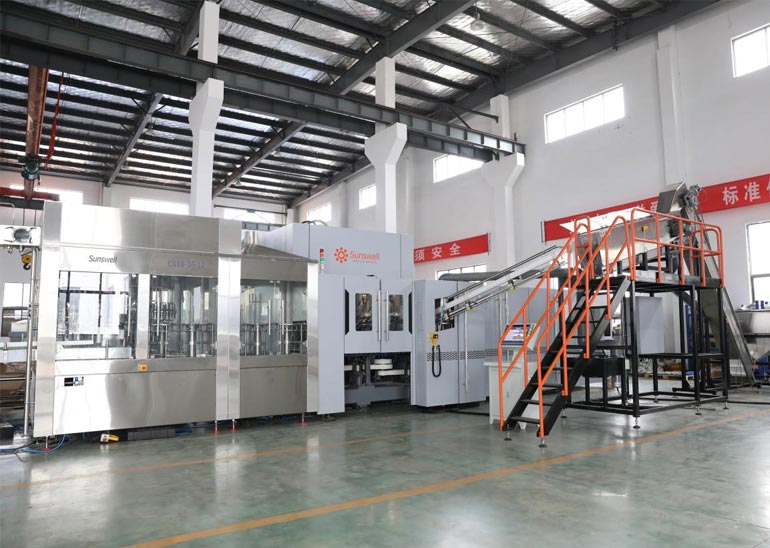
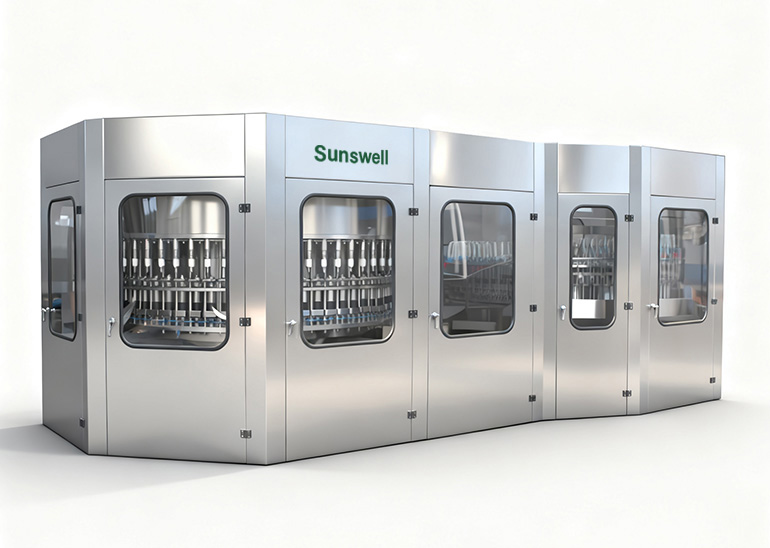
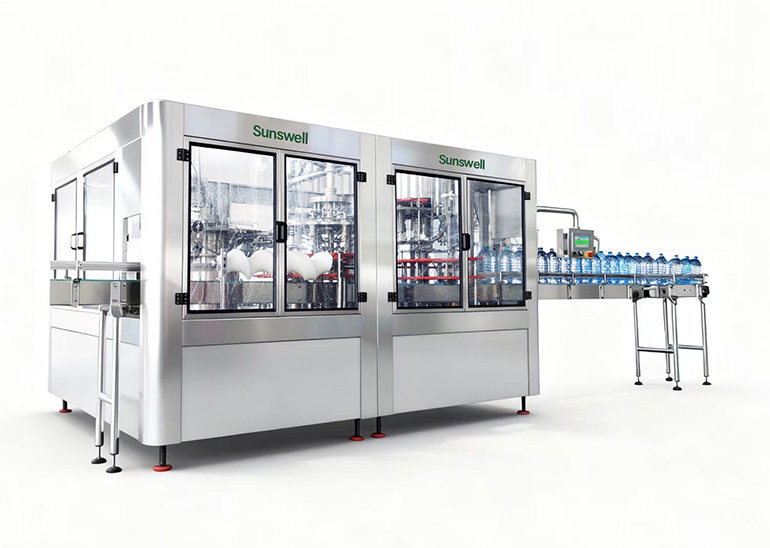
Las plantas de tratamiento de agua del Golfo utilizan botellas PET de alto volumen: los bloques combinados son la opción dominante porque integran el soplado, el llenado y el taponado en un solo bloque, con la botella más ligera y el menor espacio ocupado. Por debajo de aproximadamente 8,000 botellas por hora, una configuración de línea separada resulta más económica; por encima de este valor, el ahorro que ofrece el bloque combinado se multiplica. La línea se clasifica según el diseño de la botella, y la botella cuenta con la clasificación de resistencia al calor y al clima para el mercado.
Para los formatos pequeños y los formatos domésticos de 5 litros, confirme la botella y el tapón con el proveedor; el almacenamiento en caliente del Golfo hace que las especificaciones de la botella formen parte de la decisión del producto.
5. Decisiones de embalaje
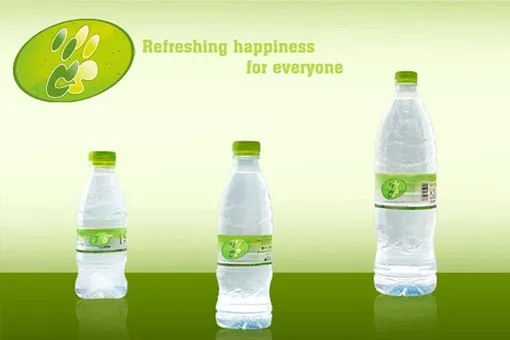
Los formatos pequeños de PET (0.33–1.5 L) cubren el volumen de ventas minoristas en el Golfo Pérsico, mientras que los formatos de 5 L se destinan al hogar y al sector de la restauración. La combinación de envases es una decisión de la línea de producción: la llenadora, la taponadora y el empaquetado se realizan después de la botella. El suministro de preformas y tapas supone un coste continuo: conviene confirmar proveedores locales o presupuestar la importación, ya que la fiabilidad de la línea depende de la calidad de sus consumibles.
Los formatos multipack (bandejas envueltas en film) dominan los estantes de Gulf; la cadena de suministro se especifica para el tipo de envase que los minoristas compran realmente.
6. Cumplimiento y servicios públicos
La importación de maquinaria sigue el proceso de homologación del país de destino —confirmado con un agente antes de realizar el pedido— y la planta cuenta con el registro local de seguridad alimentaria para agua embotellada. Inicie el registro del producto con antelación, ya que puede extenderse más que la construcción de la línea de producción. Los servicios —electricidad, agua refrigerada, aire comprimido— se dimensionan en la fase de diseño, teniendo en cuenta la carga de refrigeración del clima.
Confirme quién realiza el despacho de aduanas según el plazo de entrega y quién asume los aranceles: una cotización DDP lo incluye, una cotización FOB lo deja a su cargo.
7. Dotación de personal y puesta en marcha
Una planta del Golfo opera con un equipo pequeño y capacitado —operadores, un técnico y un inspector de control de calidad— que recibe formación antes de la llegada de la línea de producción. El técnico de puesta en marcha del proveedor los capacita durante la instalación, y la prueba de aceptación se realiza a la producción nominal indicada en la botella. La dotación de personal para el clima también es importante: los turnos de trabajo y el diseño de la planta para un entorno cálido forman parte del plan operativo.
La puesta en marcha finaliza con la prueba de aceptación, y el primer palé sale después de esta, no antes.
Preguntas frecuentes
¿Qué tipo de agua utilizan las plantas del Golfo?
En su mayoría agua desalinizada o de uso municipal: pura pero sin impurezas. El tratamiento remineraliza el producto hasta alcanzar la composición deseada, en lugar de simplemente filtrarlo.
¿El clima modifica las especificaciones de la línea?
Sí, las cargas de refrigeración, el almacenamiento en caliente, el comportamiento de las botellas y el control de la temperatura del almacén son todos factores de diseño importantes, no detalles secundarios.
¿Bloque combinado o línea separada?
Las plantas del Golfo operan a gran escala, por lo que los bloques combinados predominan por encima de los 8,000 barriles por hora; por debajo de esa cifra, las configuraciones separadas resultan más económicas.
¿Qué certificación necesito?
El proceso de conformidad con el país de destino, además del registro local de seguridad alimentaria para el agua embotellada, debe confirmarse con un agente y la autoridad competente con antelación.
¿Cuánto tiempo dura la instalación?
Normalmente, el proceso dura entre una y dos semanas con el técnico del proveedor, y finaliza con una prueba de aceptación a la producción nominal indicada en la botella.
¿Podrá Sunswell construir una planta potabilizadora en el Golfo?
Sí, Sunswell exporta a más de 71 países y suministra plantas de tratamiento de agua, desde el tratamiento hasta la paletización, con ingeniería adaptada al clima y la documentación de conformidad para el destino.
Acerca del autor.
Escrito por el equipo de ingeniería de Sunswell, liderado por Howie solFundador y director ejecutivo, con 14 años de experiencia en I+D de equipos de llenado y moldeo por soplado, y en la entrega de proyectos llave en mano en más de 71 países.
Última revisión: 28/08/2026 · Revisado por el equipo de ingeniería de Sunswell
Consulta a nuestro equipo de ingeniería →Recomendar productos
¿Tienes algún proyecto específico en mente?
Indíquenos el producto, el objetivo de botellas por hora, el tamaño de las botellas y el mercado objetivo. Le enviaremos un borrador del diseño, una lista de equipos y una estimación del plazo de entrega.
Rellena el formulario de consulta ↑