


Configuración de línea · Lácteos
Productos lácteos y bebidas lácteas: opciones de configuración de línea y niveles de inversión.
Las bebidas lácteas se configuran en función del método de conservación —tratamiento UHT más envasado higiénico para productos de larga duración, o pasteurización más cadena de frío para productos frescos— y este método determina el tratamiento térmico, la higiene del envasado y el tipo de envase. Esta página compara las configuraciones y sus ventajas e inconvenientes.
444+
Líneas entregadas
71+
Países exportadores
20,000
taller de m²
80+
Personal
2011
Se fundó Sunswell
Respuesta corta: Dos rutas definen las configuraciones de los productos lácteos: de larga duración (procesamiento UHT y posterior llenado higiénico en un envase sellado, sin cadena de frío) y frescos (pasteurización, menor vida útil, con cadena de frío ininterrumpida). Dentro de cada ruta, los niveles dependen de la producción y el envasado: las botellas (PET o vidrio) se llenan con una máquina higiénica y una taponadora; los envases de cartón se llenan con una línea de formado, llenado y sellado. La ruta se decide en función del mercado y del objetivo de vida útil, no en la línea de producción.
🎯 Conclusiones clave
- La vía de conservación es primordial: UHT + envasado higiénico, o pasteurización + cadena de frío.
- Los productos que no necesitan refrigeración evitan la cadena de frío, una ventaja logística que conviene tener en cuenta al tomar la decisión.
- Las botellas se procesan mediante una llenadora higiénica con taponadora; los envases de cartón se fabrican mediante una línea de formado, llenado y sellado.
- La homogeneización y la estandarización se realizan en etapas anteriores del proceso y son específicas para la industria láctea.
- El nivel de higiene del envasador es el factor que controla la vida útil del producto; es una especificación, no un valor predeterminado.
En esta página
1. La decisión de la ruta
En la fase de planificación, las bebidas lácteas se dividen en dos categorías: productos de larga duración, conservados mediante tratamiento UHT seguido de un envasado higiénico y sellado, y productos frescos, conservados mediante pasteurización y transportados en cadena de frío. La ruta de distribución determina el tratamiento térmico, la higiene del envasado, el tipo de envase y la logística; por lo tanto, es la primera decisión, tomada en función del mercado y el objetivo de vida útil.
Para conocer la ruta de conservación y envasado que mejor se adapte a un producto específico, póngase en contacto con Sunswell indicándole el producto y el plazo de caducidad previsto; la línea de producción seguirá la ruta indicada.
2. Ruta de conservación estable a temperatura ambiente
Ruta de larga vida útil: estandarización y homogeneización → procesamiento UHT → llenado higiénico en envase sellado → empaquetado → almacenamiento a temperatura ambiente. El proceso UHT le confiere al producto una larga vida útil, y el llenado se mantiene sellado e higiénico, evitando la reintroducción de contaminantes tras el procesamiento. La ventaja de esta configuración es la libertad logística: no requiere cadena de frío desde la planta hasta el punto de venta.
La inversión inicial es mayor (planta UHT, llenadora higiénica), y la rentabilidad reside en la economía de la distribución y la capacidad de exportación.
3. Nueva ruta
La ruta de productos frescos: pasteurización, llenado higiénico, envasado y distribución refrigerada; una vida útil más corta gracias a una cadena de frío ininterrumpida. El proceso es más sencillo y económico que el de los productos UHT; la cadena de frío representa el coste y el riesgo constantes. Los productos frescos se adaptan bien a mercados con alta densidad de clientes, un comercio minorista rápido y distancias cortas; presentan dificultades donde la cadena de frío es larga o se requiere mantenerla a temperaturas elevadas.
Planifique la cadena de frío antes de ponerla en marcha: espacio de refrigeración, transporte refrigerado y los registros de temperatura que lo demuestren.
4. Botellas frente a envases de cartón
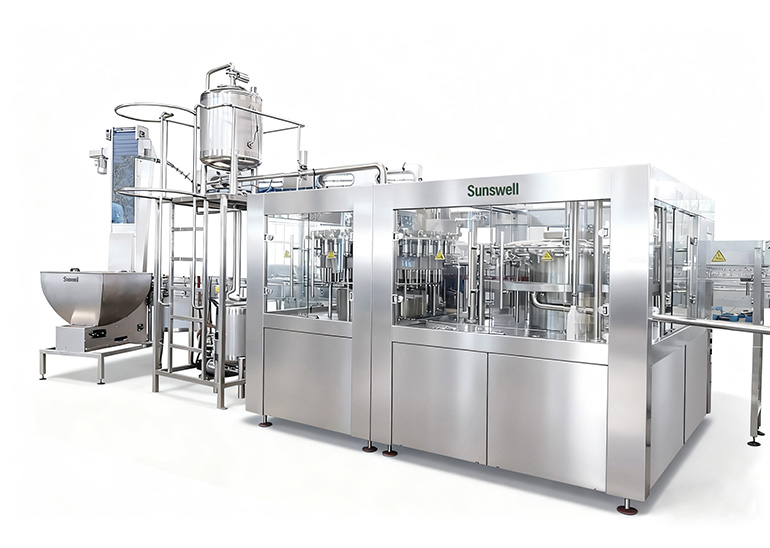
Las botellas (de PET o vidrio) se procesan en una llenadora higiénica con taponadora; la parte específica para la leche reside en el nivel de higiene y el proceso de sellado. Los envases de cartón se procesan en una línea de formado, llenado y sellado, una familia de máquinas independiente que forma, llena y sella el envase en un solo proceso. La decisión sobre el tipo de envase determina la sección de llenado y se adapta a las necesidades del mercado: botellas para consumo doméstico, envases de cartón para colegios, hostelería y productos que no requieren refrigeración.
El peso y el tipo de cierre de la botella siguen la misma lógica: una bebida de larga duración envasada en PET y una bebida fresca en la misma botella tienen especificaciones diferentes en la planta de llenado.
5. Niveles de inversión
| Nivel | Configuration | Mejor ajuste |
|---|---|---|
| Entrada | Pasteurización + llenado higiénico de botellas | Mercado local de productos frescos |
| Estándar | UHT + llenado higiénico, botellas | Marca regional de larga duración |
| Volumen | Línea UHT + botellas + cartones | Nacional, multiformato |
Los niveles se ajustan a las necesidades del mercado en cuanto a la vida útil y la combinación de formatos: una planta que abastece a una cadena de suministro larga y con productos calientes necesita el nivel UHT incluso con un volumen moderado.
6. El lado del proceso
El proceso —recepción, estandarización, homogeneización y tratamiento térmico— es específico para la industria láctea y se ubica antes de la envasadora. La homogeneización estabiliza la grasa; la estandarización define la receta; el tratamiento térmico se valida para cada producto con sus respectivos registros. En la planta de procesamiento se determina la vida útil del producto; en la envasadora, se mantiene.
Las bebidas lácteas aromatizadas requieren dosificación por lotes y dosificación de sabor antes del tratamiento térmico; el proceso de dosificación se especifica en la receta.
7. Adaptación al mercado
Relacione la configuración con tres hechos: la vida útil que necesita el mercado (las cadenas largas y calientes requieren UHT), el formato que compran los consumidores (botellas, cartones o ambos) y la realidad de la cadena de frío (disponible y asequible, o no). La respuesta es una ruta, luego un nivel, y la línea sigue a ambos. máquina de llenado El rango muestra el lado del llenador; el lado del proceso está diseñado con él como un sistema único.
Preguntas frecuentes
¿UHT o pasteurizada?
El UHT con envasado higiénico garantiza una larga vida útil sin necesidad de cadena de frío; la pasteurización con cadena de frío garantiza frescura. El mercado y el objetivo de vida útil lo determinan.
¿Botellas o cartones?
Las botellas se envasan en una máquina de llenado higiénico con taponadora; los envases de cartón se envasan en una línea de formado, llenado y sellado. La elección depende del formato del mercado y de si el producto se almacenará a temperatura ambiente o refrigerado.
¿Por qué es tan importante la higiene del empaste?
Tras el procesamiento UHT, el conducto de llenado debe permanecer sellado y limpio, de lo contrario el producto se recontamina. El nivel de higiene es fundamental para controlar la vida útil del producto.
¿Se puede evitar la cadena de frío?
Sí, la ruta de los productos no perecederos lo evita, lo cual representa una ventaja logística. Los productos frescos no pueden evitarlo.
¿Qué nivel de producción es el más adecuado para una primera línea de producción lechera?
Las configuraciones de entrada abarcan los mercados locales de productos frescos; el volumen implica UHT y formatos múltiples. El tamaño se ajusta primero a las necesidades de vida útil del mercado, y el volumen de producción es secundario.
¿Puede Sunswell suministrar configuraciones para productos lácteos?
Sí, Sunswell suministra líneas de llenado higiénicas para bebidas lácteas, con un proceso diseñado específicamente para su conservación. Póngase en contacto con Sunswell e indíquenos el producto y su fecha de caducidad.
Acerca del autor.
Escrito por el equipo de ingeniería de Sunswell, liderado por Howie solFundador y director ejecutivo, con 14 años de experiencia en I+D de equipos de llenado y moldeo por soplado, y en la entrega de proyectos llave en mano en más de 71 países.
Última revisión: 28/08/2026 · Revisado por el equipo de ingeniería de Sunswell
Consulta a nuestro equipo de ingeniería →Recomendar productos
¿Tienes algún proyecto específico en mente?
Indíquenos el producto, el objetivo de botellas por hora, el tamaño de las botellas y el mercado objetivo. Le enviaremos un borrador del diseño, una lista de equipos y una estimación del plazo de entrega.
Rellena el formulario de consulta ↑